

Choosing a dining chair starts with the people sitting in it. Here’s how I think about fabric, comfort, and everyday life before deciding what belongs around the table.
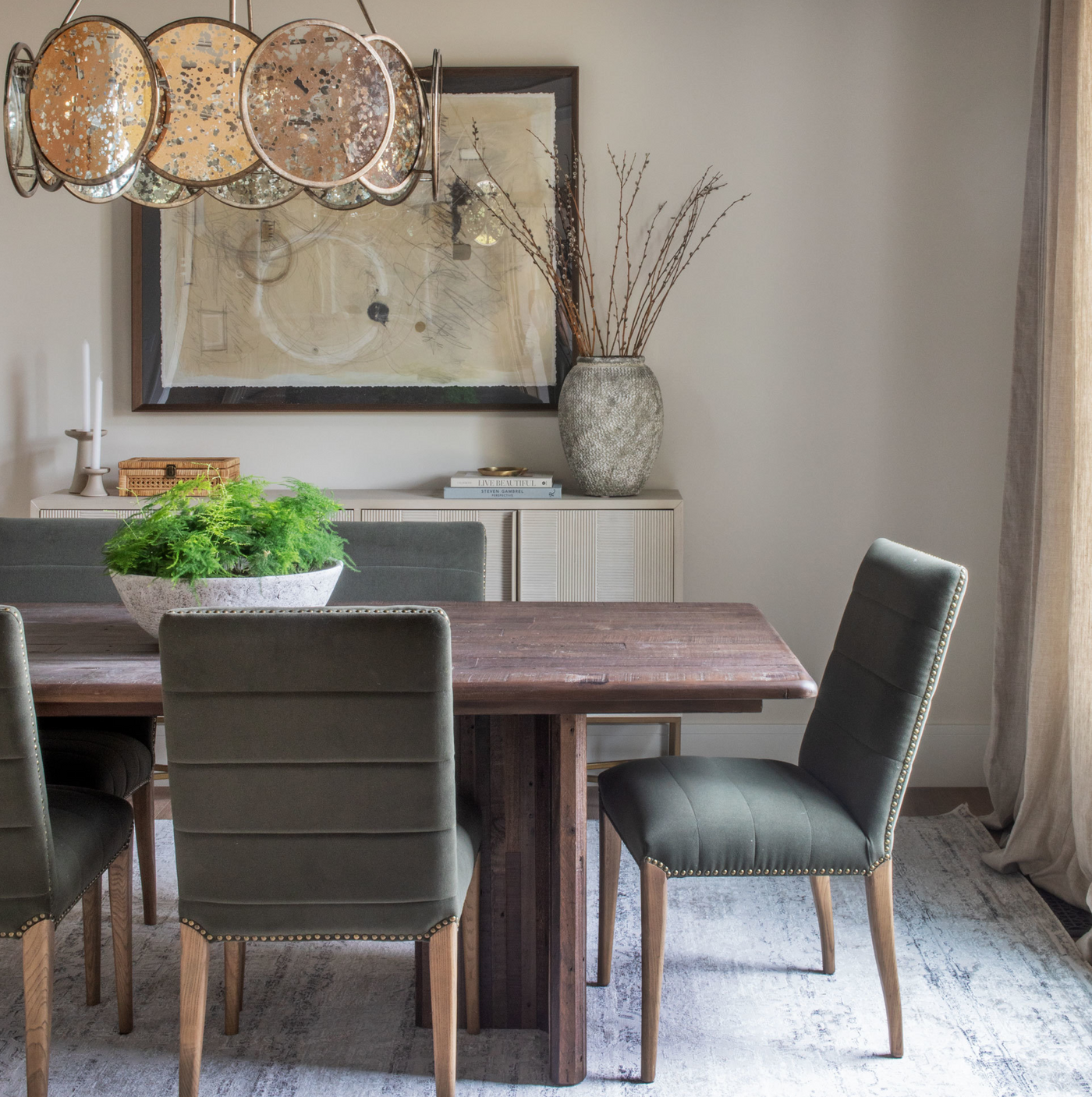
Upholstered Dining Chairs: How to Pick Fabric You Can Actually Live With
Choosing a dining chair starts with the people sitting in it. Here’s how I think about fabric, comfort, and everyday life before deciding what belongs around the table.
The first thing I think about when choosing a dining chair isn’t the fabric. It’s who is actually going to be sitting at the table.
Do you have young kids? Do you entertain often? Is this where your family eats every night, or a dining room you use mostly for special occasions? And how are you going to feel the first time someone spills something?
Those answers usually tell me where to go next.
For a family that wants to wipe everything down and move on, wood, cane, rattan, or leather might make the most sense. If you love the softness and comfort of an upholstered chair, performance fabrics have made them much easier to live with than people expect.
There’s still a whole world of custom upholstery, and I love the idea of giving a dining chair a completely different personality with a bold print or a special vintage fabric. But for most people choosing chairs for everyday life, the question isn’t really “What’s the best fabric?” It’s “What chair makes sense for the way we actually use this table?”
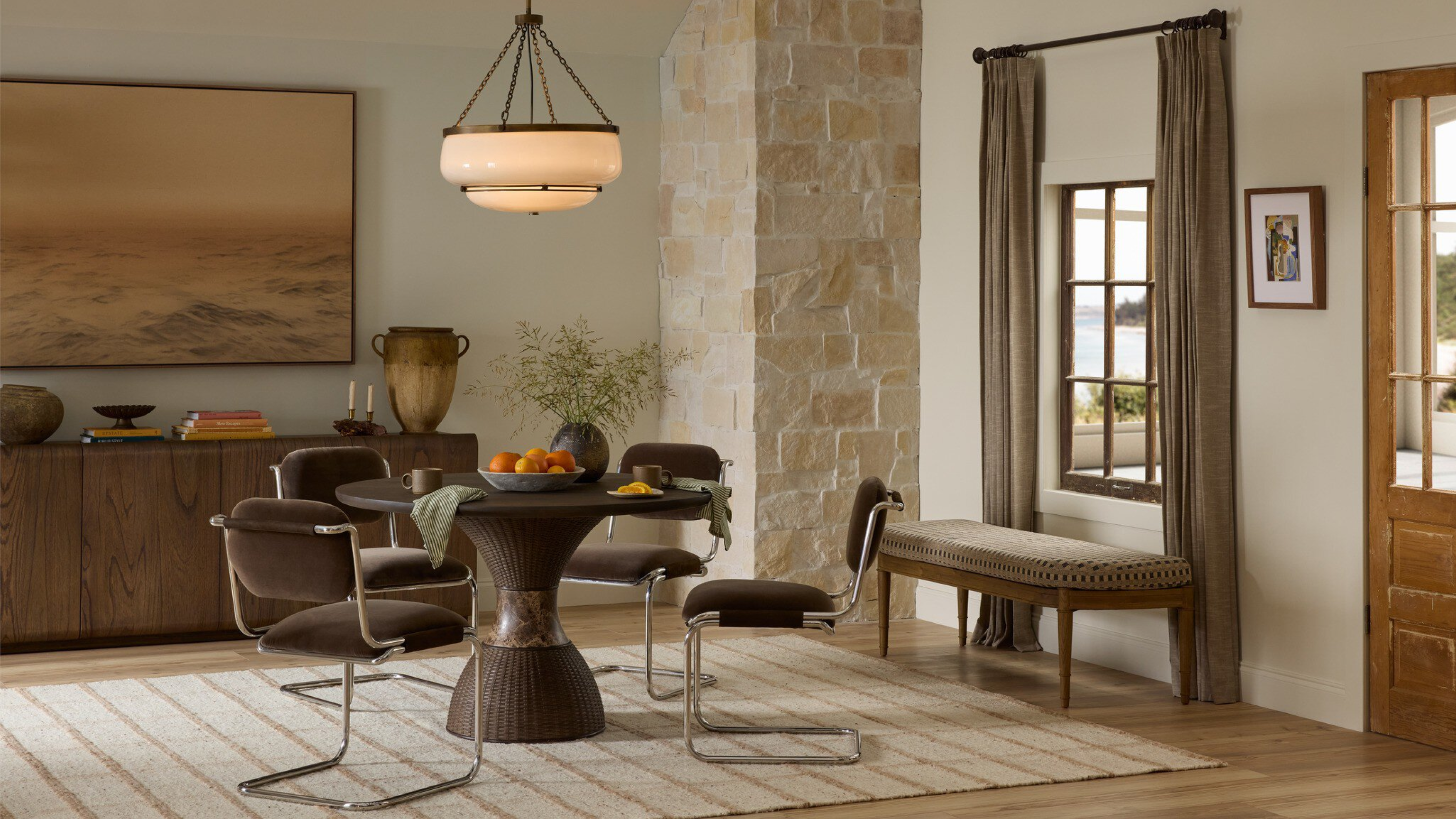
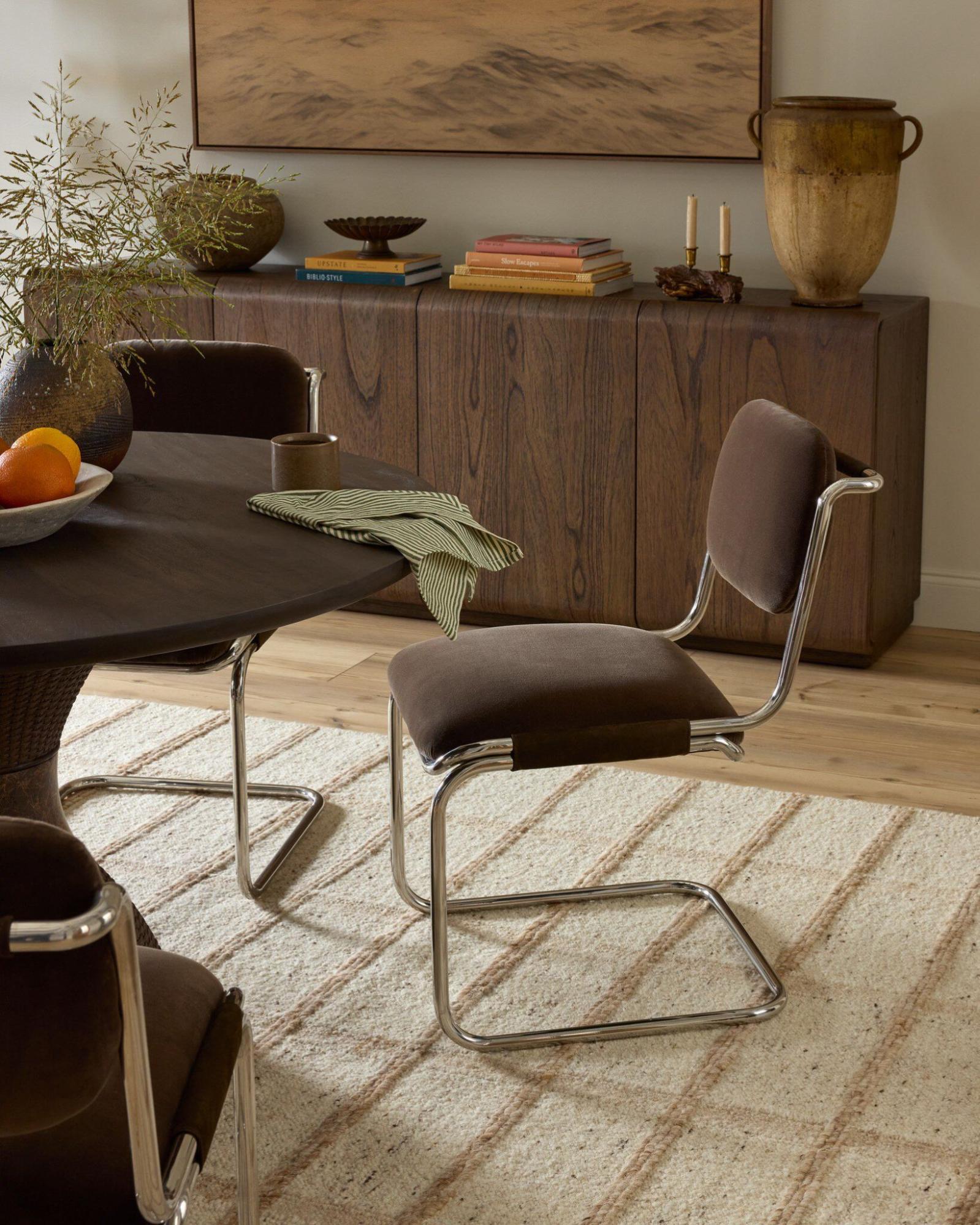 | 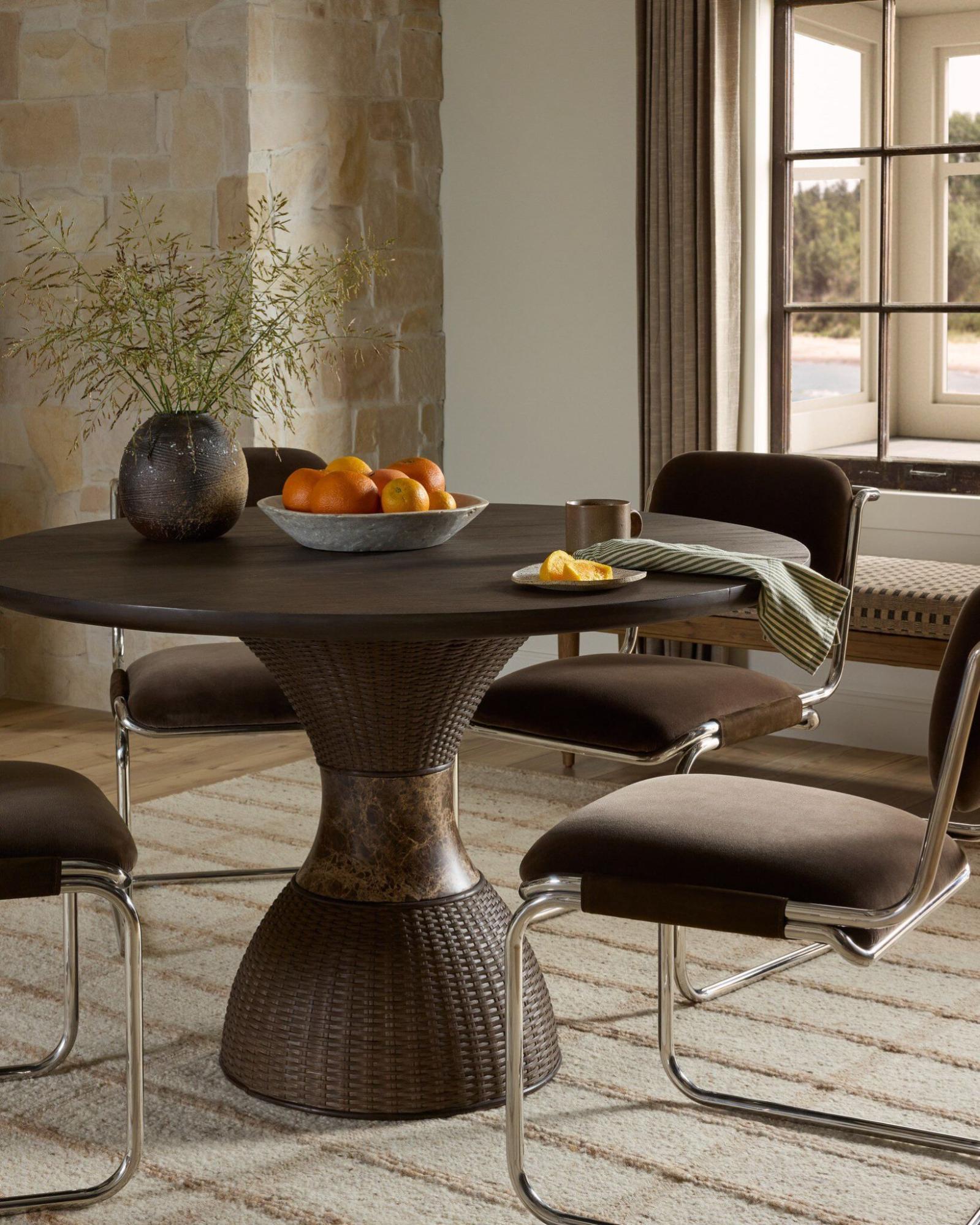 |
Start with who is actually at your table
When someone asks me whether they’re going to regret upholstered dining chairs, I don’t start with the fabric. I start with how they actually live.
If every stain is going to stress you out, you’re probably going to be much happier with a chair you can wipe clean. That’s not settling for the practical option. It’s choosing something that lets you actually enjoy the room. You can still bring in softness and upholstery elsewhere, or use upholstered chairs at the ends of the table where the adults are more likely to sit.
On the other hand, if you really love the look and comfort of an upholstered chair and you’re comfortable dealing with the occasional spill, performance fabrics have made that choice much easier to live with. That’s why I don’t automatically steer families with kids away from upholstery anymore. I just want to understand what they’re comfortable living with before we choose it.
I think about the same thing when someone entertains a lot. You want people to settle in and stay awhile. You don’t want your guests sitting in a white upholstered chair with a glass of red wine and feeling your nervous energy every time they take a sip. If you’re worried about the chair all night, they’re probably going to feel it too.
The goal is to choose a chair that lets everyone at the table relax, including you.
Performance Fabric Changed the Conversation
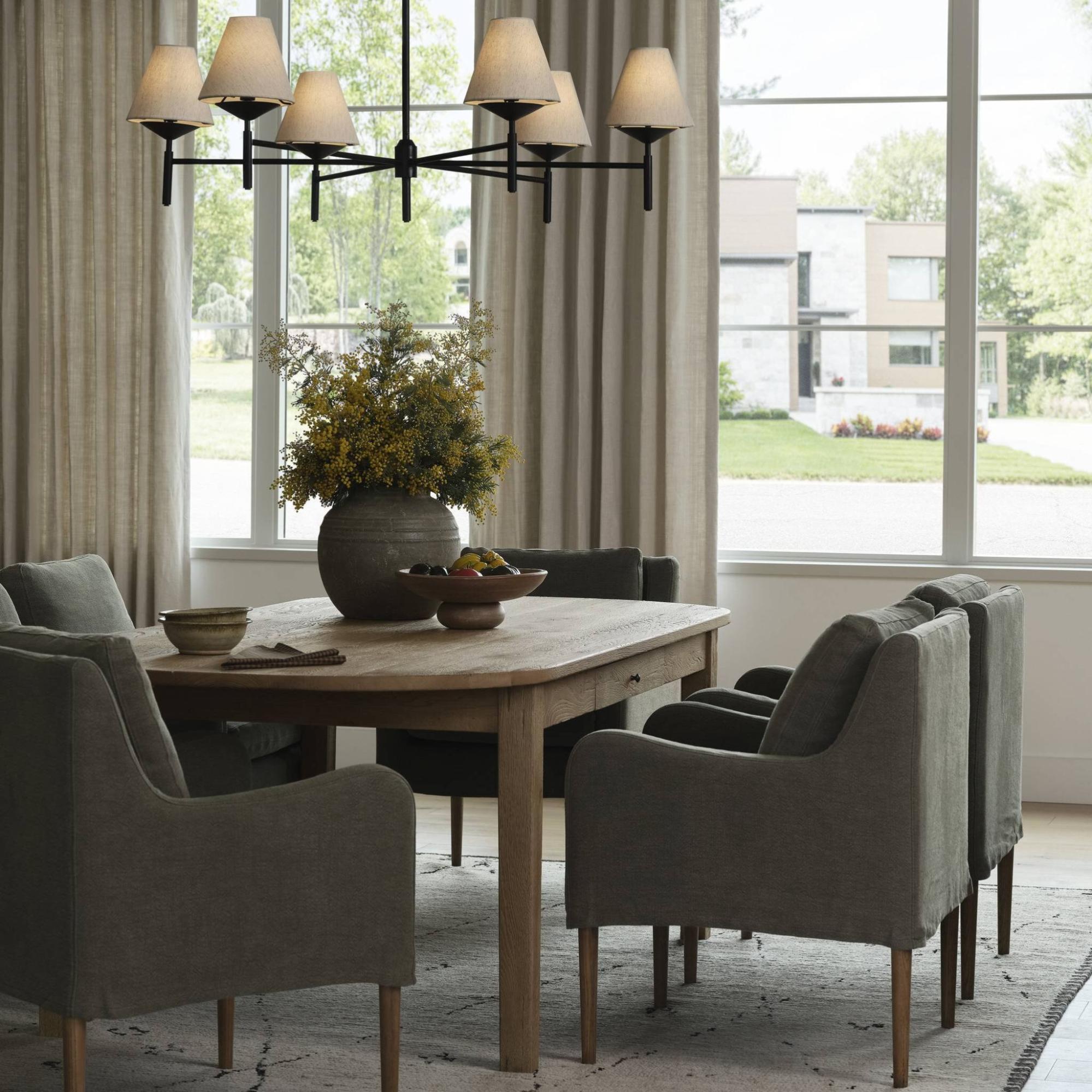
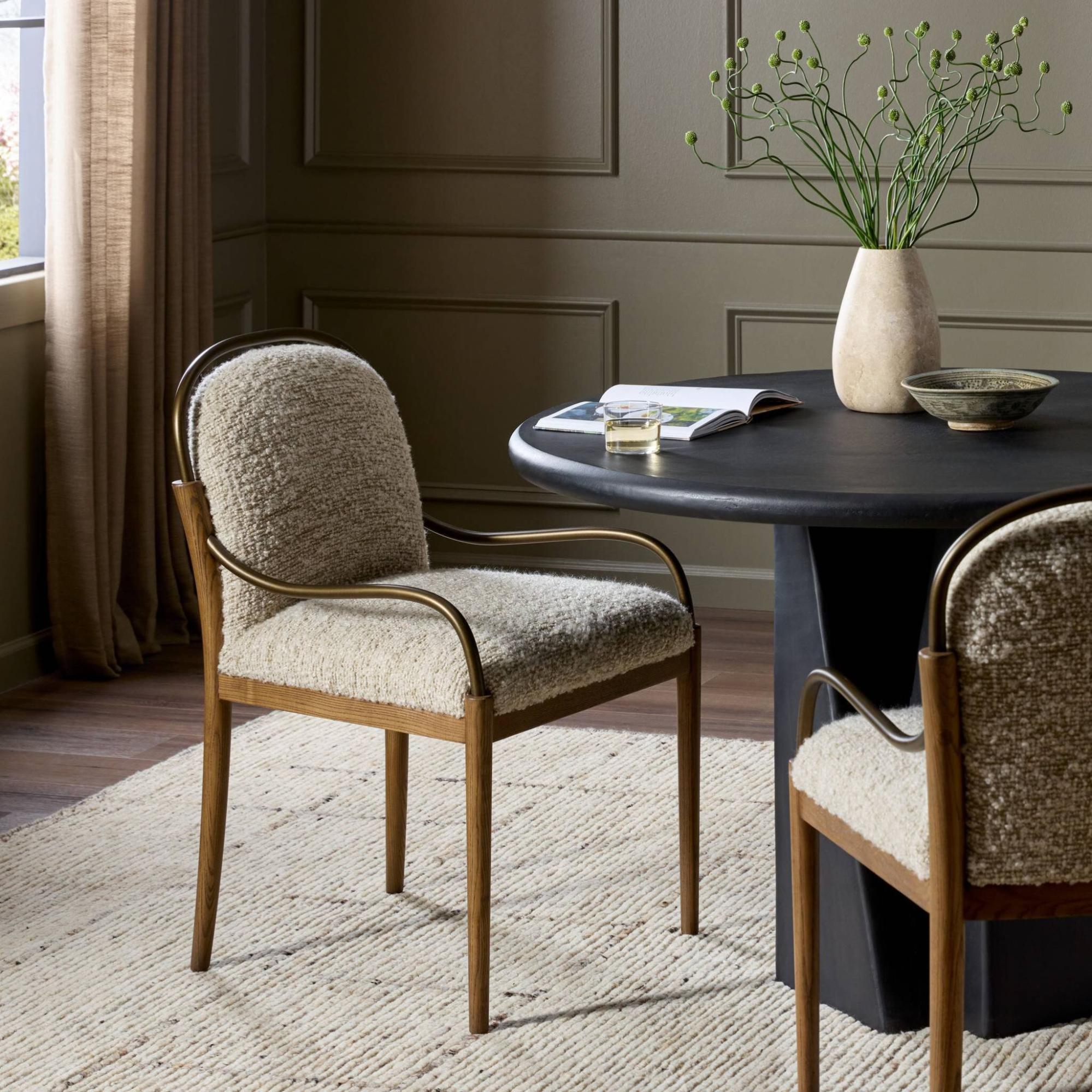
Performance fabric used to feel like something you chose because you needed the practical option. That’s changed. There are so many beautiful performance fabrics now that you don’t have to choose between a dining chair you love and one you can actually live with.
That’s a big reason I’m much more comfortable using upholstered dining chairs in homes with kids or in dining rooms that get used every day. You still have fabric at a table where people eat and drink, so spills are going to happen. The difference is that performance fabric is designed to make those everyday messes much easier to deal with.
Performance fabrics are made to resist stains, stand up to everyday wear and tear and still feel soft and comfortable. This way, you can have the upholstered chair you love without feeling like you have to protect it from everyday life.
When you’re shopping, look for a chair upholstered in a performance-grade fabric and pay attention to the care instructions to make sure the maintenance is something you’ll actually want to keep up with. Most of our dining chairs are either made from materials that are easy to wipe down, like wood, cane, rattan, metal, or leather, or they’re available in performance upholstery.
So I’d start with the chair you love and the silhouette that works for your table, then make sure the material works for the way you live. Performance fabric gives you a lot more freedom to choose upholstery without feeling like you have to save those chairs for special occasions.
Comfort is in the silhouette
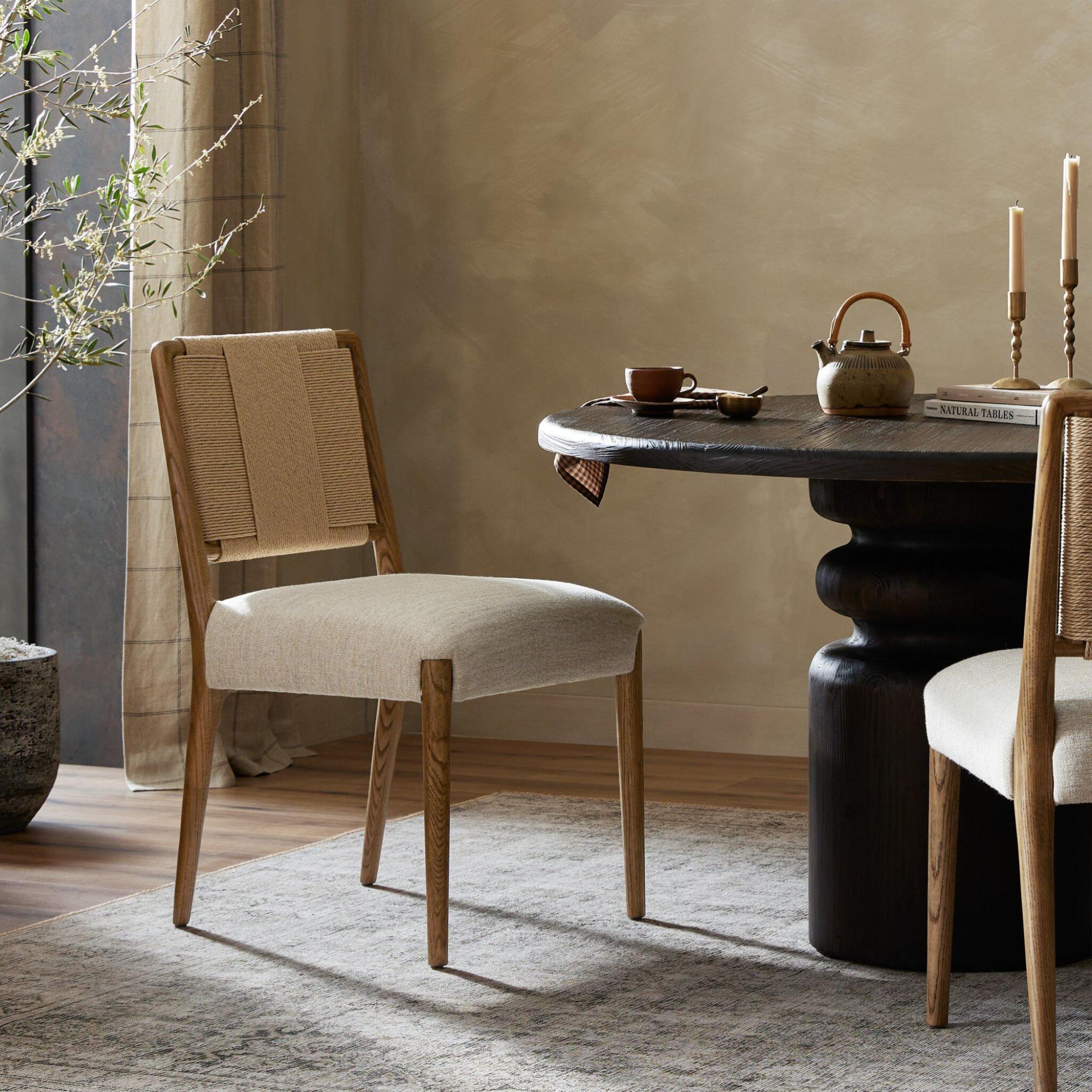
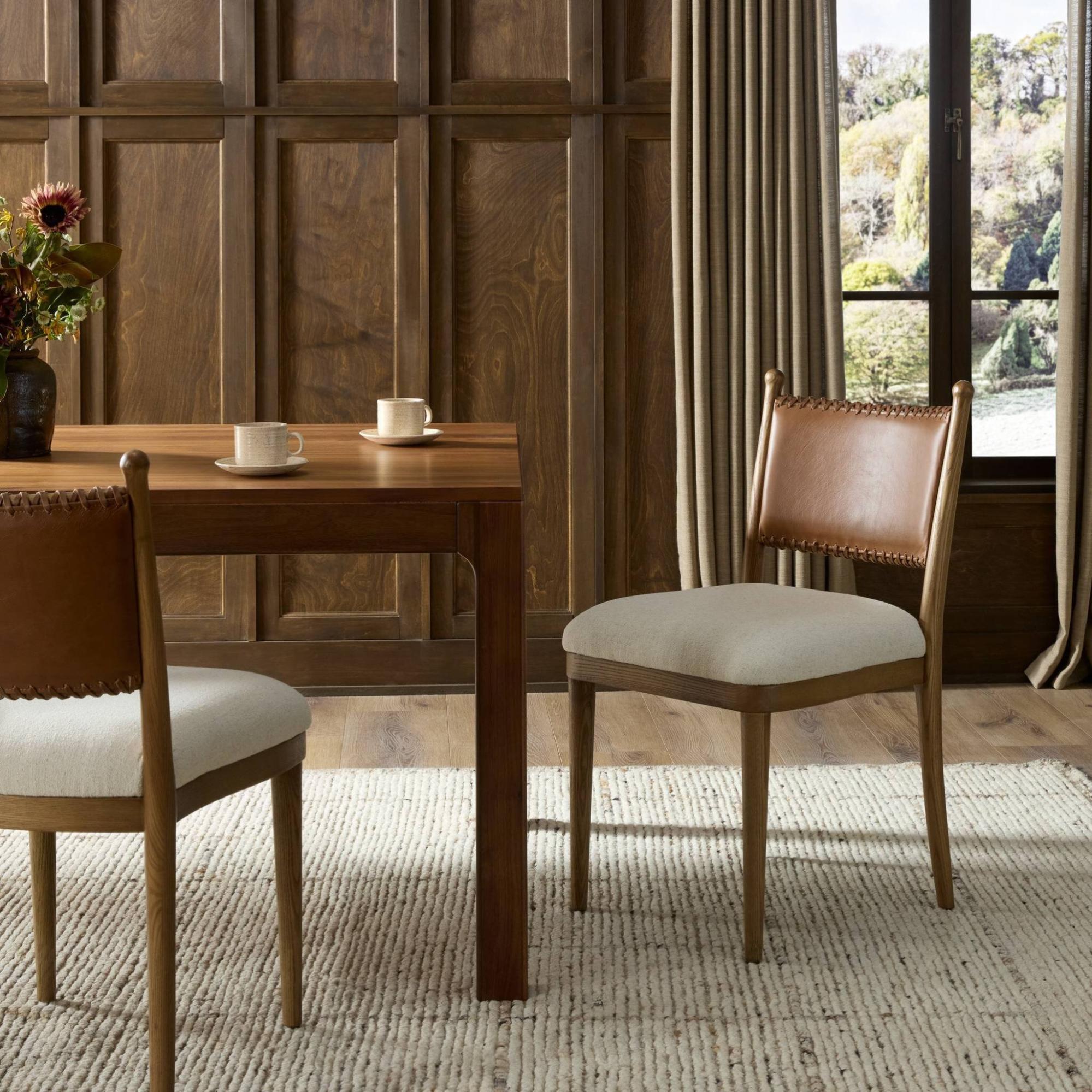
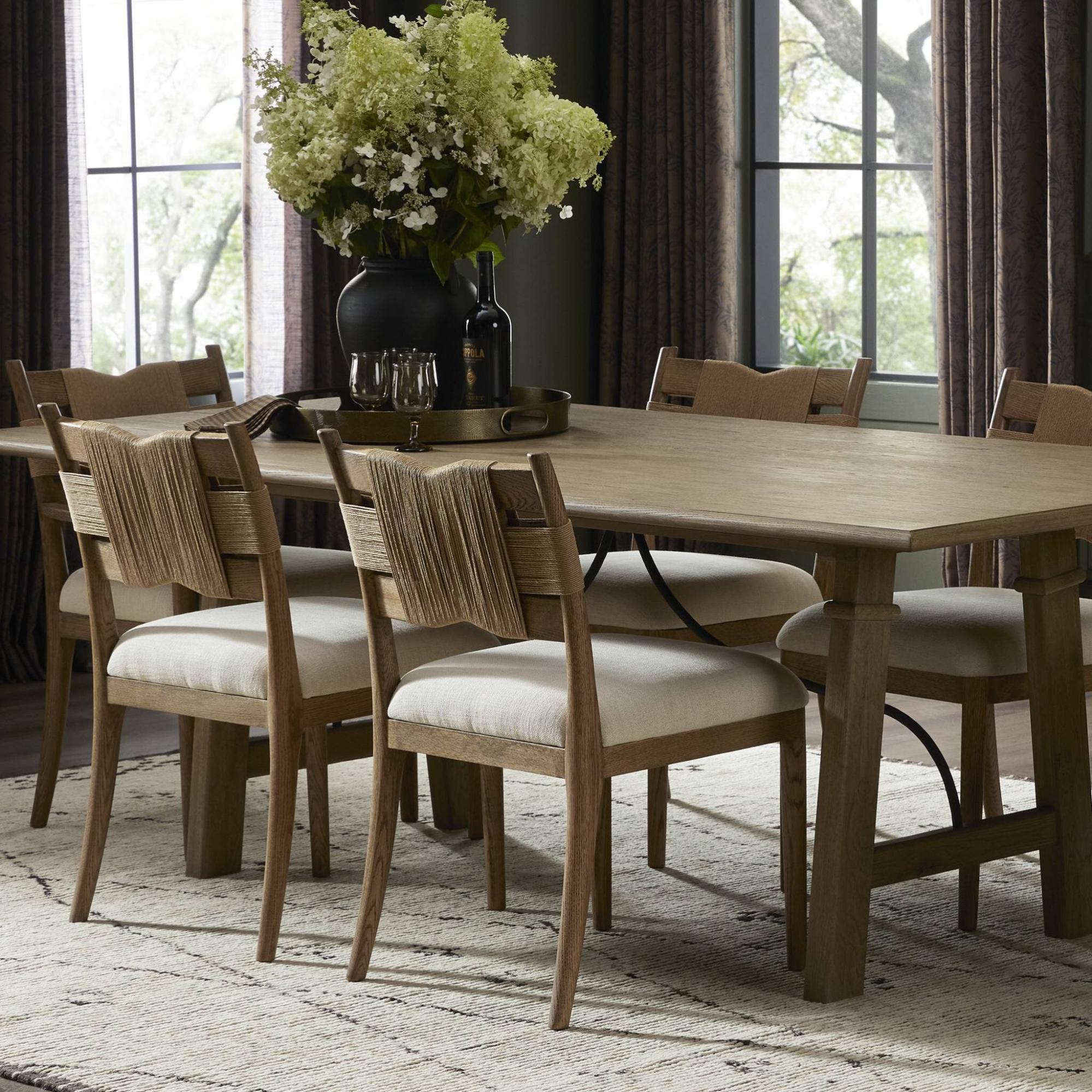
When I’m choosing a dining chair, I think about comfort in terms of the whole silhouette, not just how soft the seat feels. The width of the chair, the height and shape of the back, whether it has arms, how much support it gives you, and even the size of the person sitting in it all matter.
I typically look for something around 24 inches wide when I want a really comfortable dining chair. But that changes depending on who will be using it. We’ve designed homes for athletes and collegiate coaches who regularly have athletes around their tables, and in those homes I’m looking for something more substantial. A taller person may be more comfortable with a higher seat, a higher back, and a little more room overall.
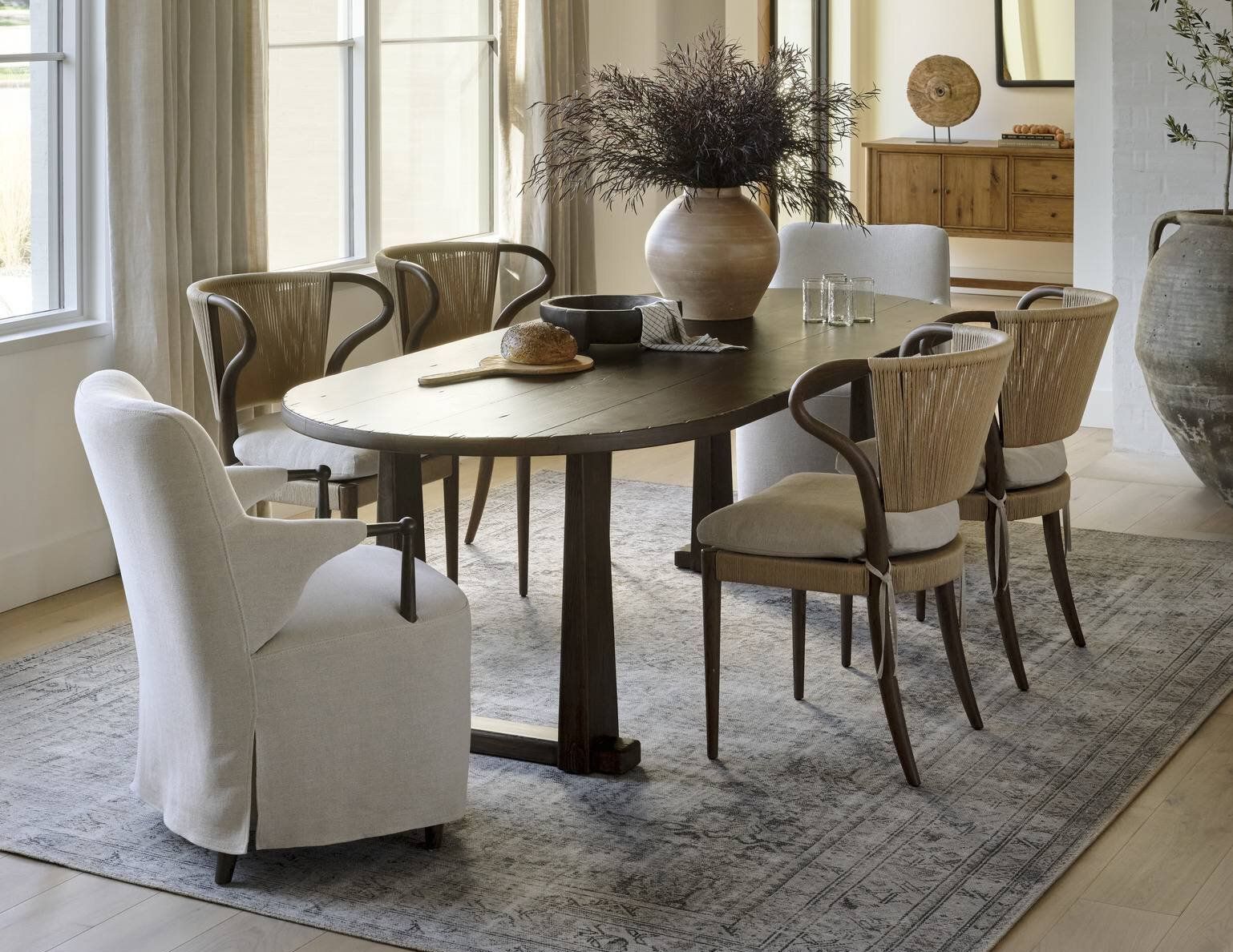
Then I look at the back and arms. A higher back, substantial arms, or a rounded shape that wraps around you can make a chair feel really comfortable for a long dinner. A lower-backed chair has a lighter presence and can be easier to use along the sides of a table. I actually love mixing the two, because you get the comfort of those more substantial chairs without surrounding the entire table with the same large silhouette.
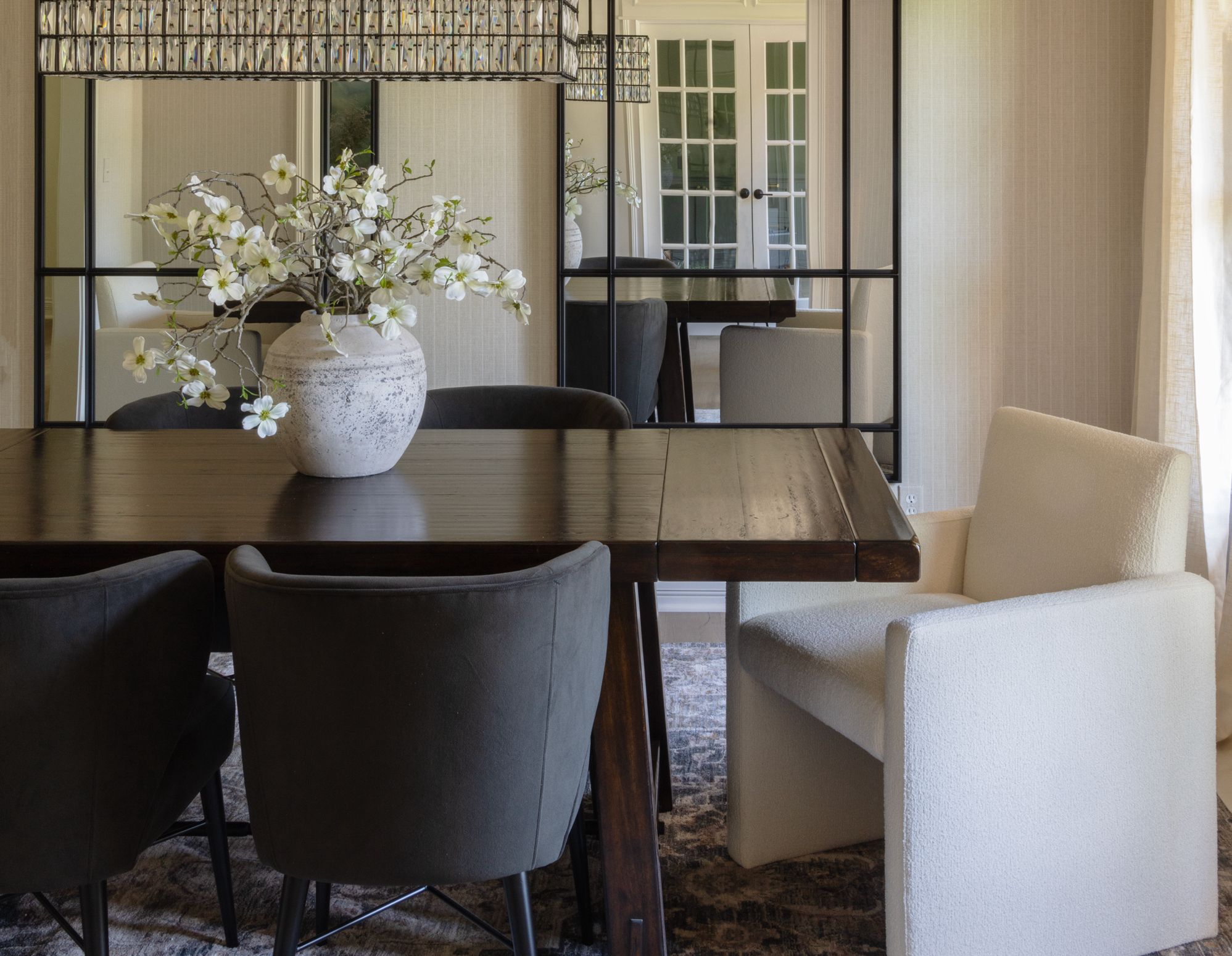
The measurement people often miss is the height of the arm compared with the apron underneath the tabletop. Your table may be 30 inches high, but that doesn’t mean you have 30 inches of clearance. If you want the chair to slide completely under the table, the arms need to clear the apron. If they don’t, or if there simply isn’t enough room along the sides, I’ll use armchairs at the two ends and keep the side chairs armless.
There are a few other measurements worth checking before you order, especially seat height, the clearance between the seat and tabletop, and the amount of space between chairs. They’re small details, but they can be the difference between a dining table that looks good and one that actually feels comfortable when everyone sits down.
There are a few other measurements worth checking before you order, and they’re easy to overlook.
Chair width: Aim for about 24 inches for a comfortable dining chair. If you have a taller family, you may want to go a little wider.
Seat height: Look for a seat height between 17 and 19 inches for a standard 30-inch dining table.
Seat-to-tabletop clearance: You want about 10 to 12 inches between the seat and the tabletop.
Arm height: Make sure the arms are lower than the apron underneath the table, not just the tabletop, if you want the chair to slide all the way under.
 |  |
Mix Upholstered and Wipeable Dining Chairs
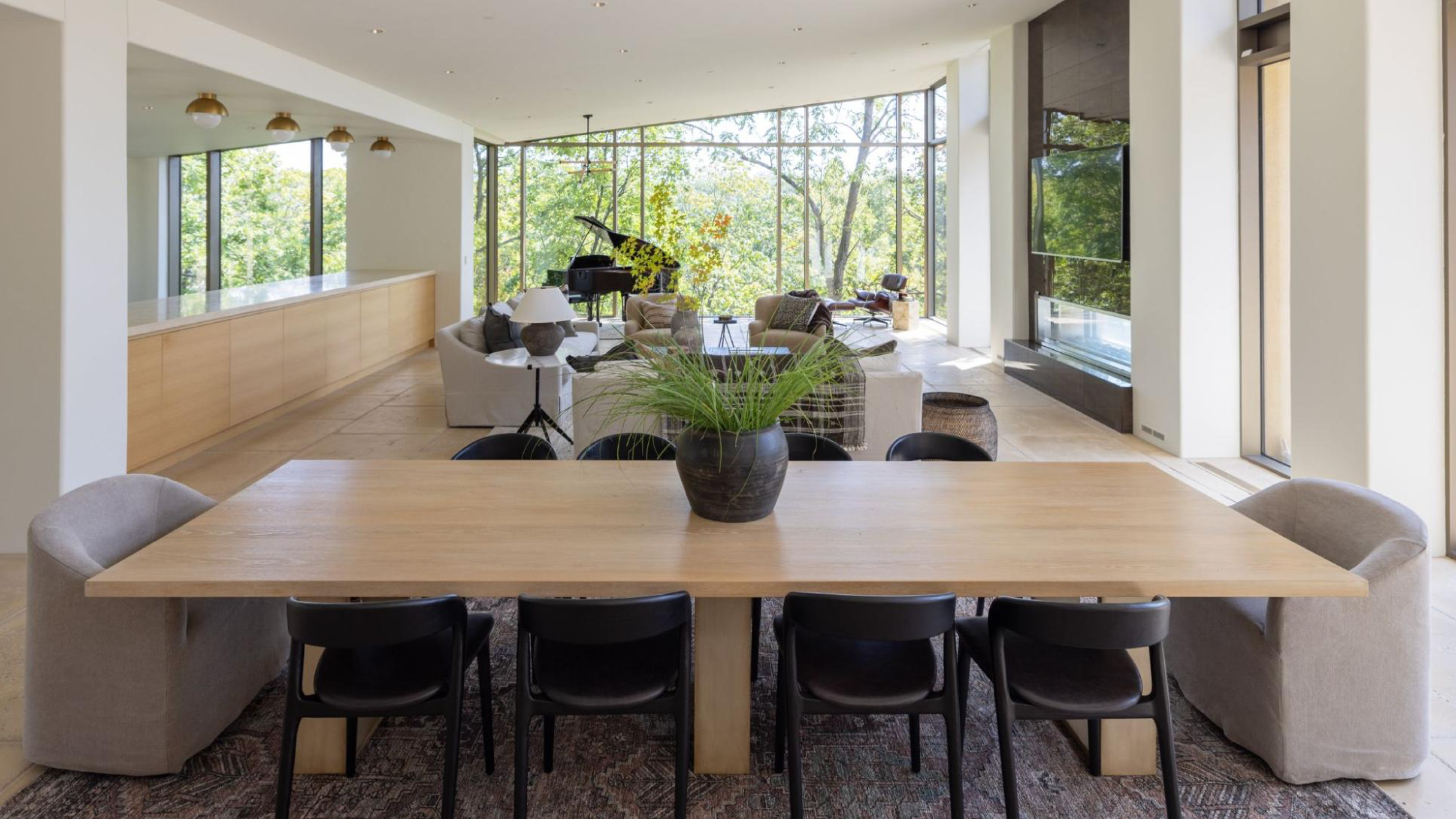
I usually start with either the dining table or the chairs, not both as a matching set. When every piece has the same finish, shape, and details, the room can start to feel flat. Mixing the chairs gives you another opportunity to bring in a different silhouette, texture, or material and add another layer to the room.
If you're looking at a matching dining set, ask yourself one question: do I love the table more, or the chairs? Keep the one you really love and choose something different for the other.
And if you already own the set, you don't need to replace everything. Start with the two chairs at the heads of the table. Changing just those two can give you the contrast you're missing while letting you keep the rest of what you already have.
This is also a really practical place to think about upholstery. If you love upholstered dining chairs but have young kids at the table every night, keep the side chairs in something easy to wipe down and use upholstery at the ends where the adults are more likely to sit. You get the softness and comfort of fabric without putting it on every chair.
If you want upholstery all the way around, look for performance fabric or a slipcovered chair with a cover that can be removed and washed. The point isn't to avoid fabric. It's to use it in a way that works for the people actually sitting at your table.
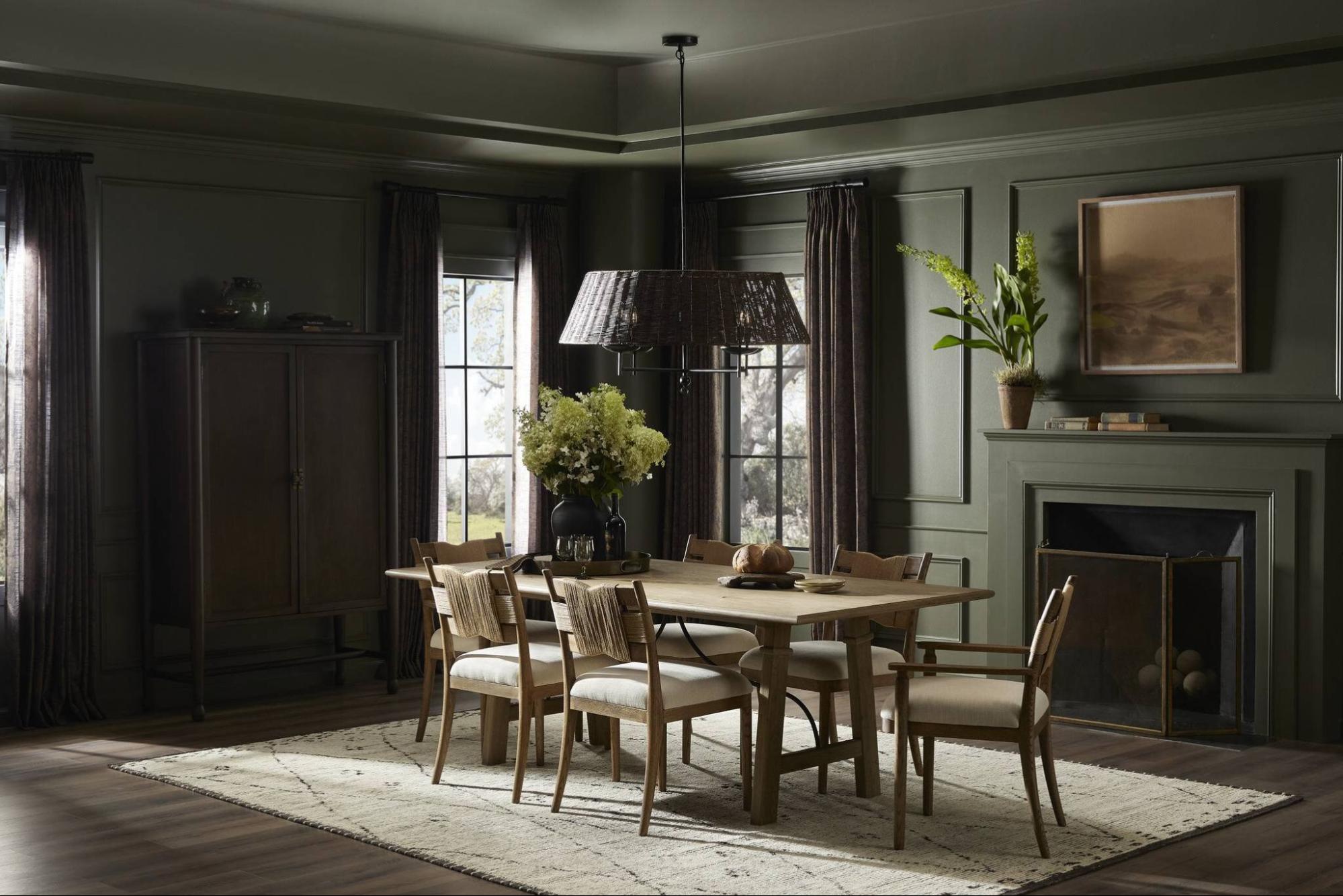
That's exactly how I approached the dining room at the Scout House. It's our only dining room, so it needed to feel casual enough for a Tuesday night but still polished and elevated for a dinner party.
That's exactly how I approached the dining room at the Scout House. It's our only dining room, so it needed to feel casual enough for a Tuesday night but still polished and elevated for a dinner party.
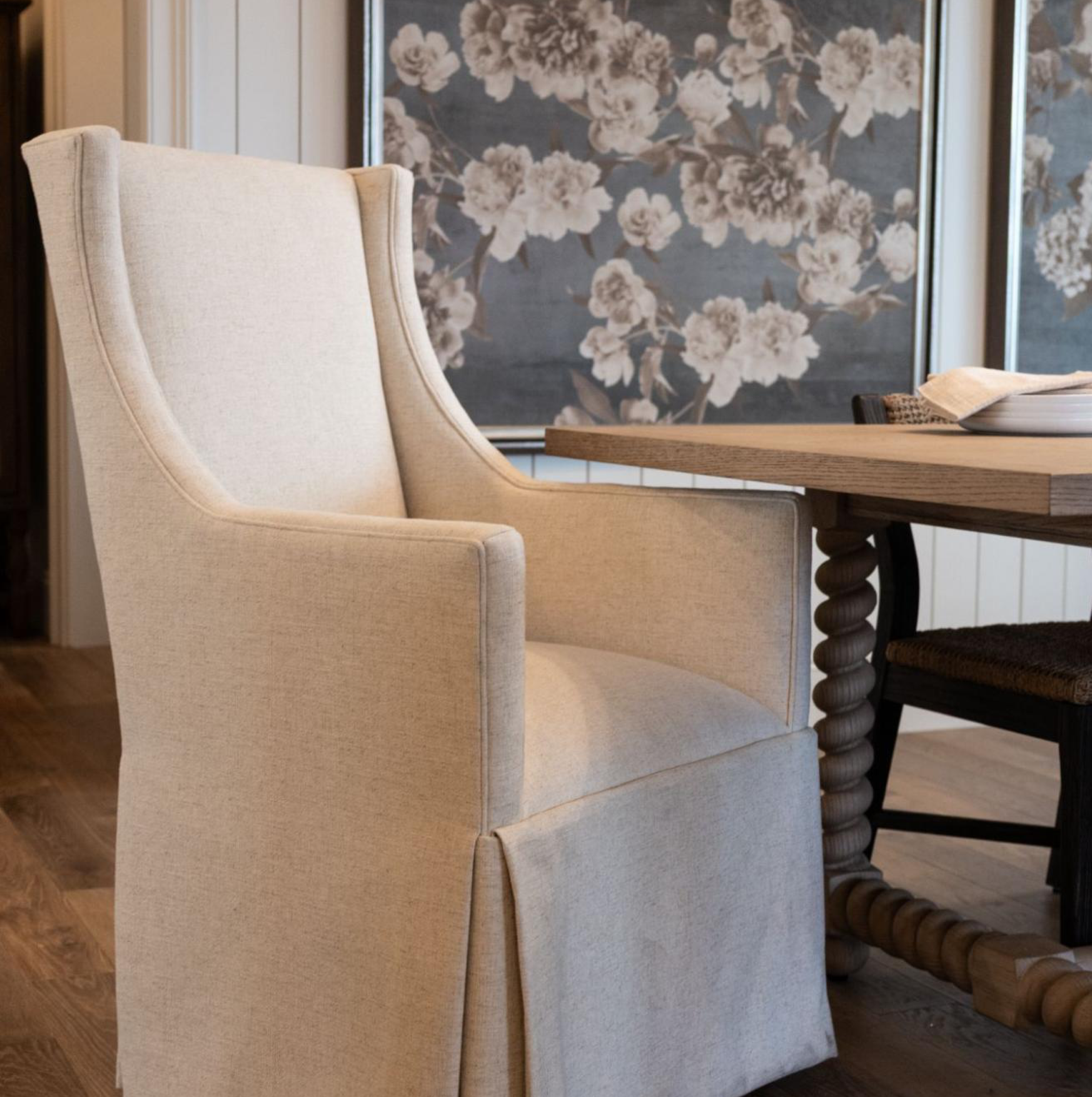
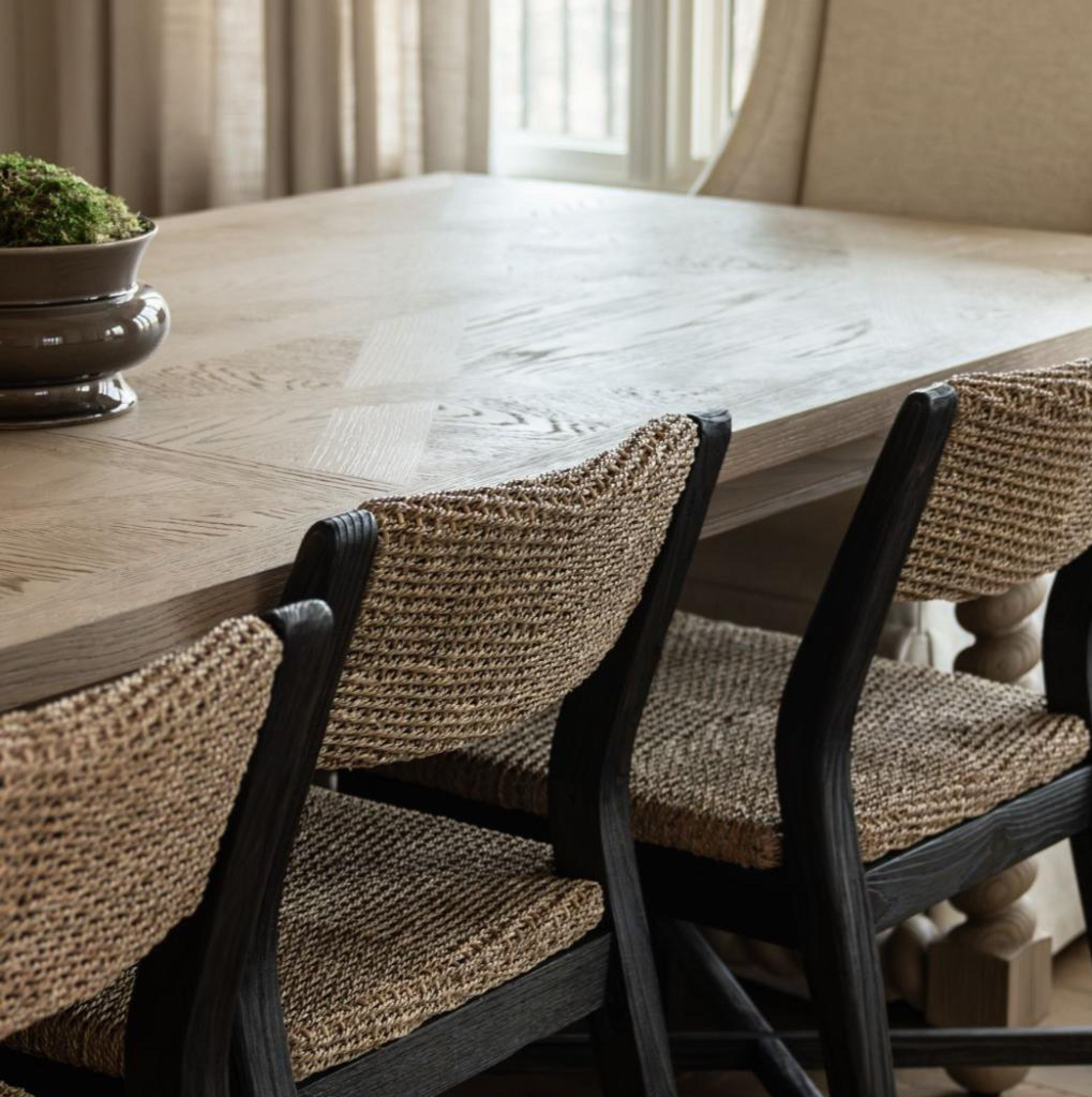
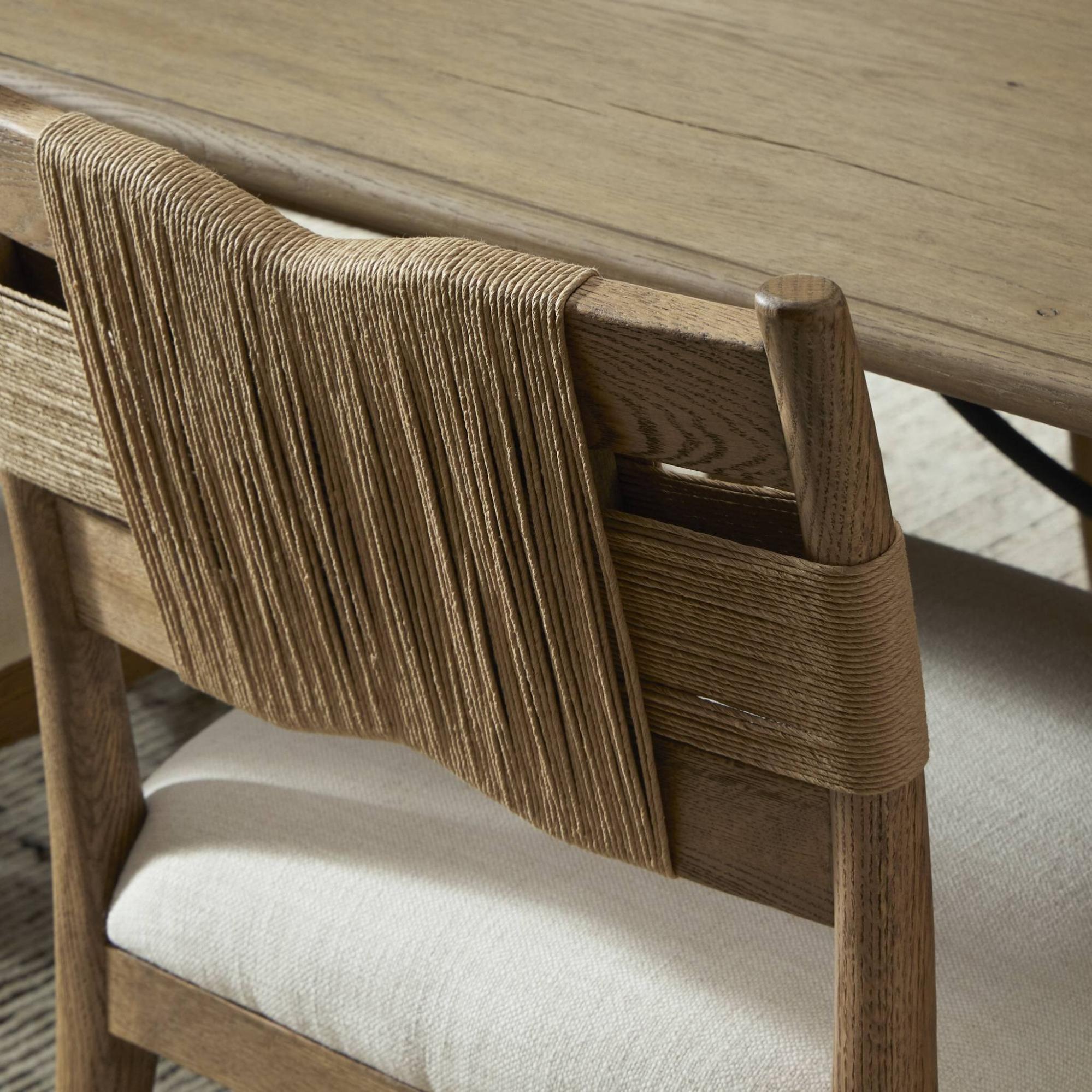
I chose Brooklyn armchairs for the ends. They're on casters, with high backs and substantial arms, and they're upholstered in performance fabric. Along the sides, I used lower-backed Carter seagrass chairs. That difference in height and silhouette gives the table more variation, while the woven texture keeps it from feeling too formal.
It’s the mix that makes the room work: different heights, silhouettes, and materials, with each chair chosen for how we actually use it. If you want to go deeper on how I approach mixing pieces throughout a room, I break down more of the process in our How to Mix Modern and Traditional Furniture blog.
What it takes to keep them clean
Performance fabric is much easier to clean than people expect. For many performance fabrics, a little dish soap and water is really all you need for everyday spills.
Mix about a quarter teaspoon of Dawn with a cup of water. Blot the spill first with a dry towel, then use a soft brush to work the solution into the stain, moving from the outside toward the center. Blot the area again, rinse with clean water to remove any remaining soap, and let it air dry.
Don’t skip the rinse. Soap residue left in the fabric can attract dirt over time, so you want to make sure you’ve removed it completely. If your chairs are upholstered in Crypton, they also make cleaning kits specifically for their fabrics that are nice to keep on hand.
Before you clean anything, though, check the manufacturer’s care instructions and the cleaning code on the chair. A W generally indicates a water-based cleaner, S calls for a solvent-based cleaner, WS allows either, and X means the fabric should be vacuumed rather than cleaned with water or solvent.
And then there’s the easiest thing you can do: vacuum your upholstered dining chairs regularly. Crumbs and dirt work their way into the weave and into the crease where the seat meets the back. A quick vacuum every couple of weeks helps keep that buildup from becoming part of the chair.
What is the best fabric for dining chairs?
A performance fabric, or a wipeable material like wood, cane, rattan or leather. Look for a rub count of at least 15,000 double rubs, which is the standard for heavy residential use. Which of the two is right depends on how old your kids are and how much you entertain.
How do you clean upholstered dining chairs?
Check the code on the tag under the seat first. For performance fabric, mix a quarter teaspoon of dish soap into a cup of water, blot the spill dry, work the solution from the outside of the stain inward with a soft brush, rinse thoroughly with clean water, and let it air dry.
Are upholstered dining chairs practical with kids?
Yes, in a performance fabric. If you would rather not think about it at all, put wipeable chairs on the sides where the kids sit and upholstered armchairs at the two ends. You get the look where the adults are and the easy clean-up everywhere else.
Should your dining chairs match your table?
No. A table and chairs bought as a matched set gives you one silhouette and one finish, and the room falls flat. Pick whichever half you love more and build the other half around it. A wood table with black chairs is the easiest place to start.
What is the right seat height for a dining chair?
Between 17 and 19 inches for a standard 30 inch table, leaving 10 to 12 inches between the seat and the underside of the tabletop. If the chair has arms, check the arm against the apron under the table rather than the tabletop, or it will not slide all the way under.
Comments
Comment or question? Leave it below.
Jesse put True Caliber refrigeration in the Scout House and color matched the cabinets to it. Why she showed the appliance instead of hiding it.
keep reading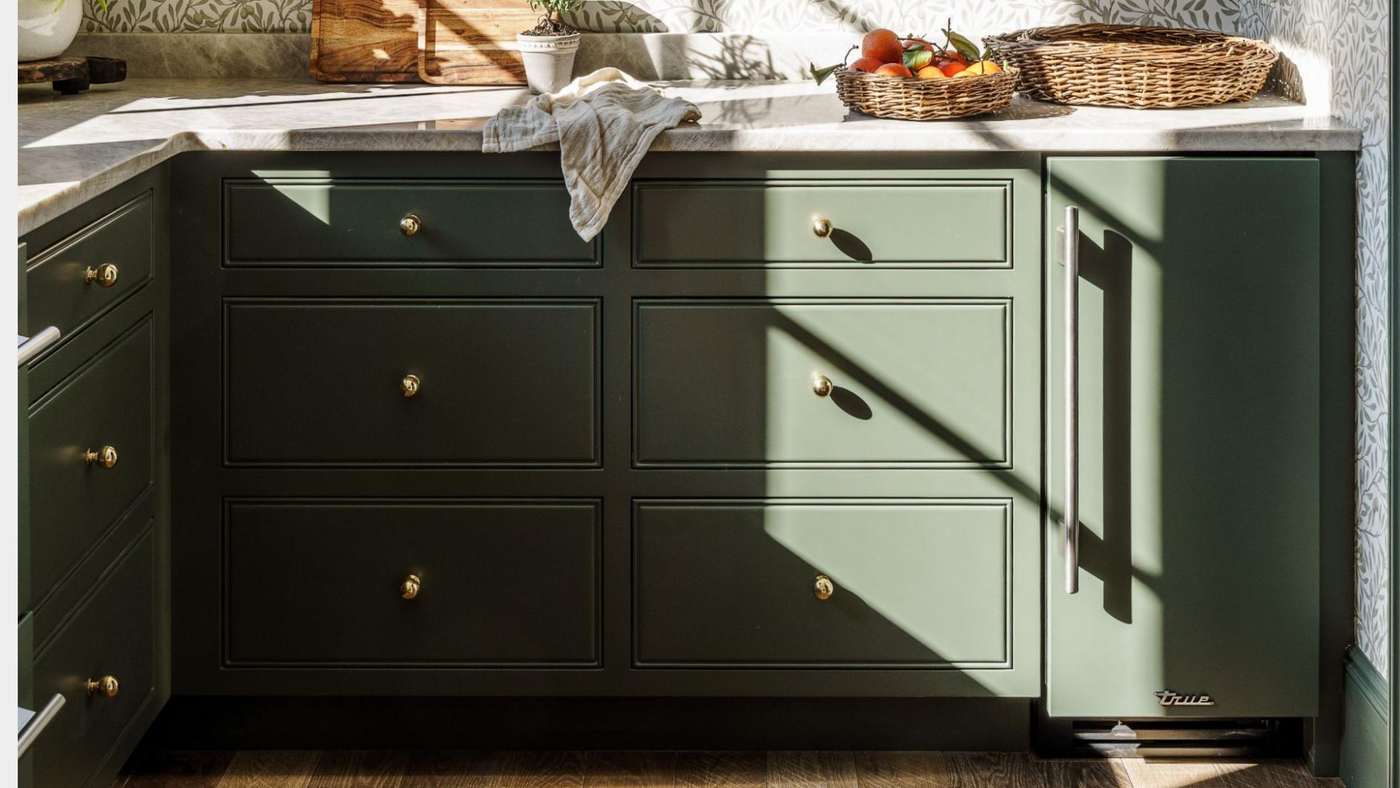
Choosing a dining chair starts with the people sitting in it. Here’s how I think about fabric, comfort, and everyday life before deciding what belongs around the table.
keep readingSolid or engineered is a subfloor question, not a taste question. Jesse on the Scout House floors, and the 5 inch plank width she would pick again.
keep reading
Designer Jennifer Hunter built a Greek Revival in Connecticut and gave every room a starting point. Inside her pattern-filled Litchfield County home.
keep reading
Gabby furniture, seen in six rooms of the Scout House. Jesse breaks down every piece she chose, what the quality buys you, and where to start.
keep reading
Jesse put True Caliber refrigeration in the Scout House and color matched the cabinets to it. Why she showed the appliance instead of hiding it.
keep readingChoosing a dining chair starts with the people sitting in it. Here’s how I think about fabric, comfort, and everyday life before deciding what belongs around the table.
keep reading


