

Jesse put True Caliber refrigeration in the Scout House and color matched the cabinets to it. Why she showed the appliance instead of hiding it.
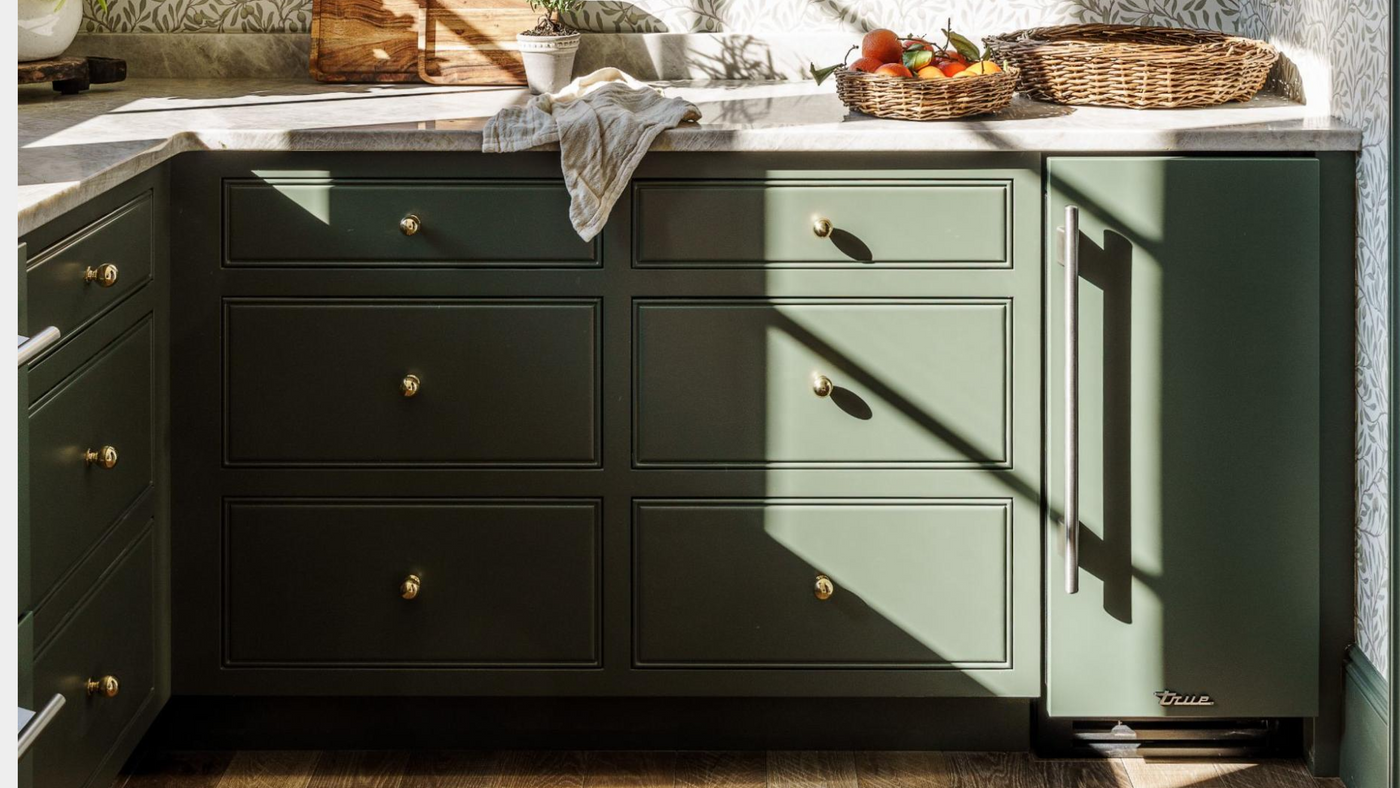
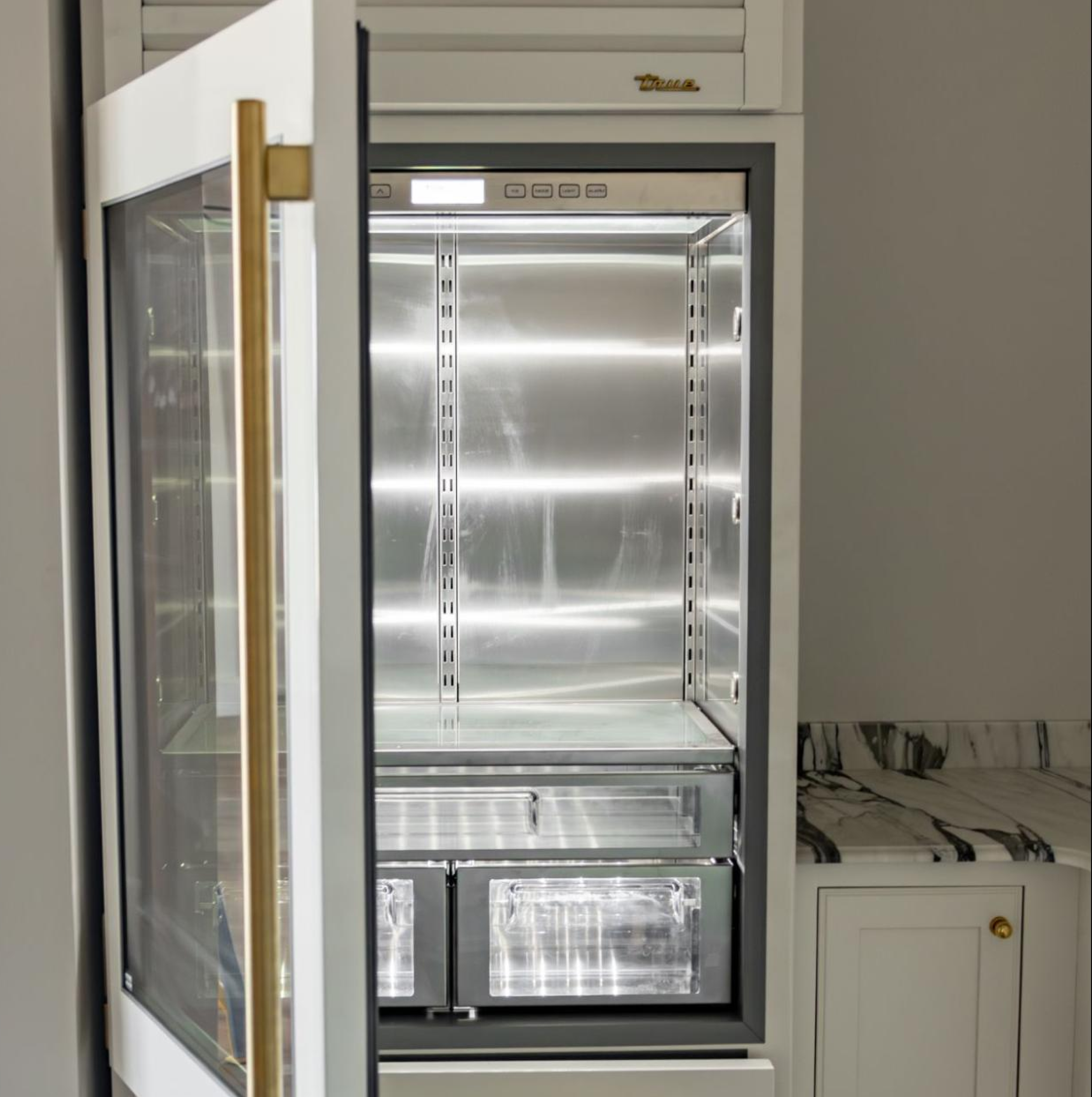
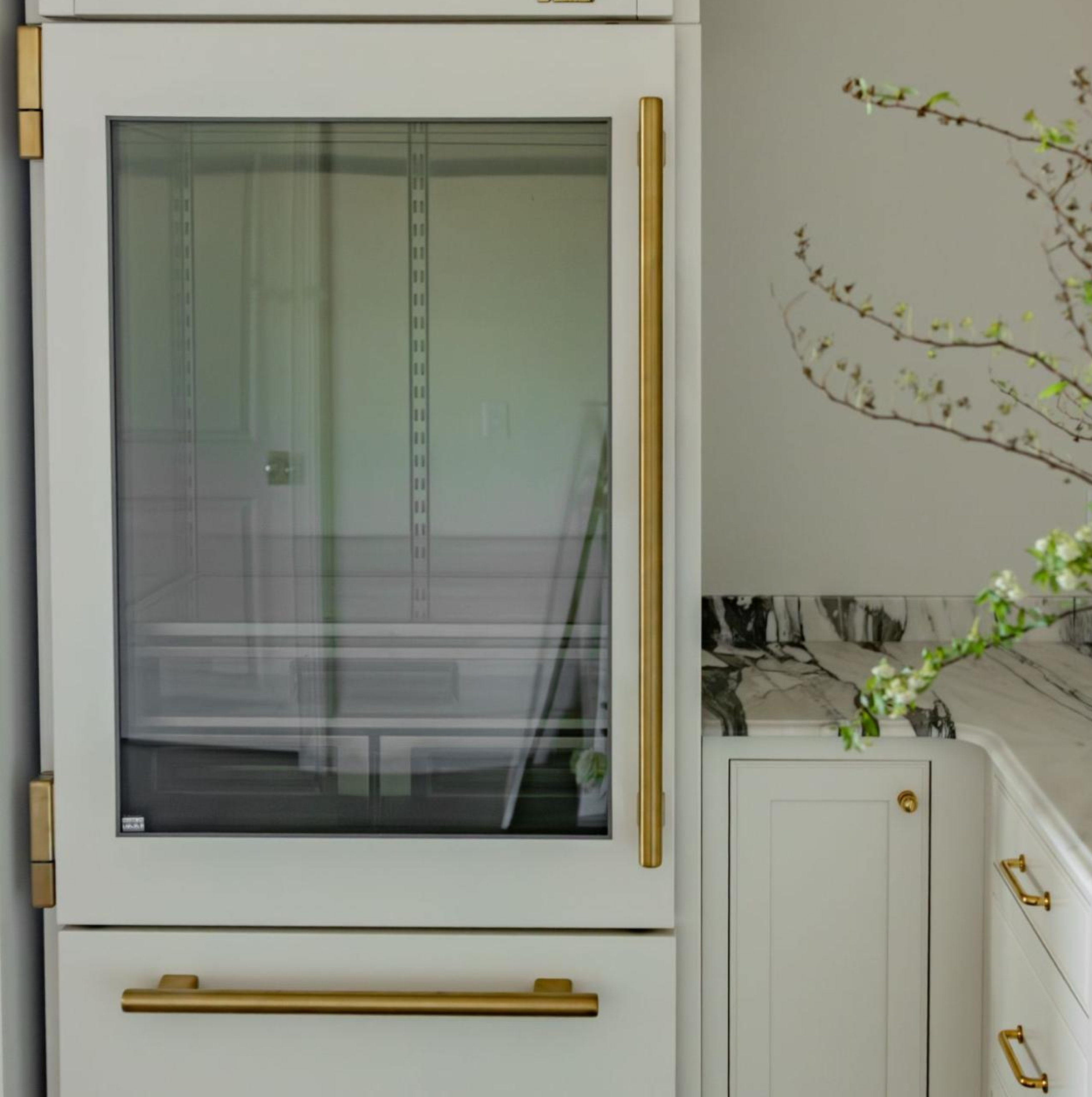
True Caliber refrigerators, which you may know as True Residential, is a home appliance built by a company that has made commercial refrigeration since 1945. I used them throughout the Scout House kitchen and the scullery, in antique white and olive, and had the cabinetry color matched to both. I did not hide a single appliance, but rather let them guide me into the color palette for their respective rooms.
For most of my career, a refrigerator was something you managed. Now it is something you can actually design with, and that changes the order you make decisions in.
Why a refrigeration company that started in a garage ended up in the Scout House
I chose True because refrigeration is the only thing they have ever done. Bob Trulaske started building commercial units out of a St. Louis garage in 1945, and the company did not touch residential until 2008.
That order matters to me more than any feature list. Six decades of restaurants and bars and grocery coolers came first, and the home line grew out of that, not the other way around. Everything is still made in Missouri.
For years you either showed a stainless box or hid it behind cabinet panels
Until recently there were two options, and both of them were really about managing an appliance you did not want to look at.
Panel ready and integrated both mean the appliance takes a cabinet front, so the refrigerator reads as furniture and the kitchen reads as one uninterrupted run of cabinetry. It is beautiful, and it is the route we have gone for years. It is also the more expensive one, and it commits you to new cabinets, because the panels have to be built to match a cabinet program that does not exist yet.
Which meant that if you were not gutting the kitchen, the old answer was that you settle for stainless.
What changed is that there is a third option now, which is an appliance built to be seen. For years the only question worth asking was how do I make this disappear. Now you get to ask what you actually want it to look like, and that is a much better question to be answering before anyone draws a cabinet.
 |  |
Antique white in the kitchen, olive in the scullery
You can do one of two things with an appliance. Blend it into the cabinets, or let it stand out against them. In the Scout House I blended, twice.
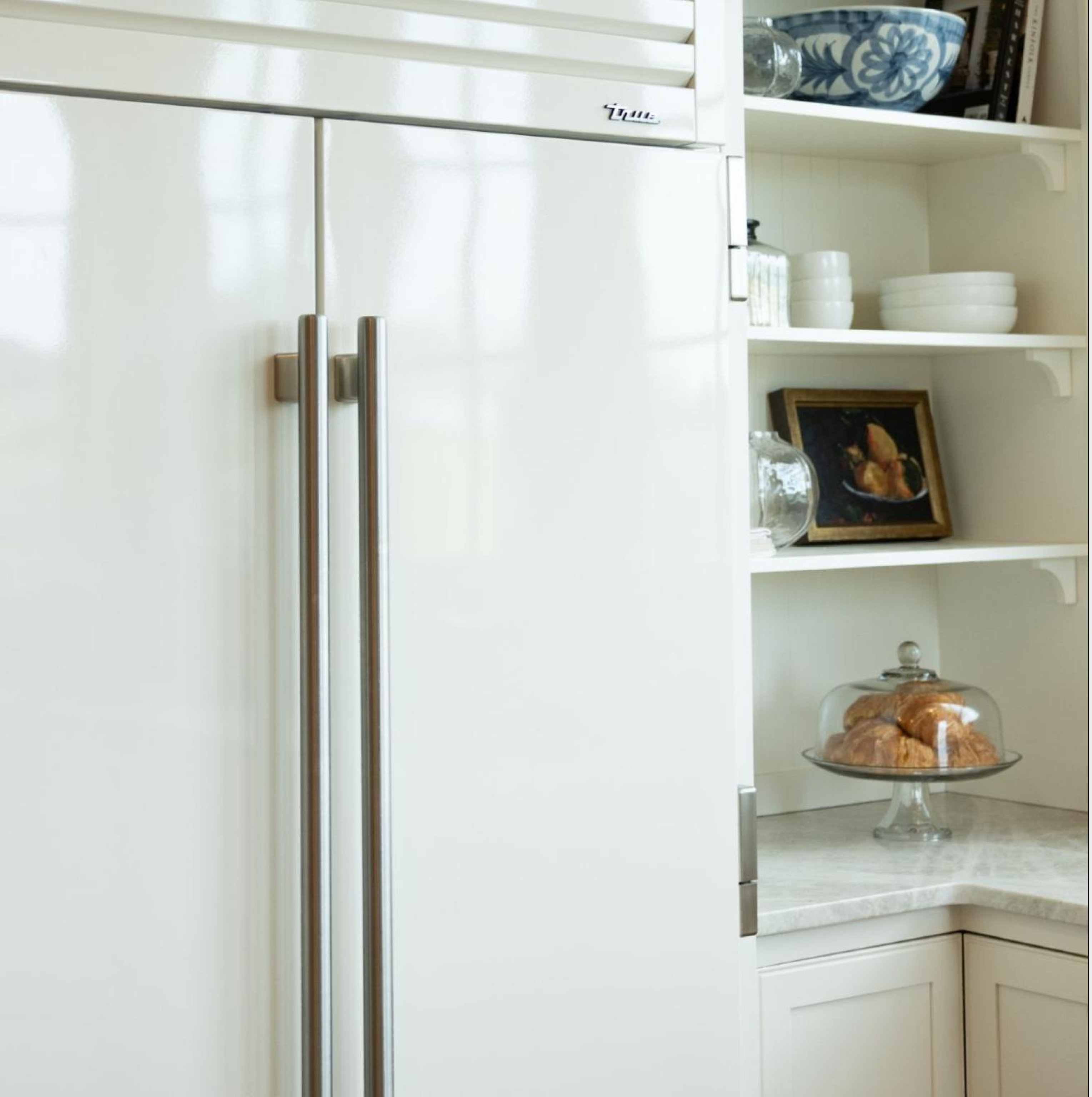
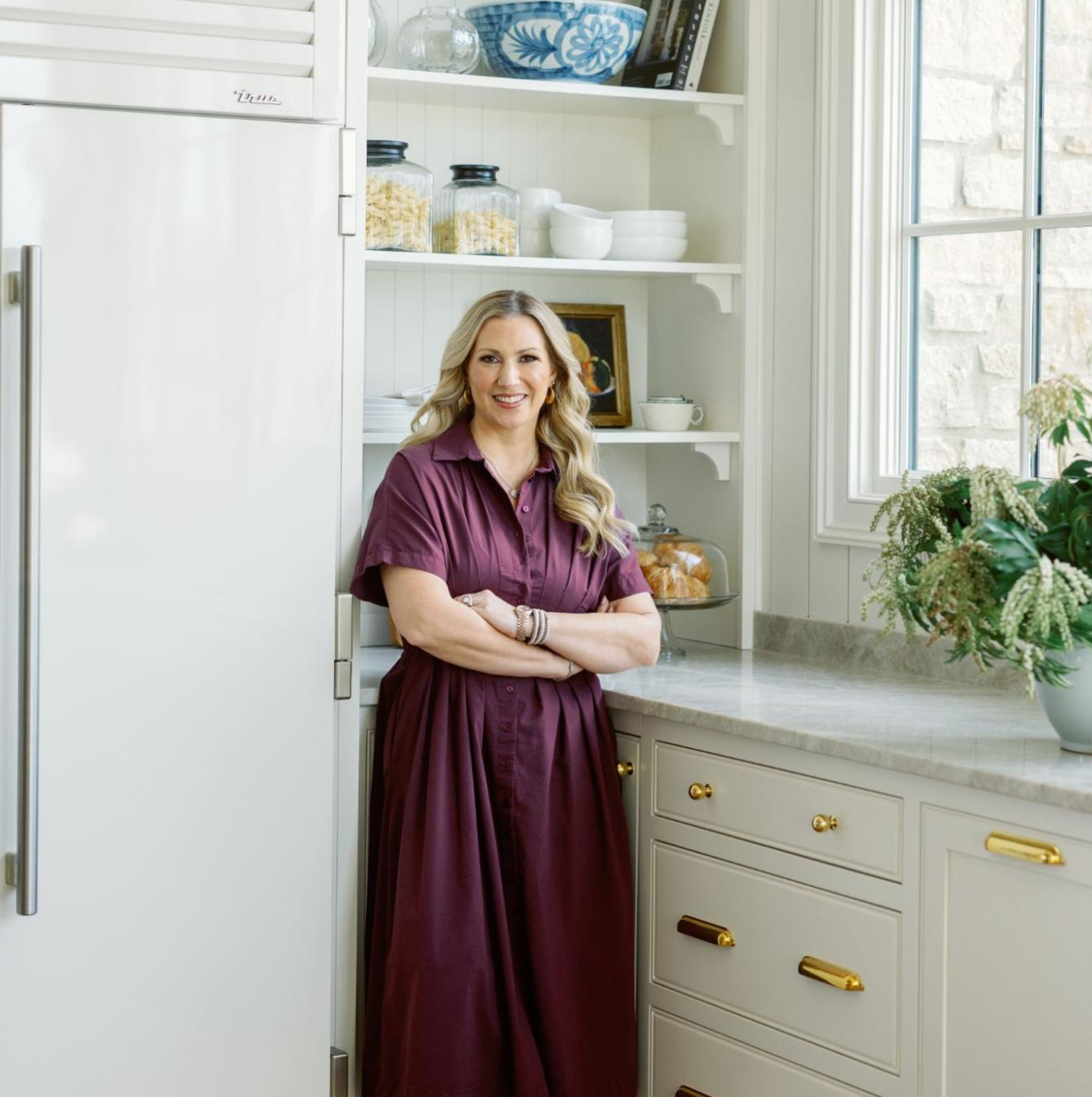
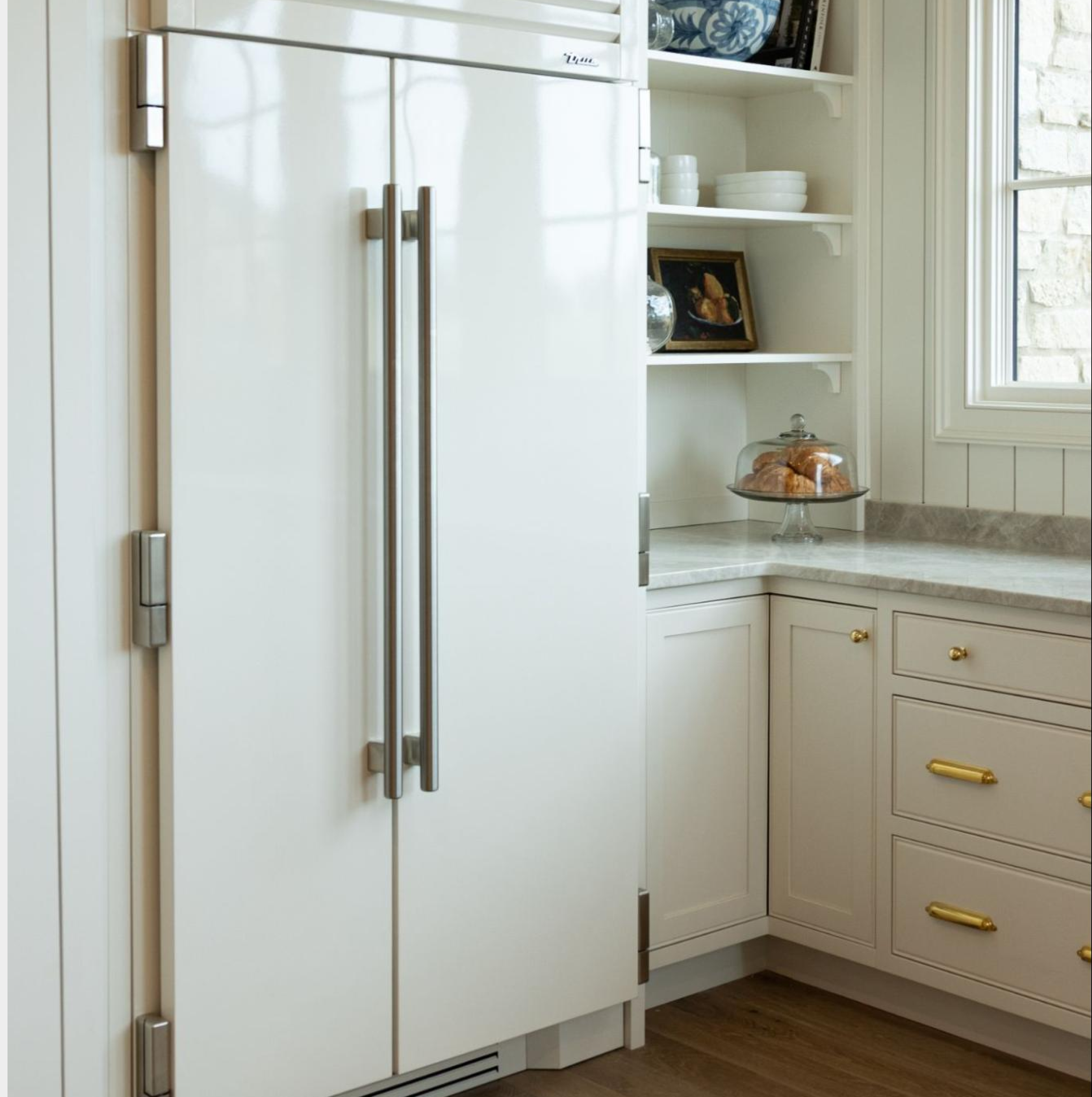
The kitchen cabinetry is a creamy white, and that was deliberate. Keeping the cabinetry white gives the eye a relaxed backdrop, and a stainless box in the middle of that wall would have been a cold, hard interruption. So the refrigerator went antique white, the cabinets were matched to it, and the whole wall reads as one surface.
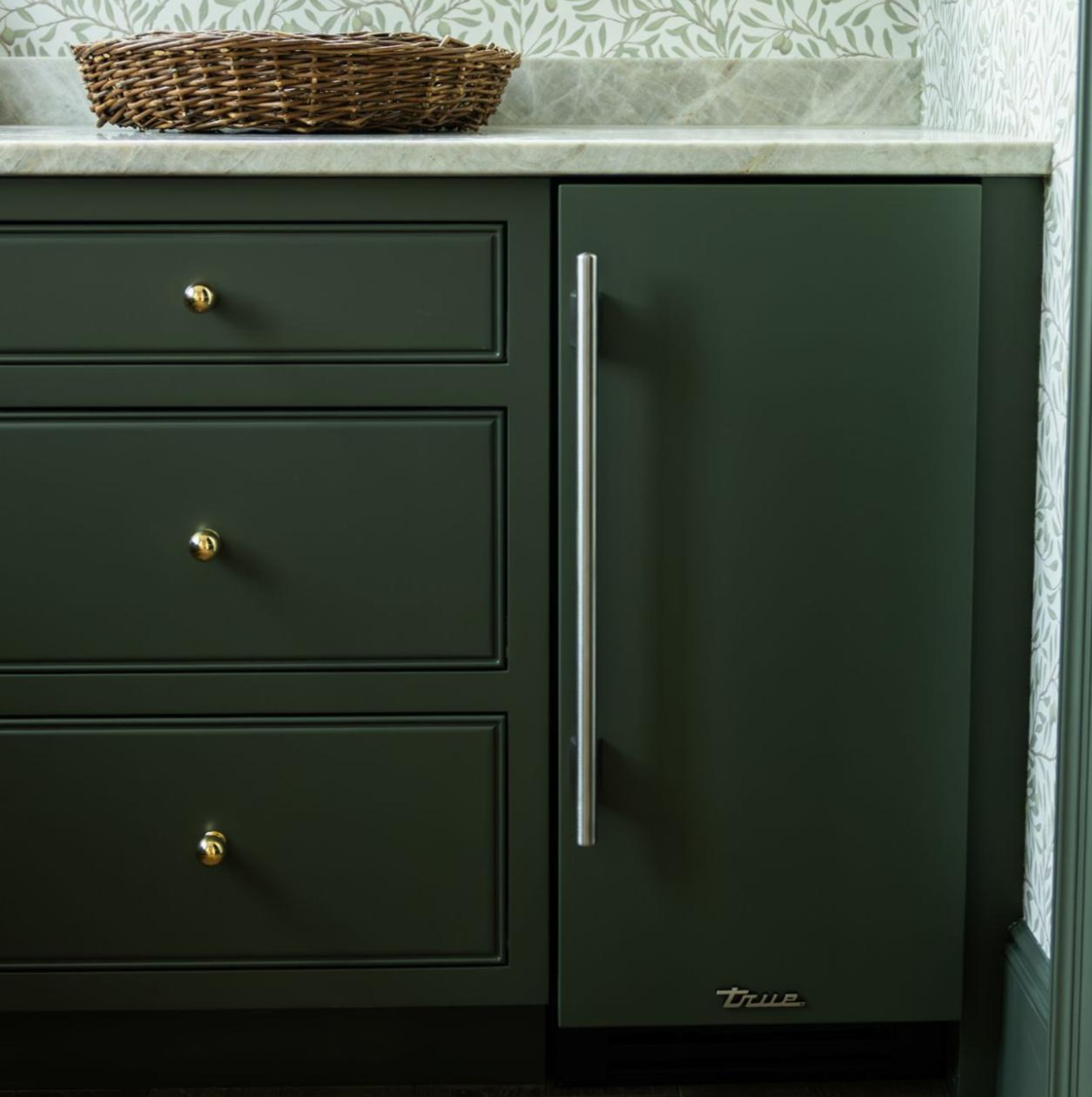
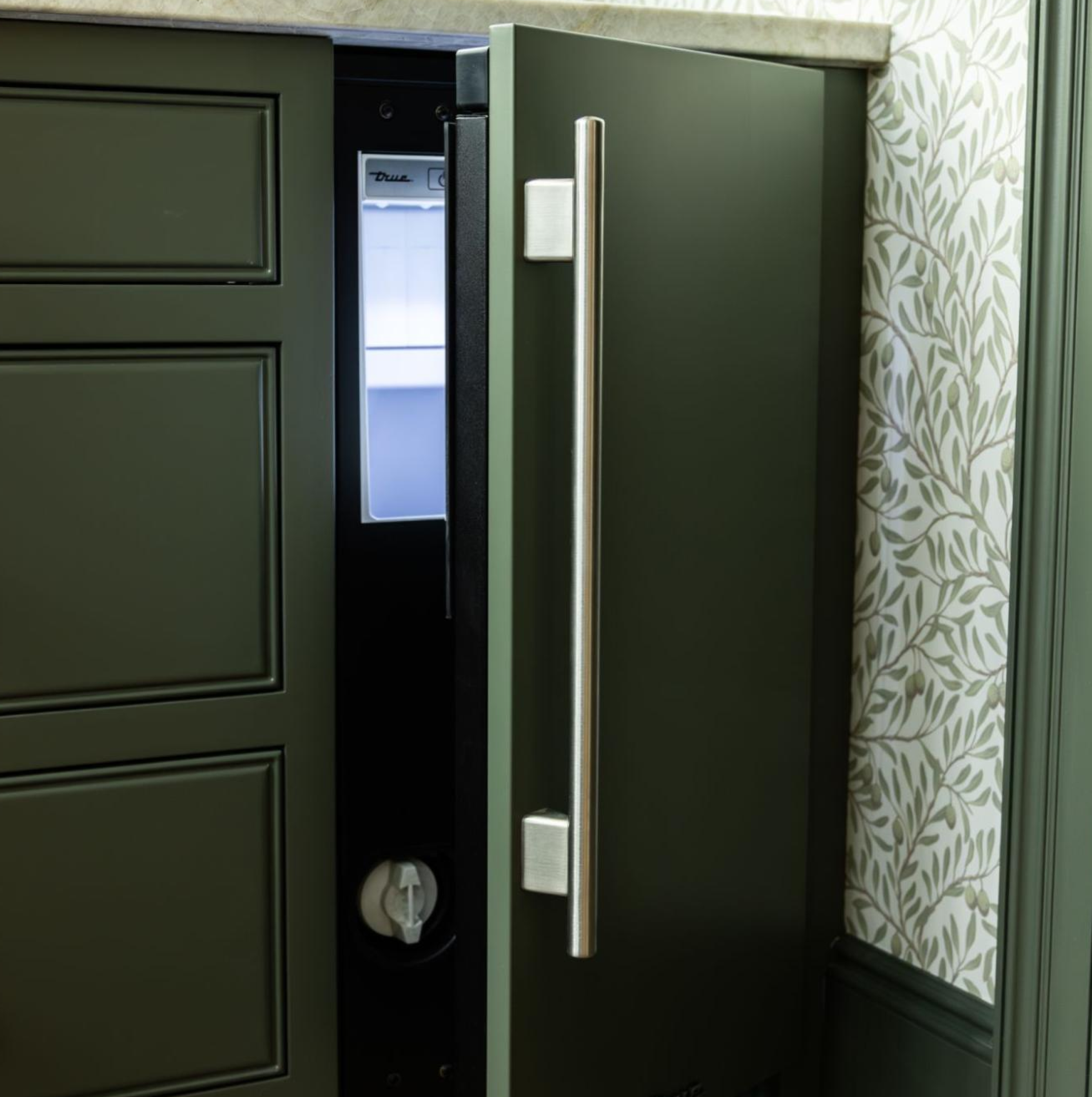
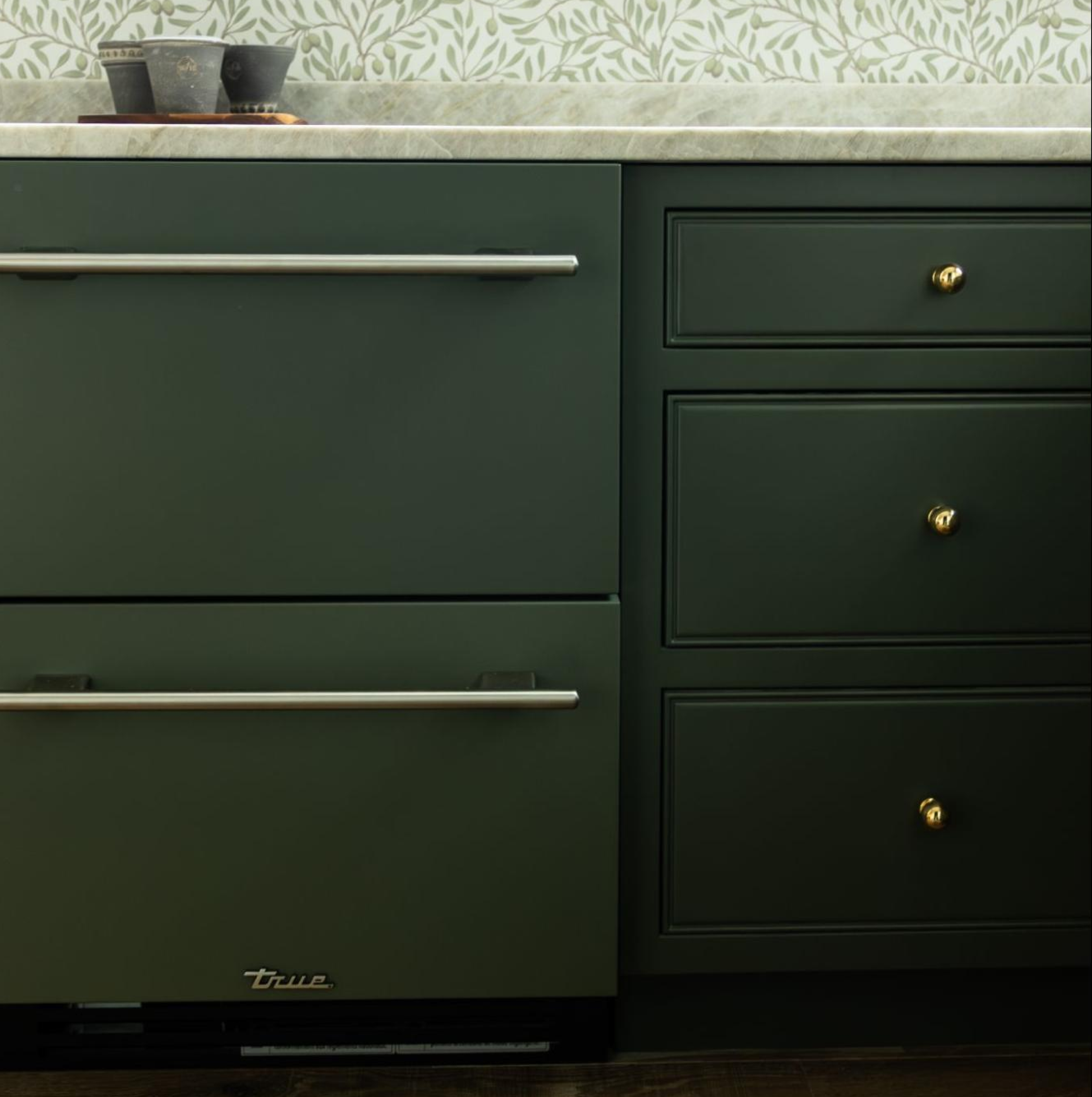
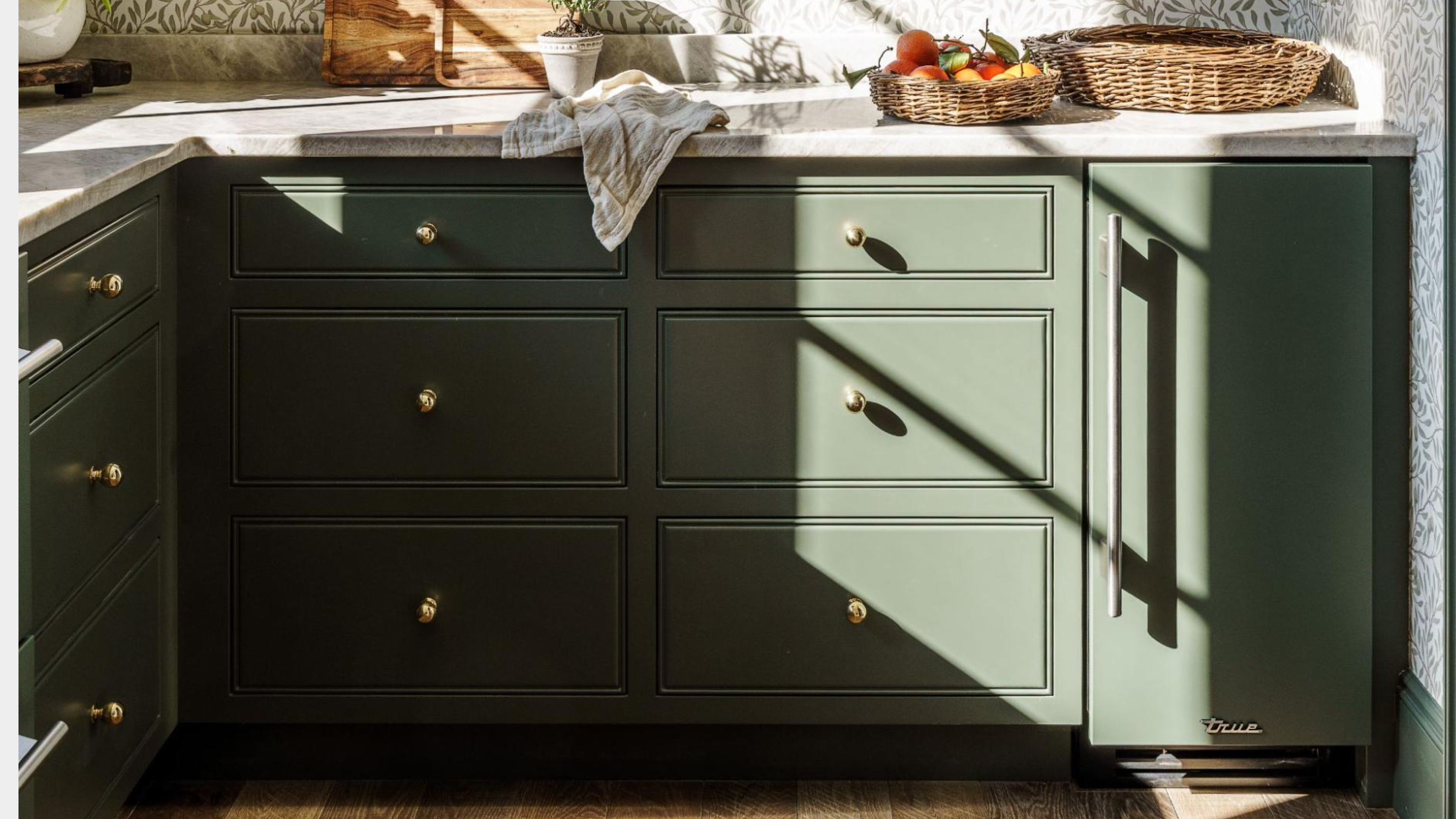
In the scullery I did the same thing in olive, cabinets matched to the appliance again.
 |  |
Here is the practical order, because people usually run it backwards. Start inside the manufacturer's existing palette and work out from there. Find the stocked color you can live with, then match the cabinets to it. Custom color matching exists and it is genuinely fun, but starting from a paint chip and asking an appliance to chase it is the slower, more expensive version of the same result.
My instinct is almost always to blend. I want the appliance to be interesting for its shape and its finish, not because it is shouting. But these are good enough as a contrasting moment that I would not talk anyone out of it. If you want one bold thing in your kitchen, this is a smart place to put it, because it is a piece you were buying anyway. You are not adding a splurge. You are choosing a color on a splurge you are already committed to.
Here is what actually went in.
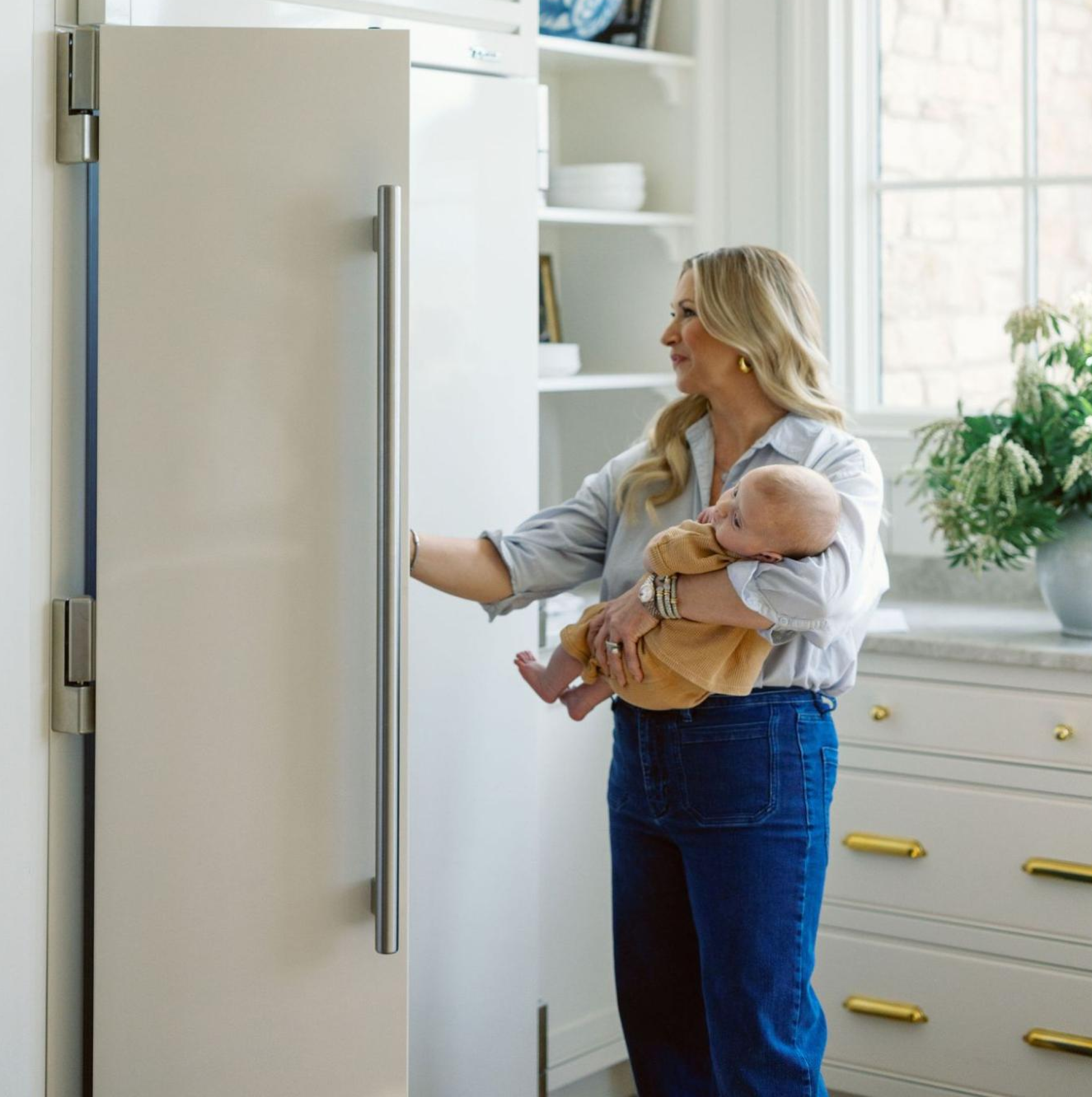
The main kitchen. A 42-inch True side by side in antique white, with the cabinetry color matched to it. It does not sit in the cooking run, and that was on purpose. This kitchen works in three zones. The first is the island, the hood and a dishwasher, which is where the cooking happens. The refrigerator lives in the second one, a side kitchen along the windows with its own sink and its own dishwasher. It is still in the room, just off to the side, so somebody can come in for a snack without standing in the middle of dinner.
 |  |
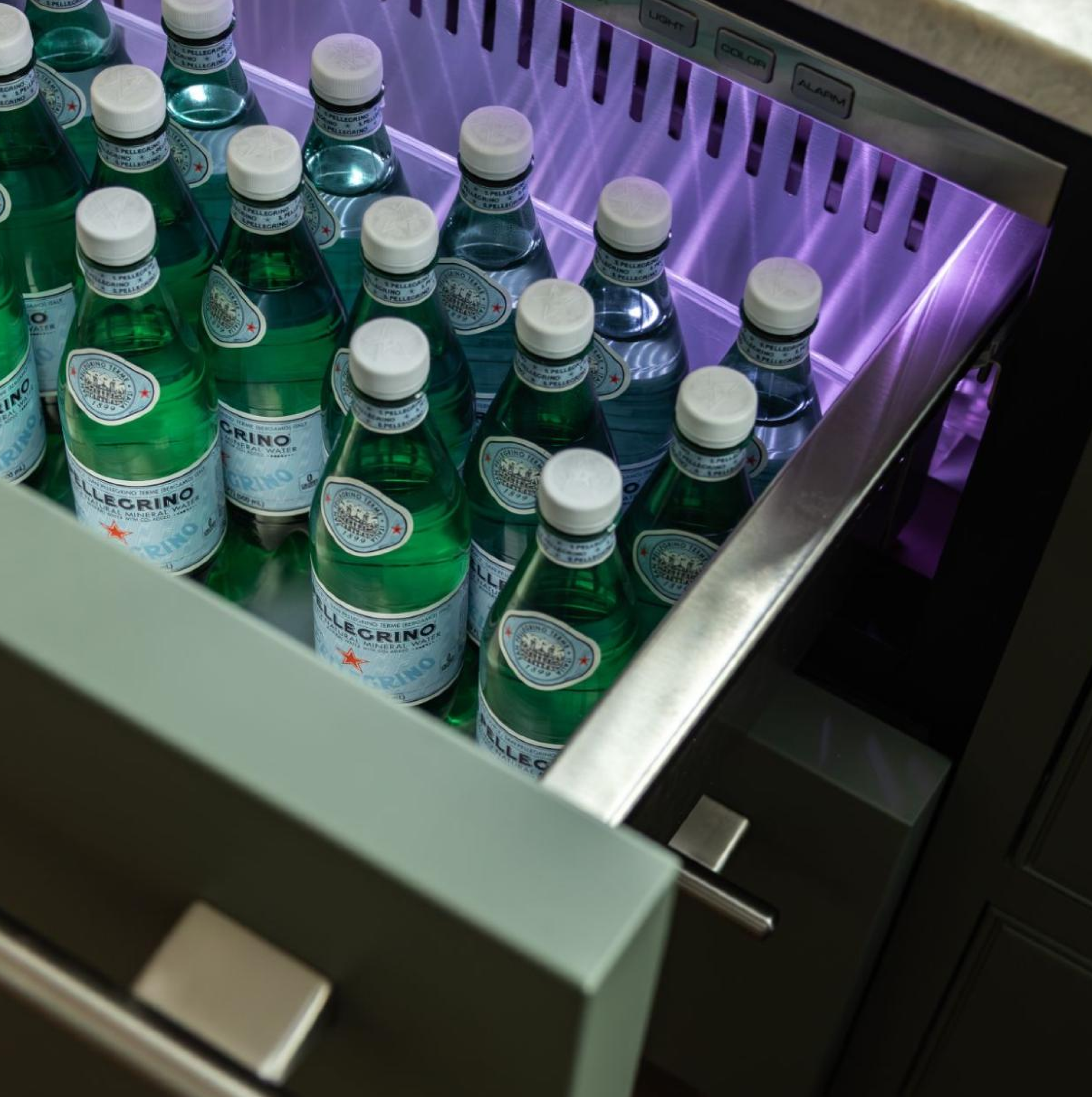
The scullery. Two True pieces back here, both olive, both with the cabinets color matched to them so the whole small room reads as one thing. A stack of two 24-inch refrigerator drawers, and an undercounter ice maker beside them. The microwave is back here too, deliberately, so it is not out on the kitchen counter. Base cabinets only, because the windows were worth more to me than the upper storage. This is the zone where the drinks and the grab-and-go things live, and it opens straight into the walk-in pantry, which has its own door to the garage so a Costco run never crosses the kitchen at all.
 |  |
 |
Pick the refrigerator before the cabinets get designed
Pick the refrigerator first. Before the cabinets are designed, before anything gets drawn. The cabinets get built around the appliance, and if you run that order backwards you end up asking a finished cabinet program to make room for something it was never sized for.
Then think about how you actually live, not about how a rendering looks. A side by side puts a bit of freezer and a bit of refrigerator next to each other in one opening, which is what most people picture when they picture a nice fridge. A column is a single full-height unit, refrigerator or freezer, that you combine however you want.
The columns are where it gets interesting, because some people need far more freezer than a side by side gives them and some need far less. Some want the freezer down at the bottom where the kids can reach it. Some want two refrigerators and two freezer drawers instead of a split at all, because the refrigerator is what they open all day and the freezer is really just where the ice cream lives.
You can build any of that. You just have to decide it while the drawings are still open.
The refrigerator everyone said was too far from the range
Plenty of people looked at the Scout House floor plan and told me the refrigerator was too far from the range. It is not next to the sink and the cooktop, and everyone wanted to talk about the work triangle.
It still forms a triangle. It is just not the tight one people picture. And I think we all overthink how far we are going to walk to the fridge.
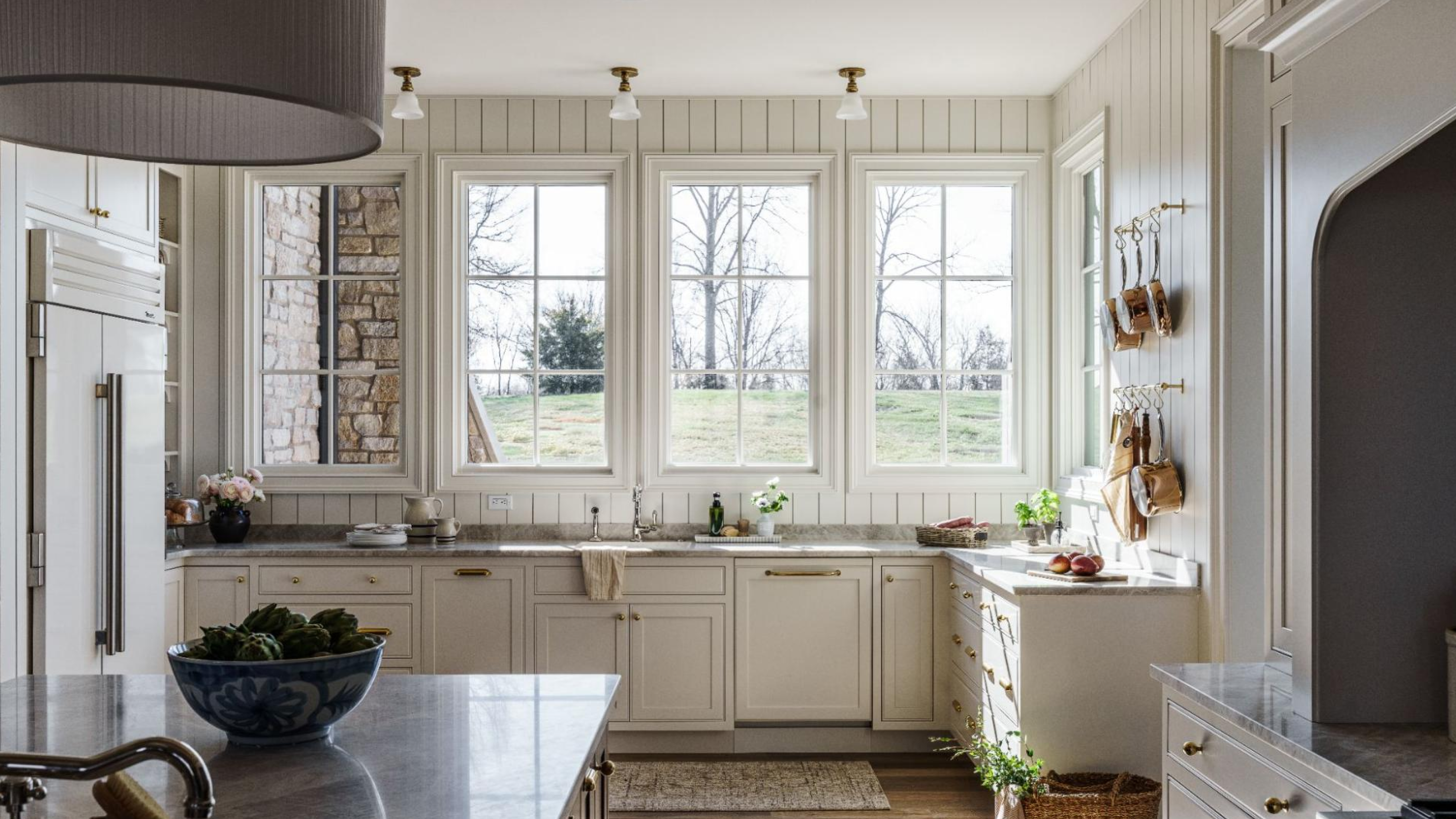 |
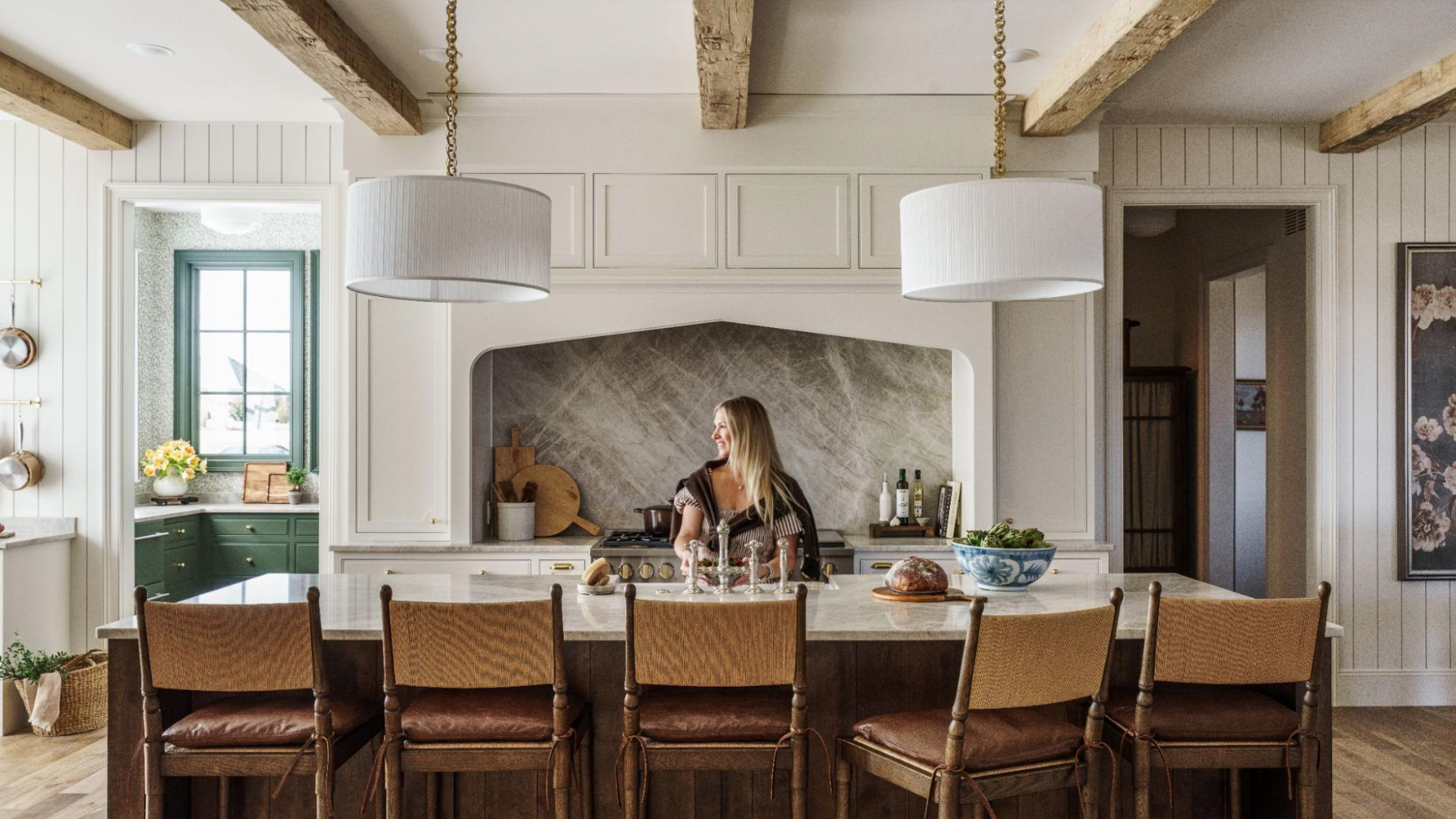
Here is what that distance bought. The main kitchen holds the range, with a sink and a dishwasher in the island, so cooking happens there. The second kitchen sits along a wall of windows with its own sink and its own dishwasher, and that is where the refrigerator lives. Somebody can come in and get a snack without standing in the middle of dinner. The scullery behind it holds the refrigerator drawers and the ice maker, so kids can grab a drink and never enter the cooking zone at all.
What matters in a kitchen that gets opened a hundred times a day is not step count. It is whether everything has a place. A place where the drinks live. A place where the leftovers actually fit. A place where everything you are prepping for a party goes in at the same time and you are not playing Tetris the night before.
That is also the reason the dining table sits in this room rather than in a separate dining room, and why the island seating had to be comfortable enough to sit at for an hour. If you are working out that side of the kitchen, we wrote up how we pick counter stools separately.
 |
Why the refrigerator was the piece I cared most about getting right
It is the appliance everyone in the house touches more than any other. Not the range, not the dishwasher. The refrigerator gets opened a hundred times a day by every person who lives there, and for most of the time I have been designing kitchens it has also been the piece we worked hardest to hide.
That is the thing I wanted to undo here. There is a tier of the appliance world that is frankly insane money, and True is not that. It is expensive and it is achievable, and what it buys is a piece built to be looked at rather than managed. That mattered to me more than any single feature, because it meant the appliance could carry the room instead of apologizing for being in it.
It also means the decision does not cascade. The integrated route asks you to commit to new cabinetry, because the panels have to be built to match a program that does not exist yet. This one slides in and is beautiful on its own terms, so nothing else in the kitchen has to change to accommodate it. The thing you touch the most is allowed to be beautiful, and that is why it got the attention it did.
Everything else in that kitchen, down to the counter stools and the pieces that sit out on the counter, got chosen after the appliance was settled. That is the order I would keep. If you want to see how the rest of the house came together around it, the full Scout House tour starts at the front door.
It is the appliance everyone in the house touches more than any other. Not the range, not the dishwasher. The refrigerator gets opened a hundred times a day by every person who lives there, and for most of the time I have been designing kitchens it has also been the piece we worked hardest to hide.
That is the thing I wanted to undo here. There is a tier of the appliance world that is frankly insane money, and True is not that. It is expensive and it is achievable, and what it buys is a piece built to be looked at rather than managed. That mattered to me more than any single feature, because it meant the appliance could carry the room instead of apologizing for being in it.
 |  |
It also means the decision does not cascade. The integrated route asks you to commit to new cabinetry, because the panels have to be built to match a program that does not exist yet. This one slides in and is beautiful on its own terms, so nothing else in the kitchen has to change to accommodate it. The thing you touch the most is allowed to be beautiful, and that is why it got the attention it did.n refrigerators so expensive?
You are paying for depth, integration and build. A built-in sits flush with your counters instead of standing proud of them, which means tighter tolerances and a cabinet opening designed around the appliance. Add construction built to commercial standards and a finish meant to be seen, and the cost lands well above a freestanding box.
Are True Caliber and True Residential the same brand?
Yes. True Residential is the home line of True Manufacturing, which has built commercial refrigeration since 1945. The company now goes by True Caliber, after joining with Caliber grills. Same refrigeration, same Missouri factories, new name. Plenty of dealer listings still say True Residential, so you will see both.
How much does a True Caliber refrigerator cost?
It sits in the upper tier of home refrigeration without reaching the very top of the market. Price moves with size, door style, color and hardware finish, and a custom color costs more than a stocked one. Ask a dealer to quote the exact configuration rather than a starting price.
Can you color match a refrigerator to your cabinets?
Yes, and it works better in the other direction. Start from a color the manufacturer already stocks, then have the cabinets matched to it. True Caliber stocks a range that includes antique white and olive, and will custom match a color you bring them, but a stocked color is faster and cheaper.
Where are True refrigerators made?
Missouri. True has built refrigeration there since Bob Trulaske started the company in a St. Louis garage in 1945, and it still manufactures components and finished units in the state. The home line launched in 2008 and comes out of the same operation as the commercial equipment.
Comments
Comment or question? Leave it below.
Diameter, clearance, and the base you choose decide how many people actually fit around a round table. Here are the numbers our designers use, and the tables we'd recommend to every client.
keep reading
Jesse put True Caliber refrigeration in the Scout House and color matched the cabinets to it. Why she showed the appliance instead of hiding it.
keep readingYou can put a clean-lined sofa next to your grandmother's carved chest. Here is how I actually do it, including what to do about the matching set that is already sitting in your bedroom.
keep reading
The kitchen is divided into three working zones, with the dining table right in the middle and the scullery at the end intentionally left open. Nothing is closed off from the rest of the space. Here’s the thinking behind each of those decisions.
keep reading
Three completely different purchases go by the same name. Here's how I sort them, and what I'd buy for each.
keep reading
Diameter, clearance, and the base you choose decide how many people actually fit around a round table. Here are the numbers our designers use, and the tables we'd recommend to every client.
keep readingJesse put True Caliber refrigeration in the Scout House and color matched the cabinets to it. Why she showed the appliance instead of hiding it.
keep reading


