

You can put a clean-lined sofa next to your grandmother's carved chest. Here is how I actually do it, including what to do about the matching set that is already sitting in your bedroom.
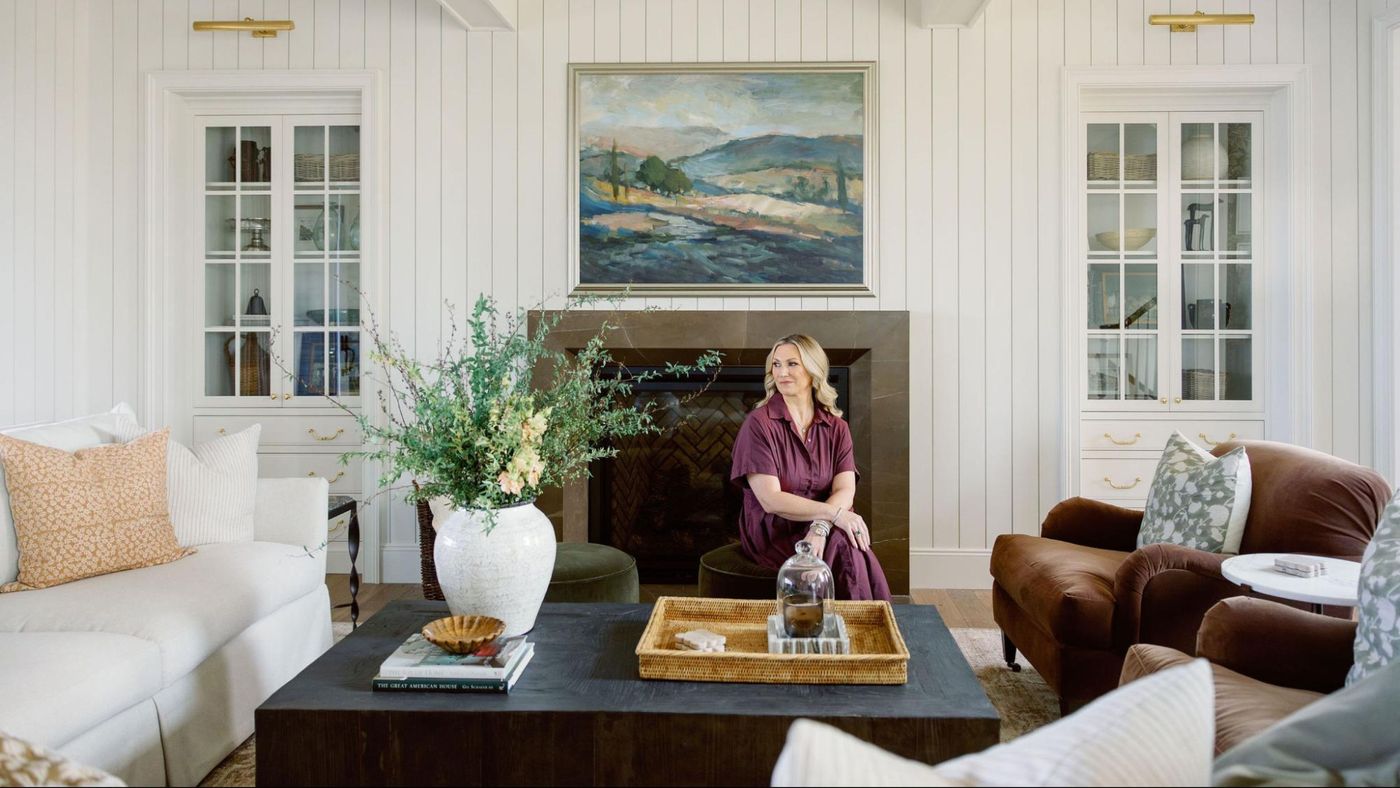
Yes, you can mix modern and traditional furniture, and most of the rooms you have saved already are a mix. One piece starts the room. Everything else either supports it or gently argues with it. Break up the matching sets, repeat two or three wood tones, and vary your lines.
Why mixing beats picking a lane
My grandmother lived on a quarter horse farm, and her house was not a farmhouse. There were the hard-working rooms where you came in off the farm, and then there were the formal rooms with floral upholstery on everything. I have a photograph of her on a horse, and another of her holding my mom in a beautiful floral chair. Same woman, same house. I grew up thinking that was just what a house was.
A room furnished entirely from one era can start to feel like a showroom. A room built around a single trend can date just as quickly. Modern traditional, to me, is what happens when you stop feeling like you have to choose between old and new.
Where I differ from a lot of decorating advice is the idea that a layered home has to take ten years to create. I plan a room from top to bottom. I think about the whole space—the furniture, lighting, art, textiles, and objects—and how those pieces will work together. But having a plan doesn’t mean everything comes from the same place or belongs to the same style. The layering is intentional from the beginning, and then the room keeps evolving as I travel, find something I love, or bring home something with a story.
I love the romance of slow decorating. In practice, it has usually cost me more money. Make the plan, then give yourself permission to layer into it over time.
And you don’t have to name your style. When someone asks, they’re usually looking for a broad category, but a home should be more personal than that. If your personality is showing up in the rooms, there should be more nuance to them than one word.
One piece starts the room, and it may not be the one you inherited
Almost nobody furnishes a room from nothing. Start with what you are doing in the room and how you want to feel while you do it, then find the piece that carries that. Usually one piece starts a room and you build off it, and that piece is not automatically the one you already own. In the Scout House, the art started the living room and set the direction for everything after it. In my own living room, the piece I inherited from my parents is a little different from everything else in there, and my job was to work it in. Those are two different jobs.
So what do you do with a special piece that you want to work in but doesn't necessarily fit in? For example, in my own home, the dark cabinet with slight red undertones in a rather light living room. I decided to bring a few darker items in on purpose. I brought in a darker coffee table and brought in some copper to bring that warmth within the space. You can bring the color through through furniture, art, textiles or even accessories. Another point that I would argue is that sometimes a piece of furniture that doesn't belong is what makes the room interesting, so if you want to let yours stand out, let it. Embrace the juxtaposition of it. The rug stayed light. Please do not read that as go buy two more dark pieces. It does not even have to be the same material, and a side table on iron legs gives me that dark just as well as another wood piece would. Sometimes the piece that does not belong is what makes a room interesting, so if you want yours to stand out, let it, and answer it in a throw instead.
What to do about the matching set
Touchy subject, but, I'm just going to say the thing that might be hard for some to hear. A room will always look better when it is not a matching set because changing the silhouettes, shapes, texture add layers to a space that you cannot get when you have a full collection on display. Here is what I have learned from years of talking with clients. Most buy the set because they got overwhelmed trying to figure out what went with what, then walked into a furniture store where an entire collection was already styled together. Furniture brands still sell complete furniture collections as a finished look, which is one reason matching sets are so common. The problem is that every piece speaks the same design language: the same finish, the same shapes, the same details so the room can end up feeling flat.
If the dining room set is still in your cart, ask yourself one question: do I love the table more, or the chairs? Keep the one you really love, then choose something different for the other. You don’t need to start over. You just need enough contrast to make the room feel collected rather than matched.
And if the set is already sitting in your dining room, you still don’t need to replace everything. Start with the two chairs at the heads of the table. Swap them for a pair of upholstered dining chairs and leave the side chairs alone. Then find another purpose for the two you removed: a desk chair, a chair in a bedroom, or a seat at the end of a hallway. If you’d rather keep the dining table and replace all the chairs, look around for another place that needs seating. Chairs are much easier to redistribute around a house than another dining table.
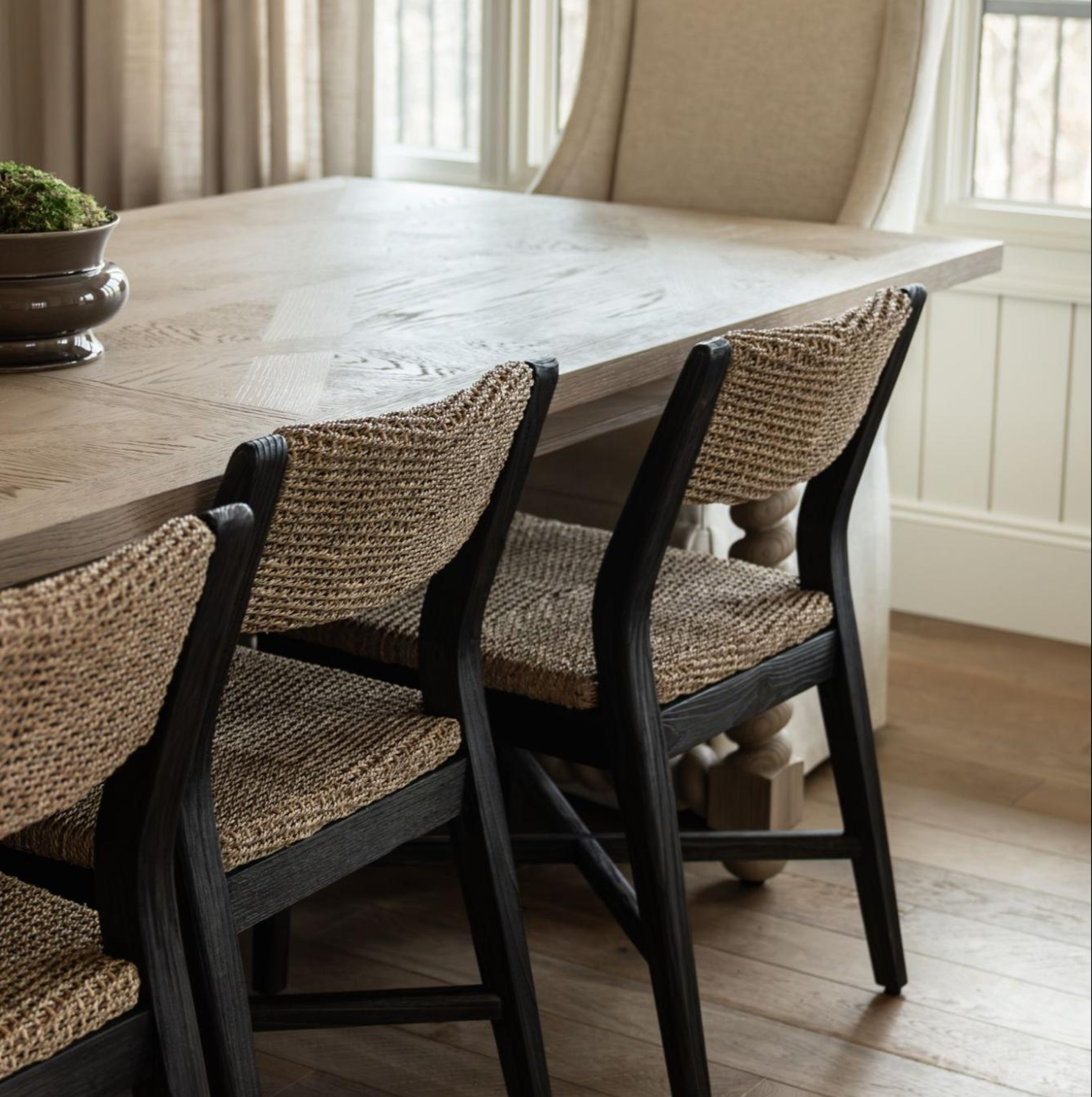
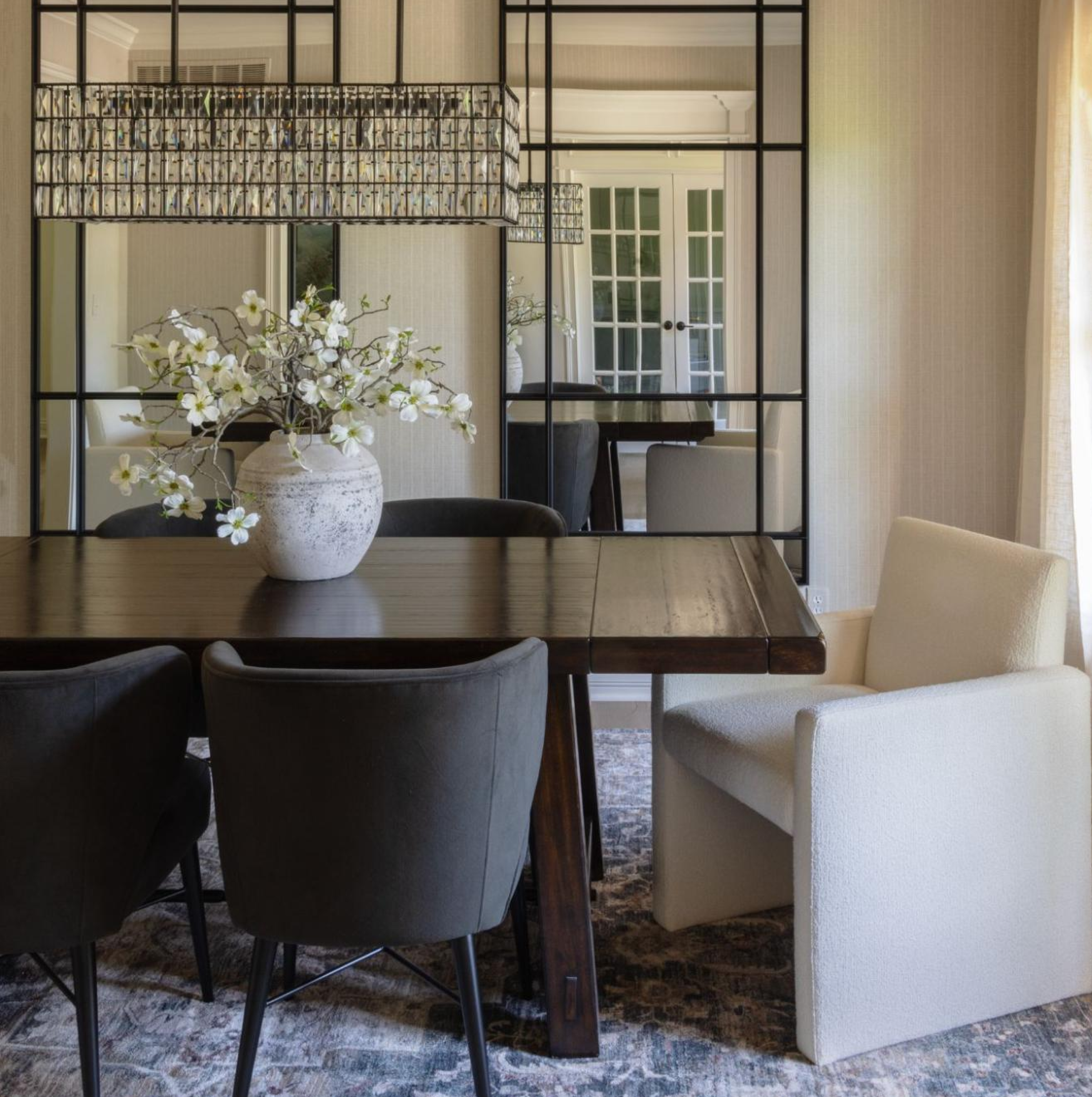
The bedroom is where I see the matching furniture set most often, and it may be the easiest one to break apart: bed, nightstands, and dresser, all from the same collection. Before buying anything new, try a furniture swap. Move your dresser into the guest room and bring the guest room dresser into your bedroom. You may be surprised by how different both rooms feel just by changing one piece.
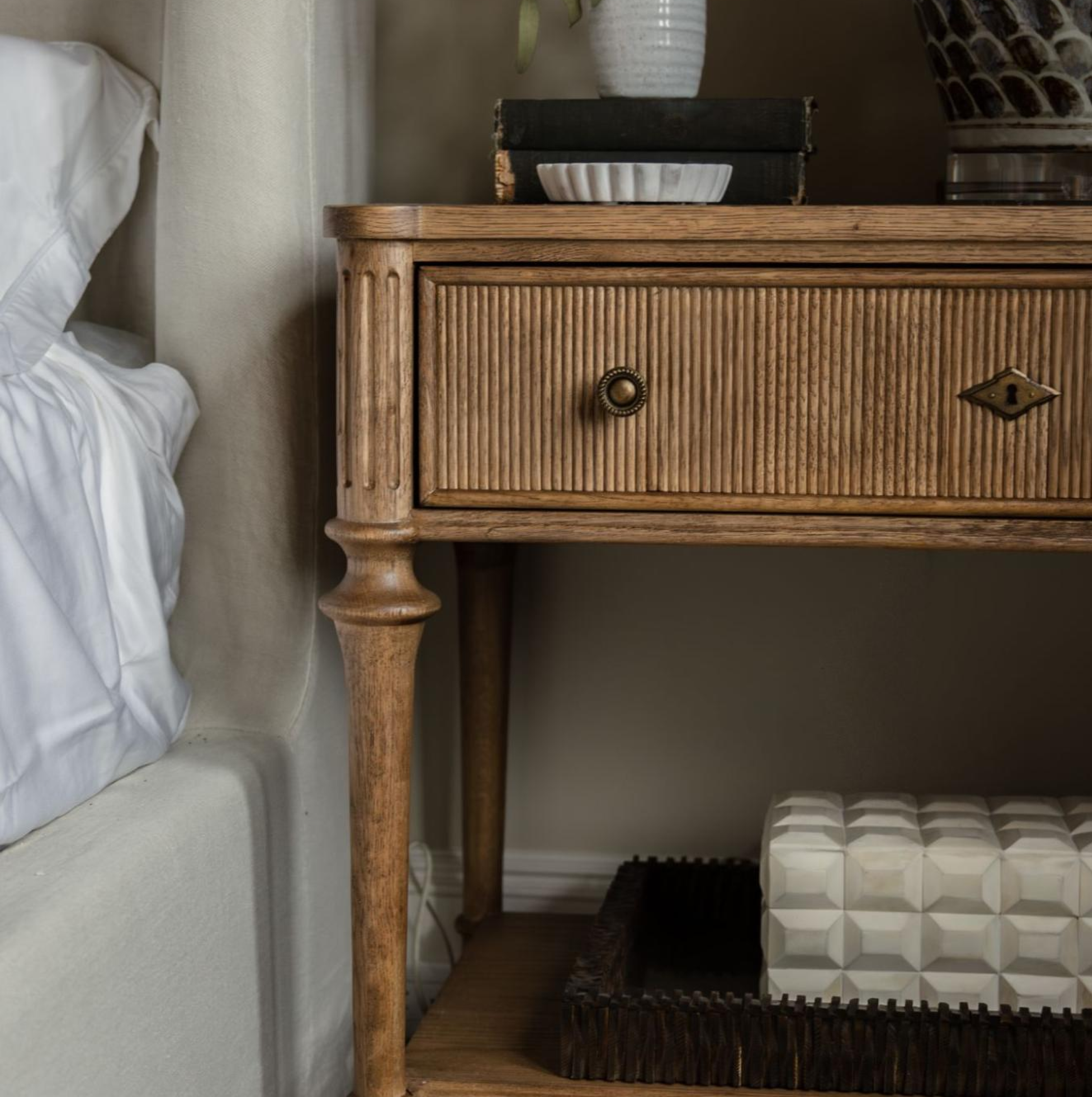
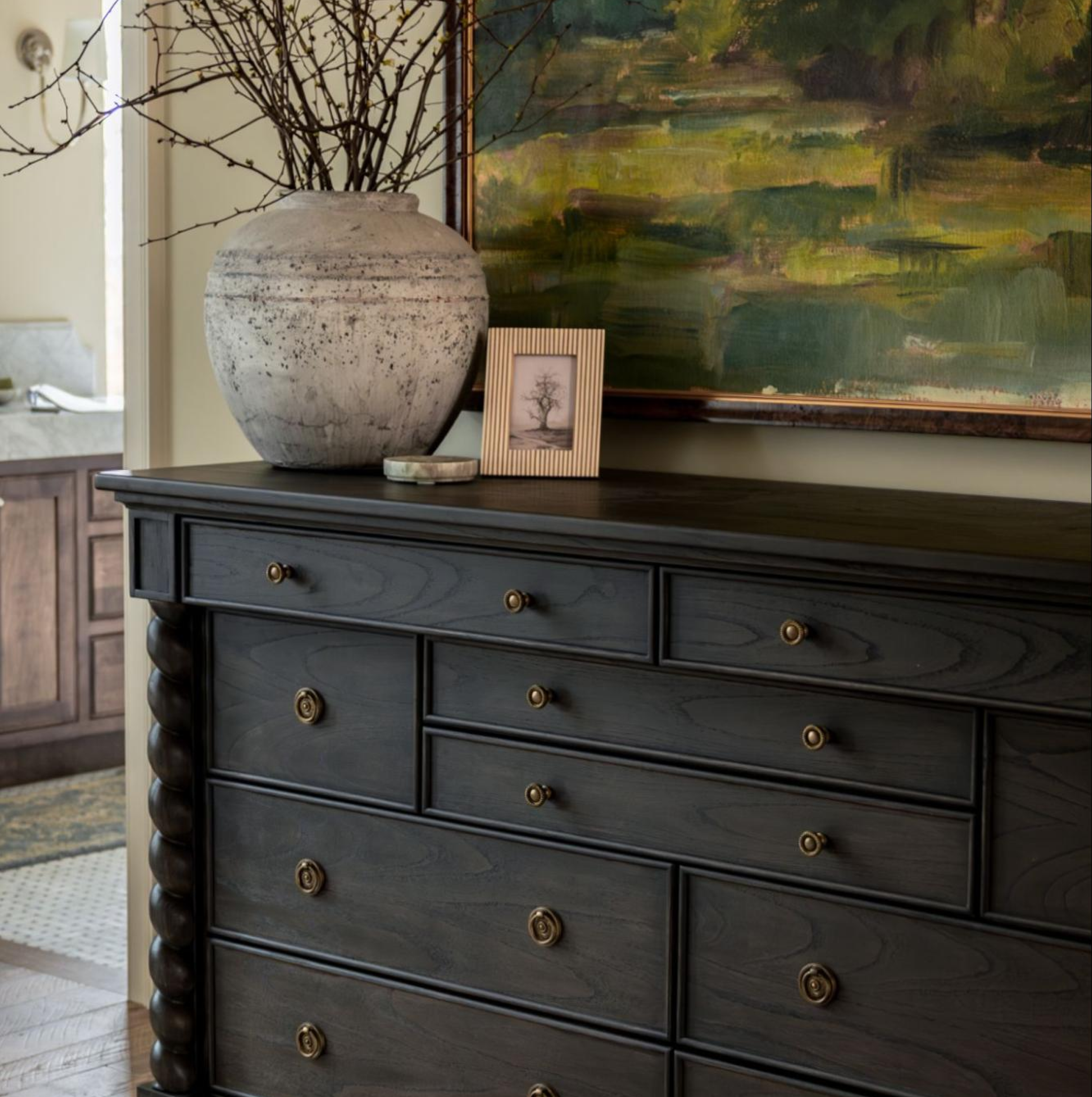
One place I usually don’t borrow from is the kids’ rooms. Kids’ furniture is often scaled differently, so those pieces rarely make the same transition. Shop your own house first. You may already have the piece that breaks up the set.
Wood tones are the part most people get wrong
If there is one thing that stops people when they start mixing furniture styles, it’s wood tones. It’s also one of the reasons so many rooms end up matched in the first place.
The trick is to stop looking at wood as one flat color. Look closely at the wood grain and you’ll almost always find variation—lighter tones, darker tones, sometimes several shades within the same piece. Instead of trying to match the dominant color, find one of those secondary tones and pull it into the next piece you choose.
I did exactly that in the Scout House. The floors are white oak, and the obvious choice would have been to match the island to them. Instead, I pulled one of the darker tones already running through the white oak floors and used it on the island, then repeated it on the stair rail. The woods feel connected because the color was already there, but nothing feels matched.
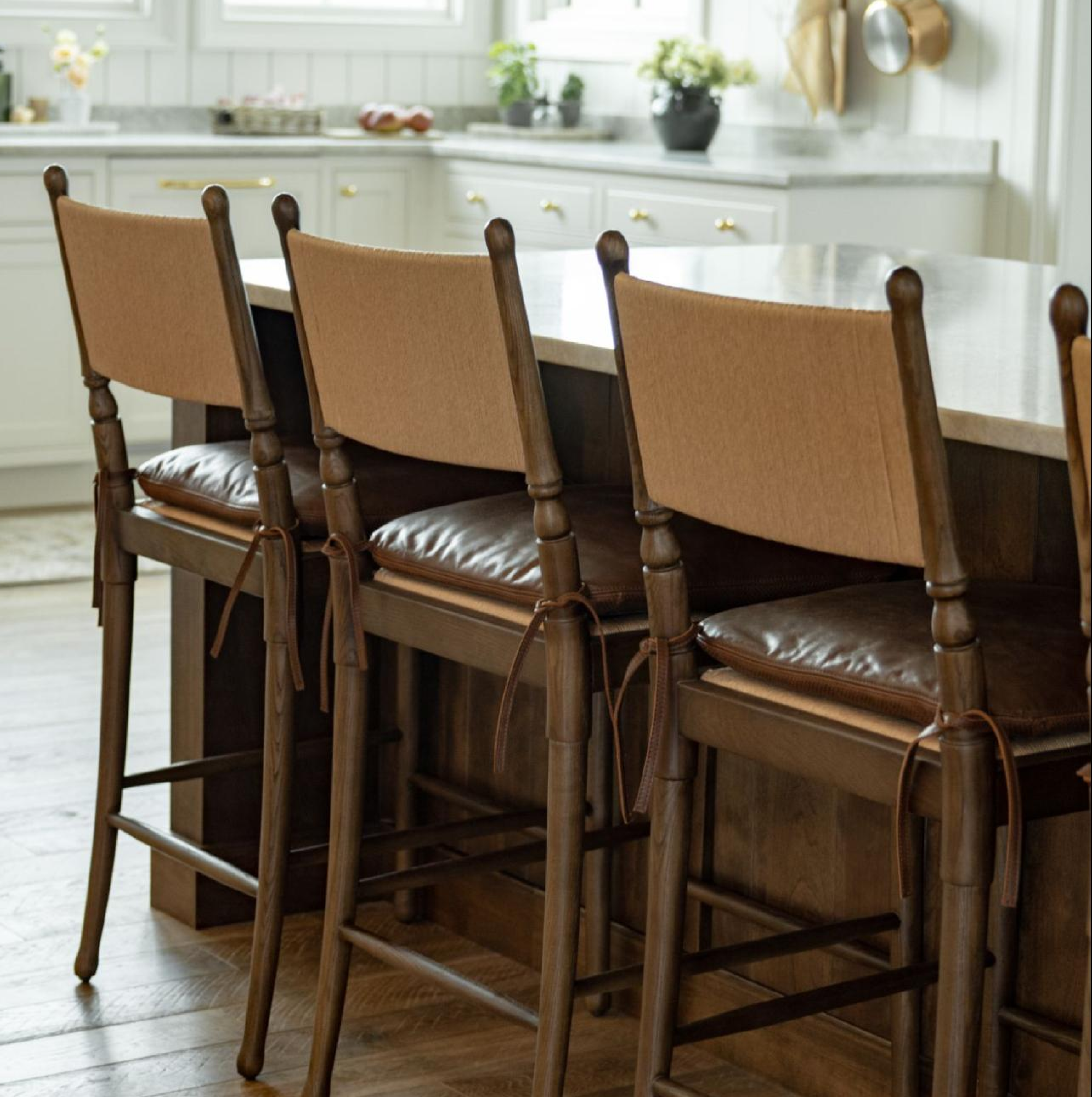
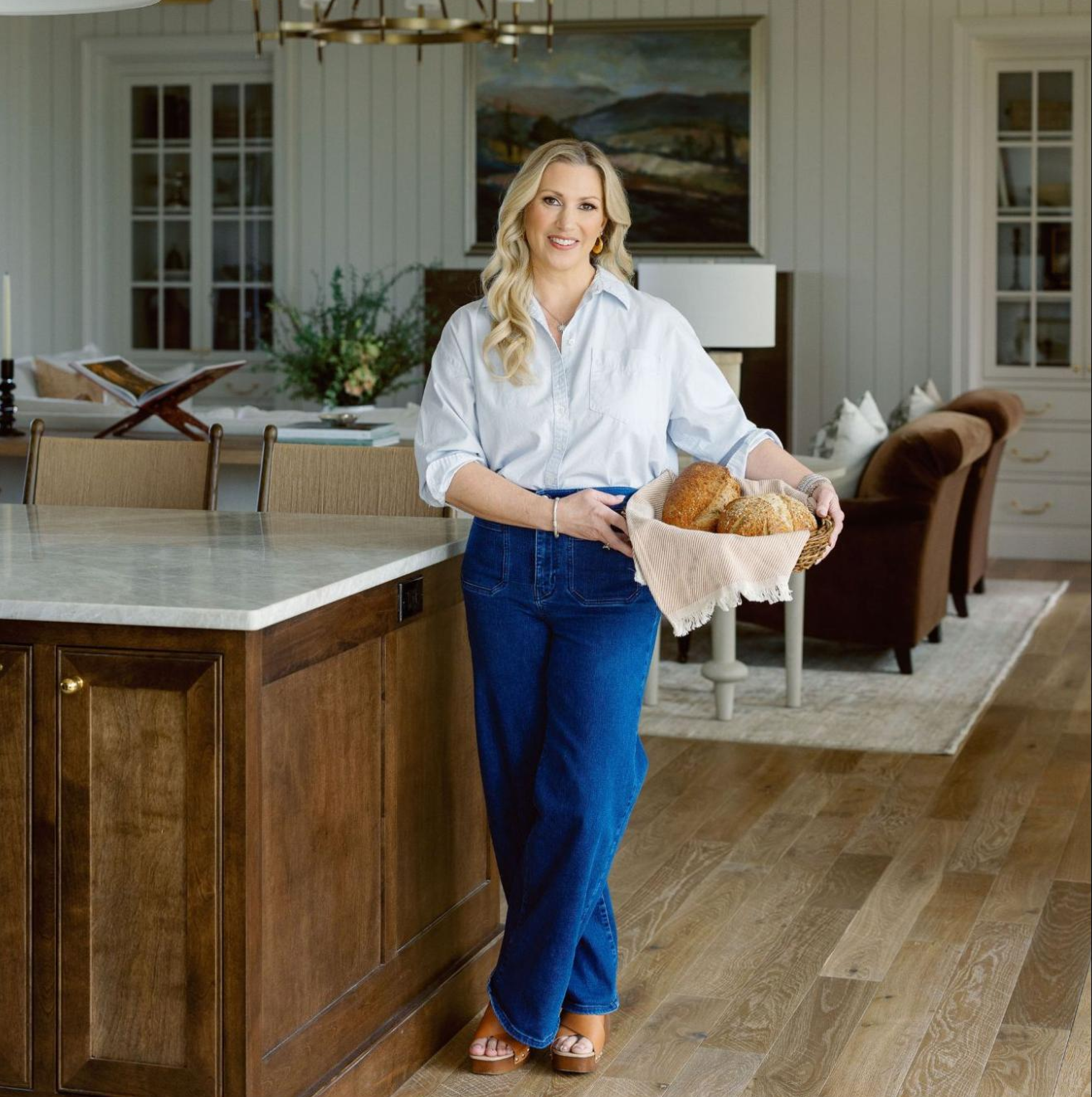
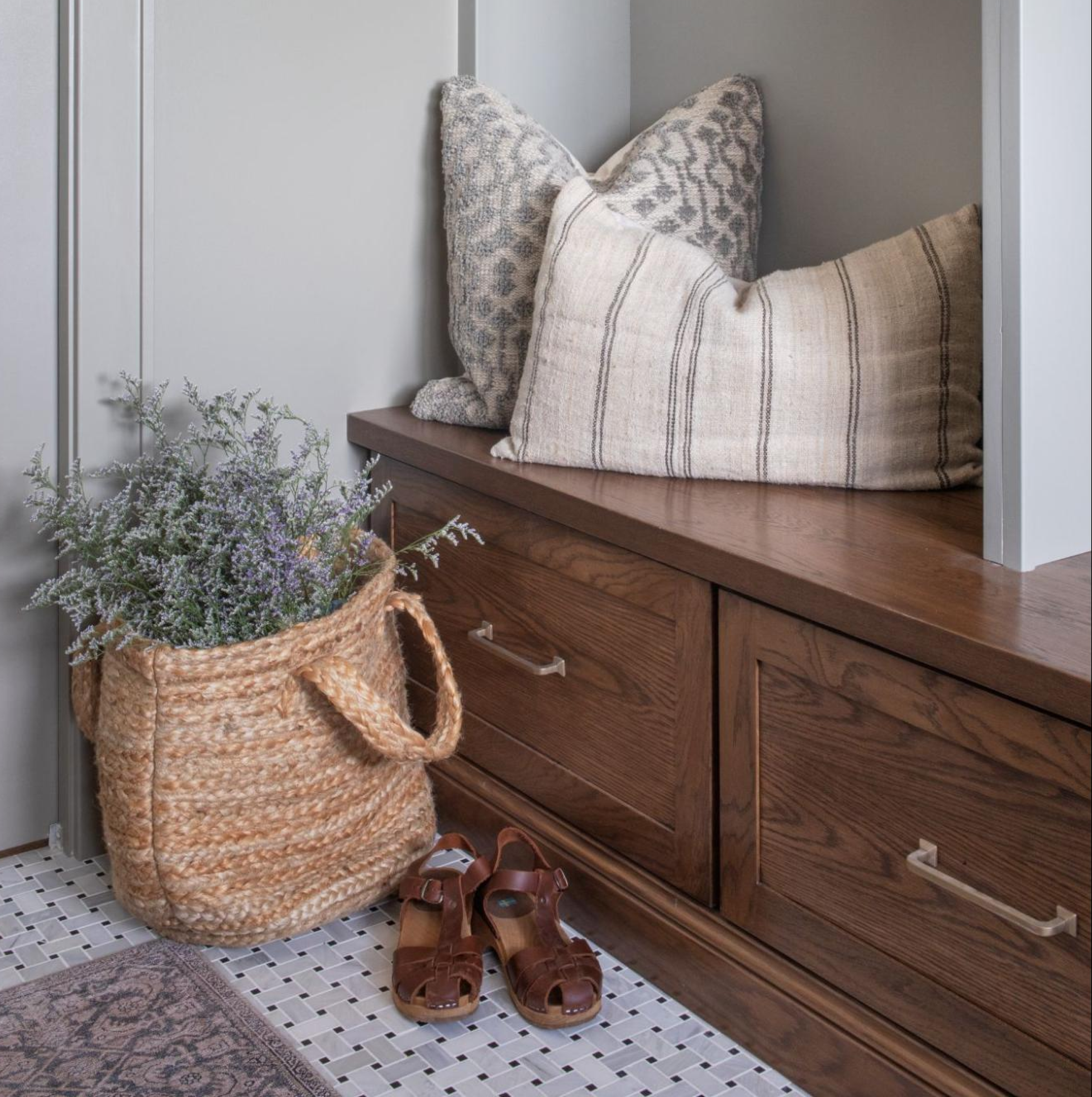
When you don’t want to overthink it, there are a few ways to make mixing wood tones easier. Black works with almost anything, so pairing a wood table with black chairs is an easy place to start. The exception is a really light coastal home, where white can play the same role. In a more traditional room, a painted finish can break up the wood, and a fully upholstered chair takes wood tone out of the equation entirely.
The bigger idea is repetition. Two or three wood tones, each appearing more than once, feel intentional and collected. Six different tones that never show up again can start to feel random. If you want to go deeper, I have a full guide to mixing wood tones on the blog.
When the room still is not working, go looking for sameness
Mix the Style, Mind the Scale
Different furniture styles add character. Getting the scale wrong is what makes a room feel off. A delicate side chair next to a deep contemporary sofa doesn’t feel eclectic—it feels like the pieces belong in two different-sized rooms.
When I have the right furniture but something still isn’t working, I look at the flow first. Can you move through the room easily? Does the furniture arrangement make sense for how you actually live there? If the flow works, I start looking for too much sameness. Are all the tables the same height? Do the pieces have similar lines? Is everything sitting on the same style of leg?
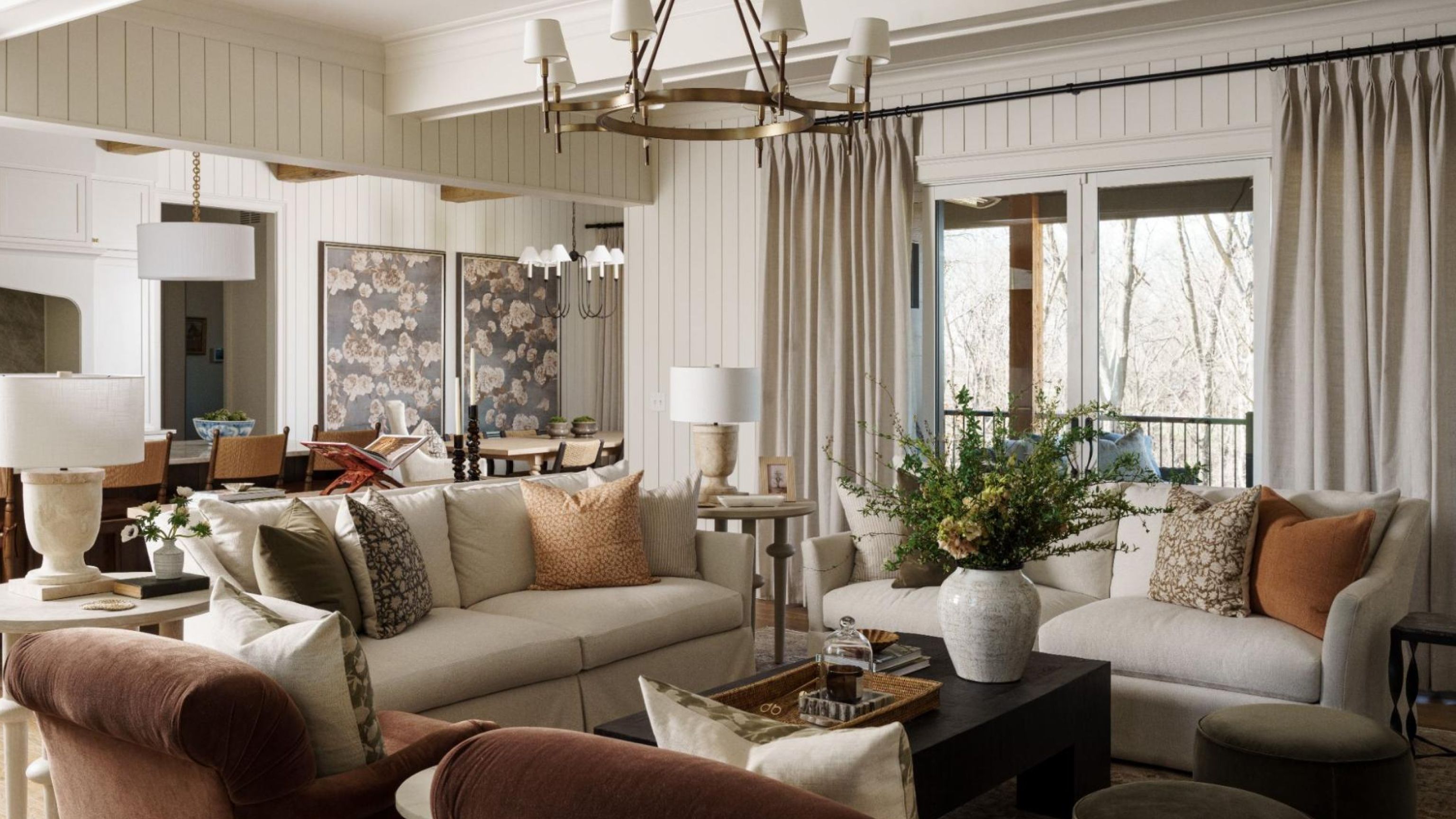
Look at the lines in the room, too. If everything is straight and angular, bring in a curve: a round mirror, a demilune table, the arm of a chair. But don’t swing so far that everything becomes curved. I want both in the room. The contrast is what makes each one more interesting.
 |
I’m willing to push that variation pretty far, especially with the heights of case pieces. Seat height is the one measurement I worry about less, unless someone in the house is particularly tall or needs an easier time getting up and down.
The Scout House living room is a good example. There are six side tables, and no two are exactly alike: white, bleached wood, marble, metal and marble. Some have spindly legs, some are turned, one has casters. On paper, that sounds like a lot. In the room, it works because the palette stays tight while the shapes, materials, and silhouettes are allowed to change.
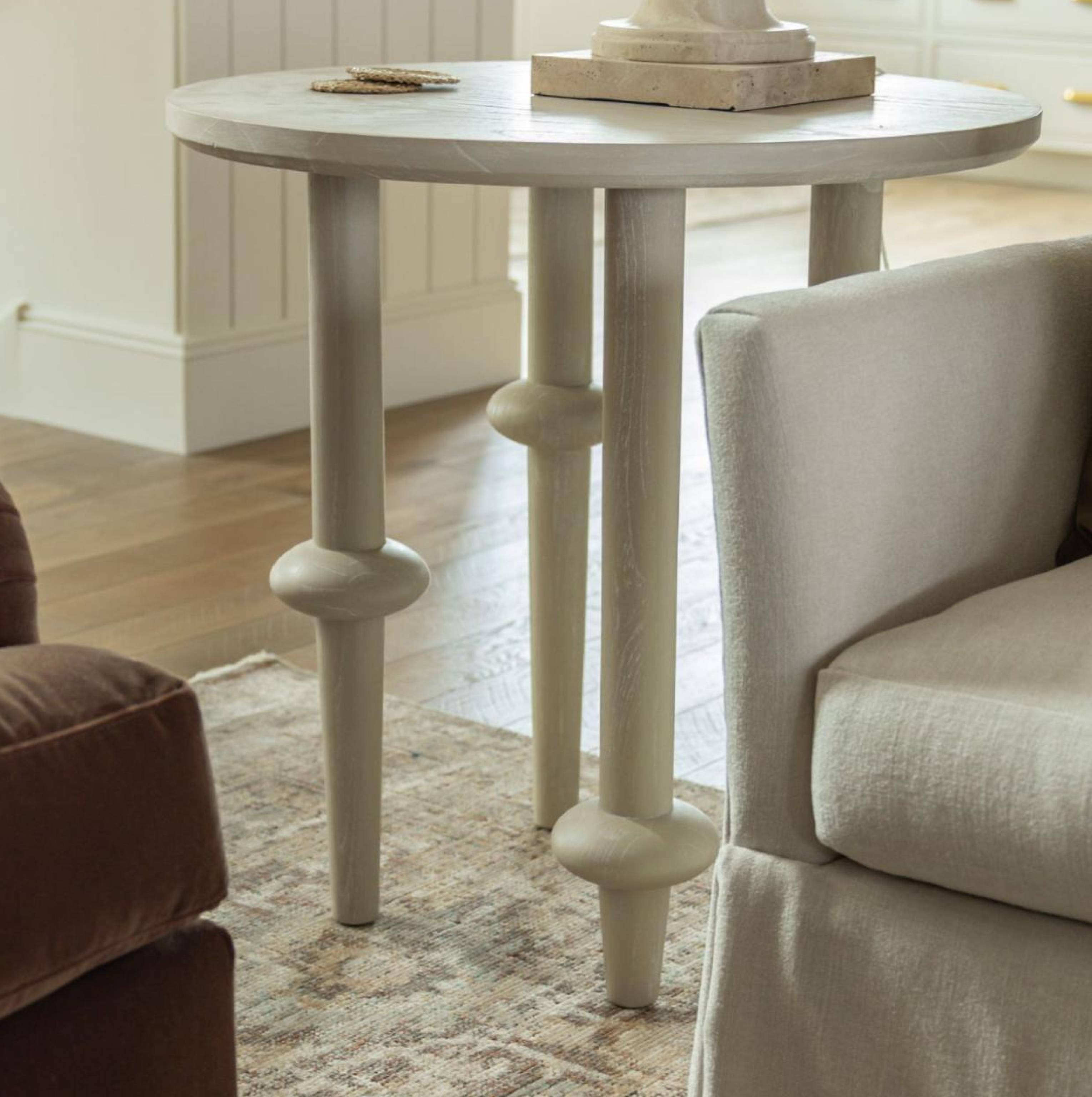
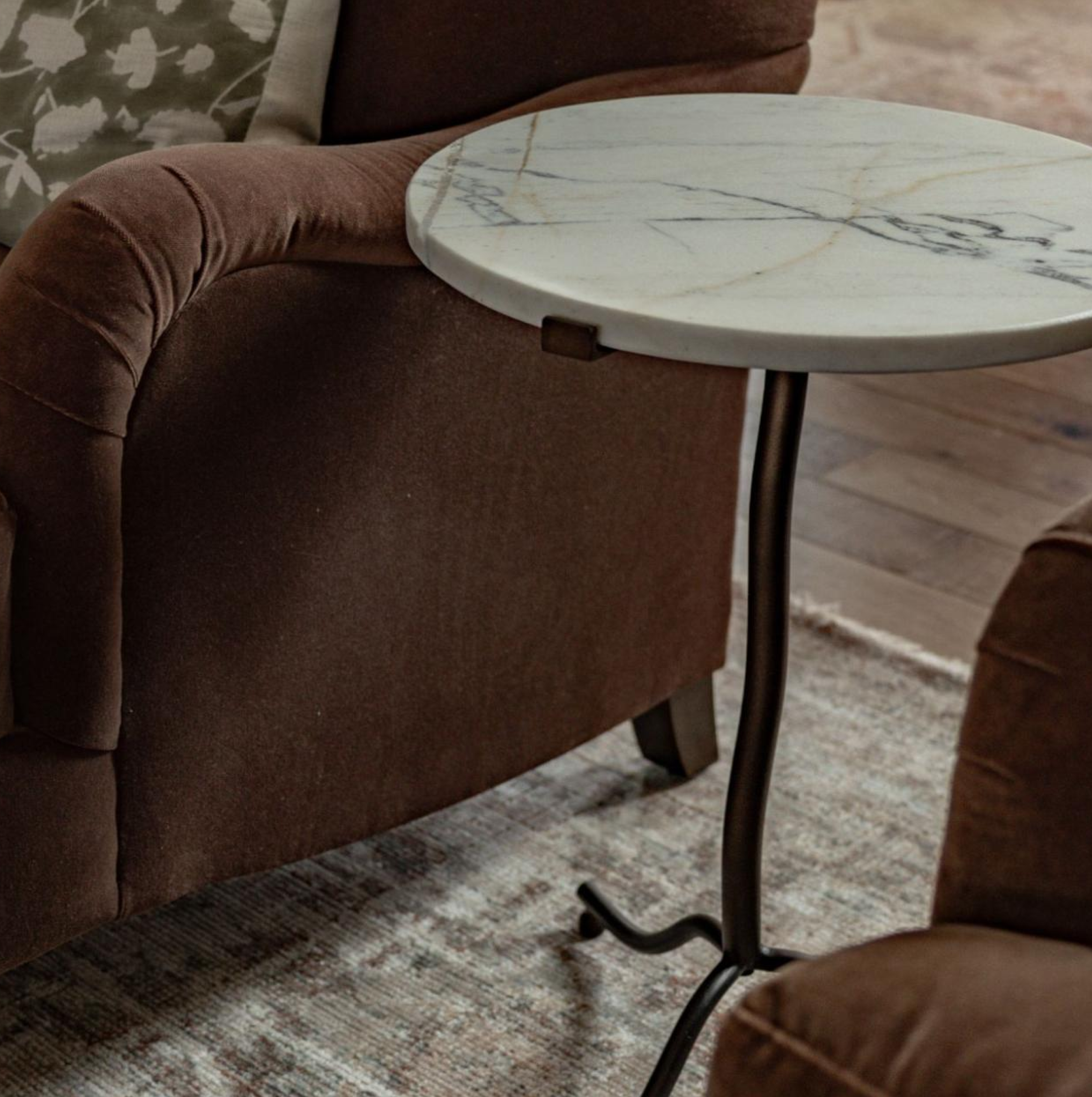
That’s the balance: keep enough consistent that the room feels connected, then vary enough that it feels collected.
Where I Start in Each Room
Living Room
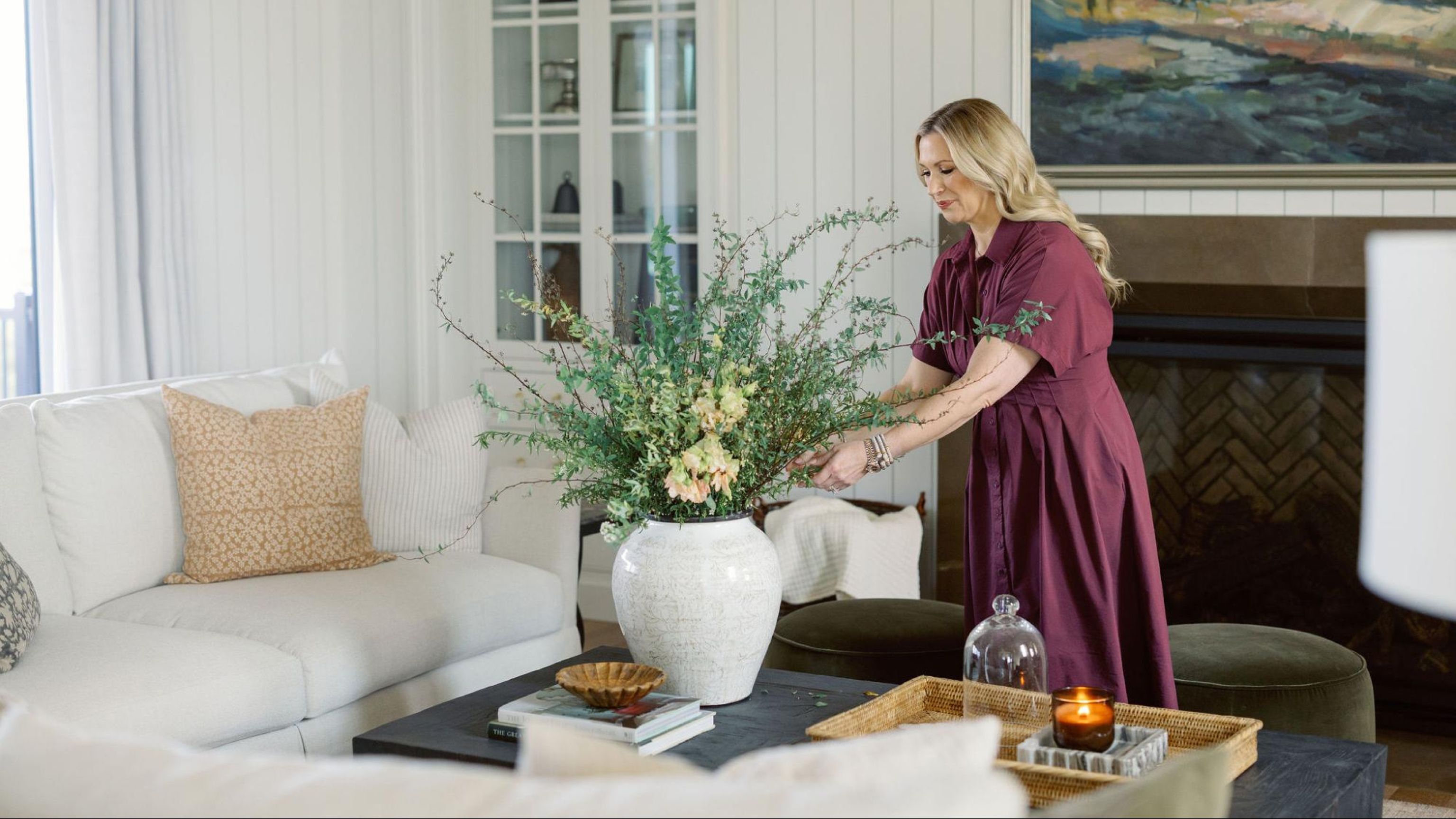
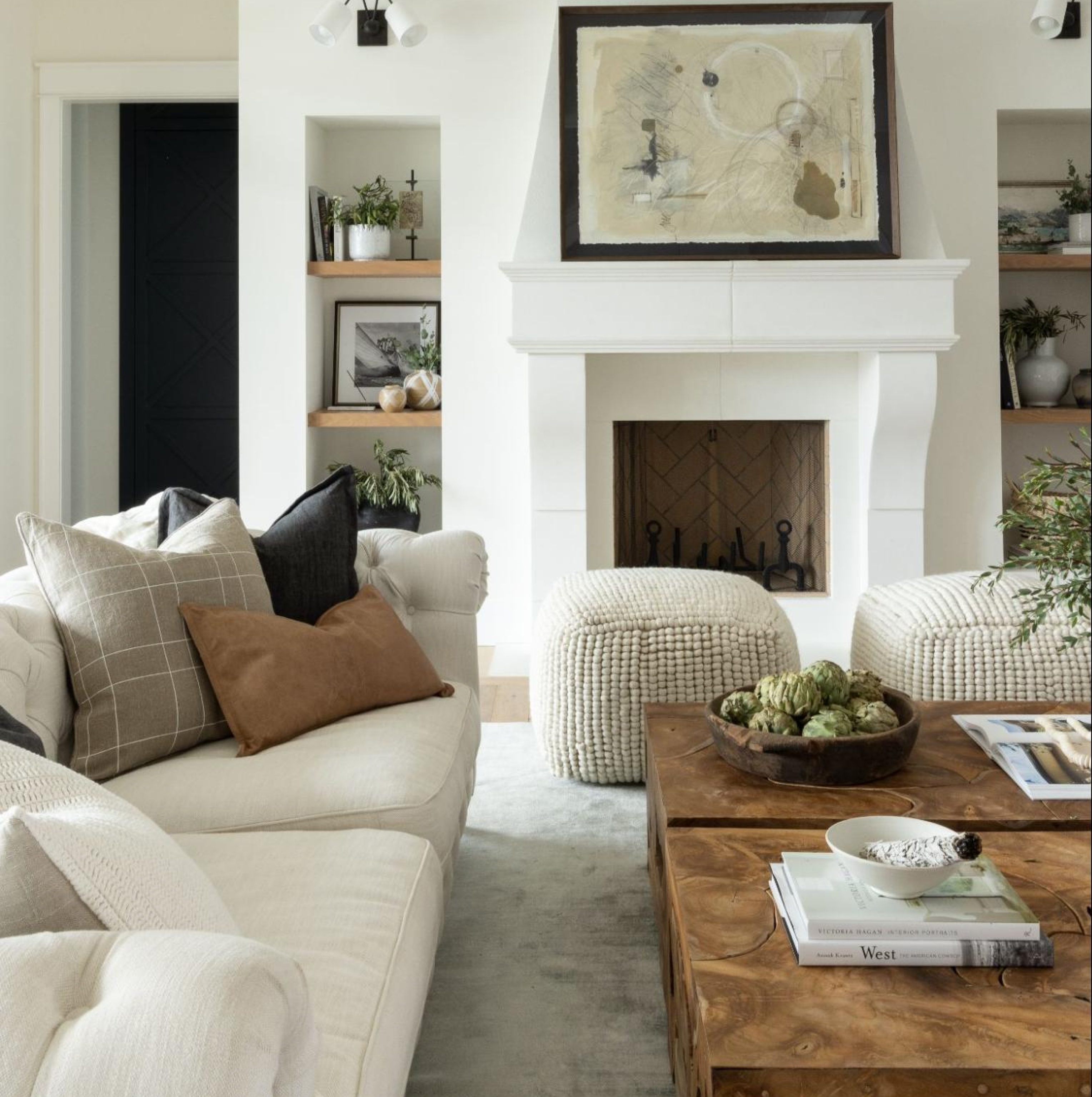
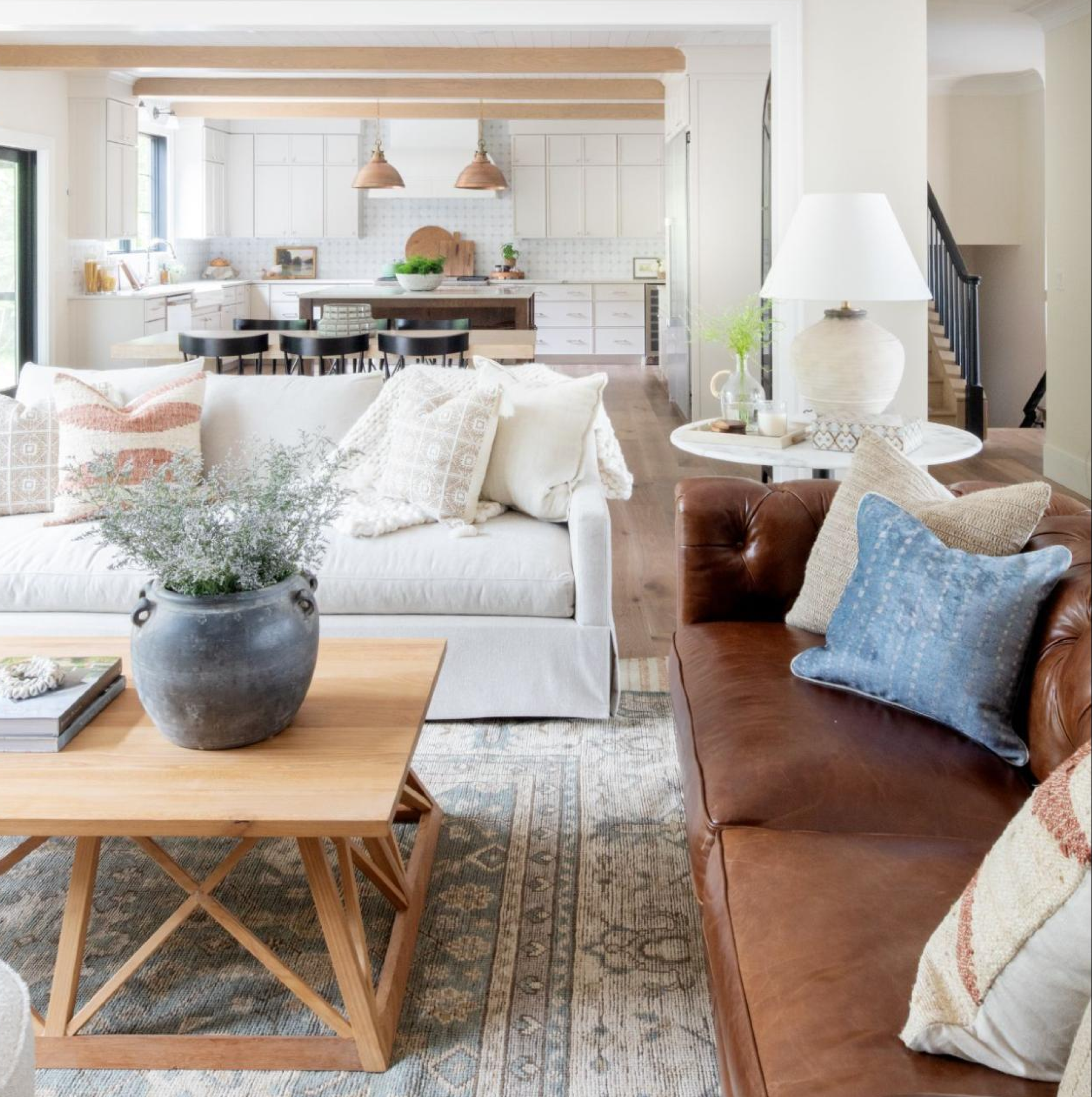
In a living room, I usually start with the sofa, and the rug comes later. But there really isn’t a one-size-fits-all rule. Sometimes I know the accent chairs first. Sometimes it’s the coffee table. Start with the piece you love, then let the mix happen around it. That might mean accent chairs from a different style, an antique chest used as an end table, or the art over the mantel bringing in something completely unexpected.
 |  |
Dining Room
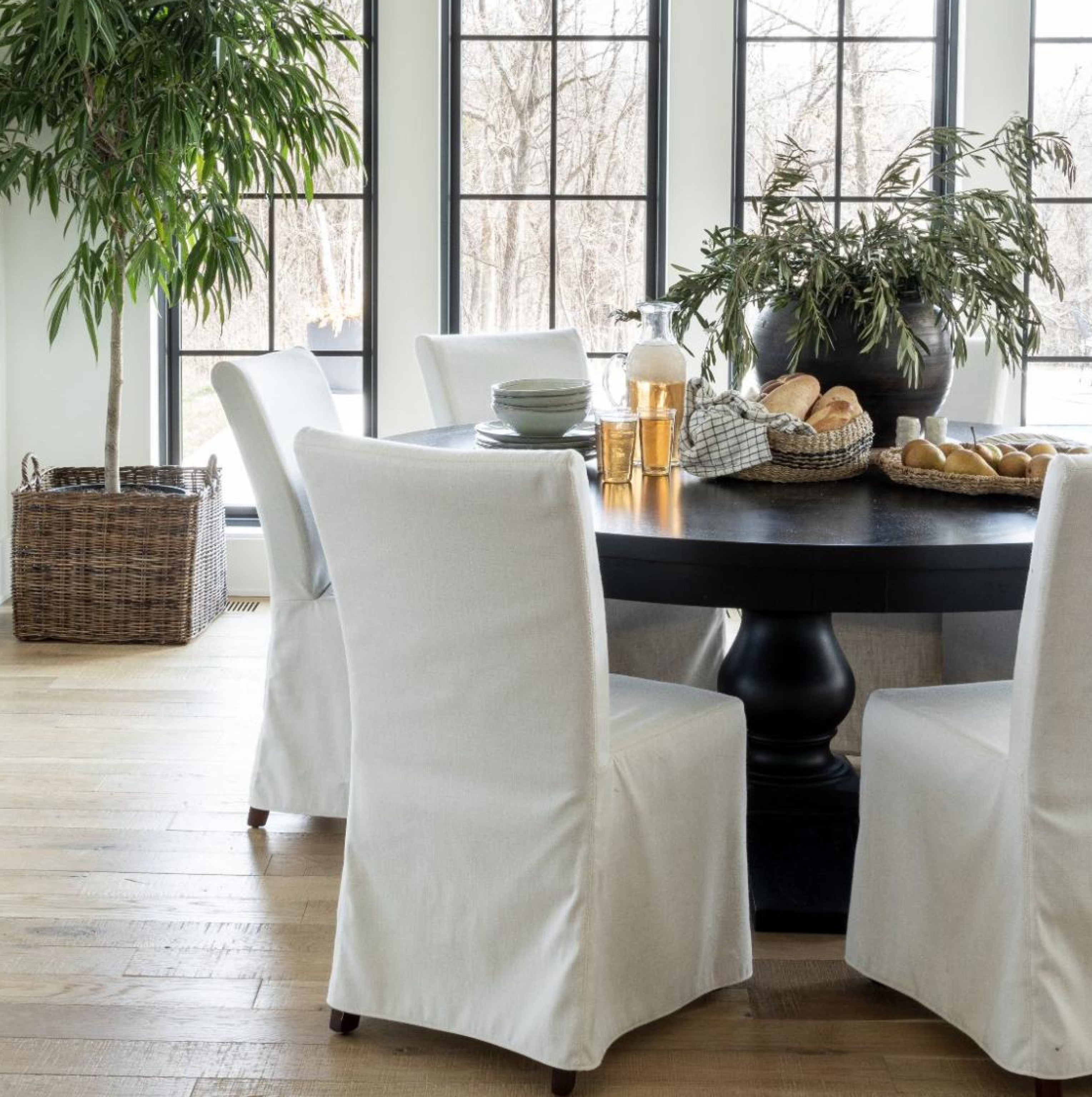
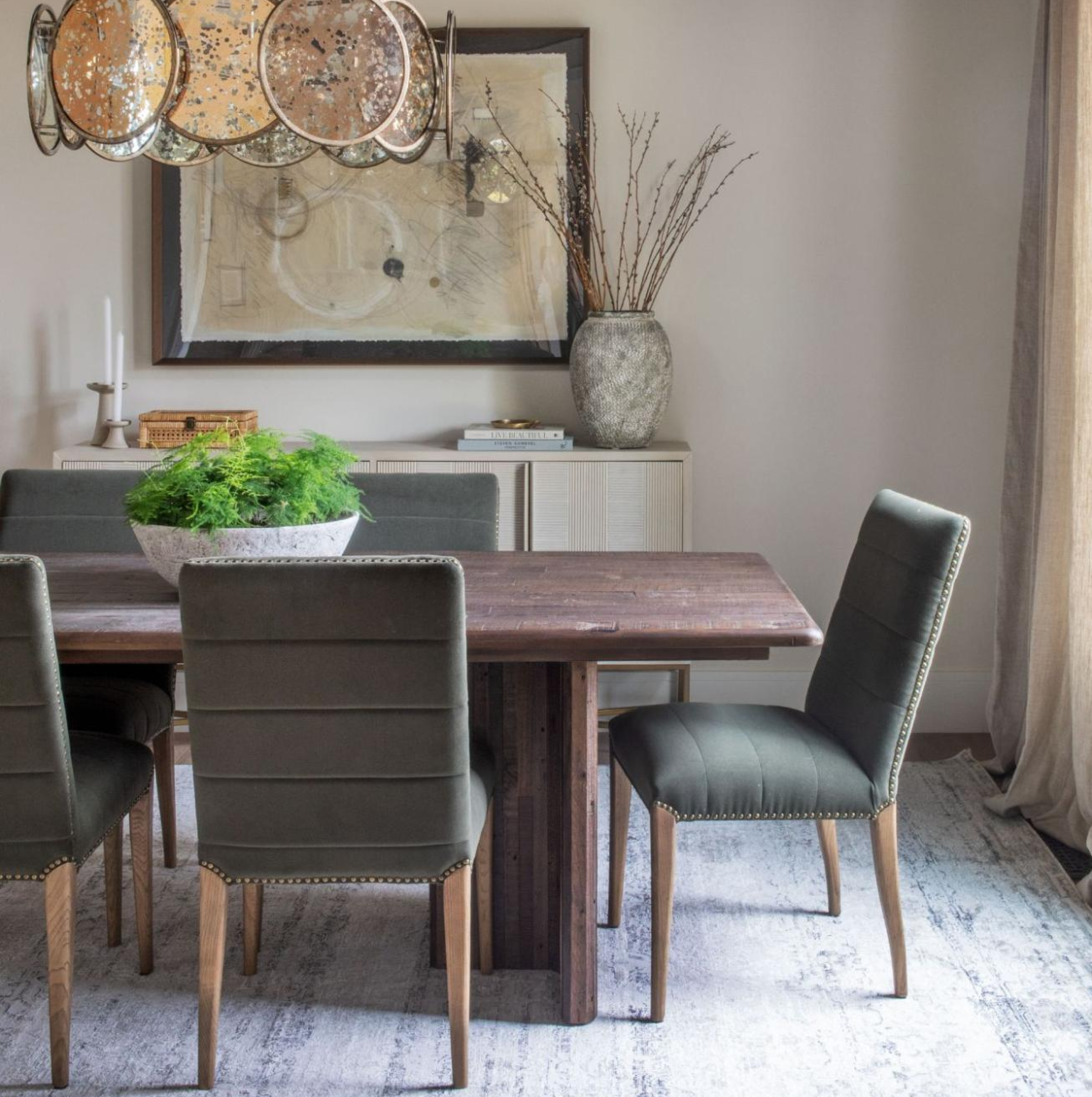
In a dining room, I usually start with either the table or the chairs, never both as a set. Whichever one comes first gives you the opportunity to do something different with the other. At the Scout House, I mixed the dining chairs and used two end chairs that are slightly different from the rest. Even the light fixture creates contrast with the table rather than simply repeating its style.
Bedroom
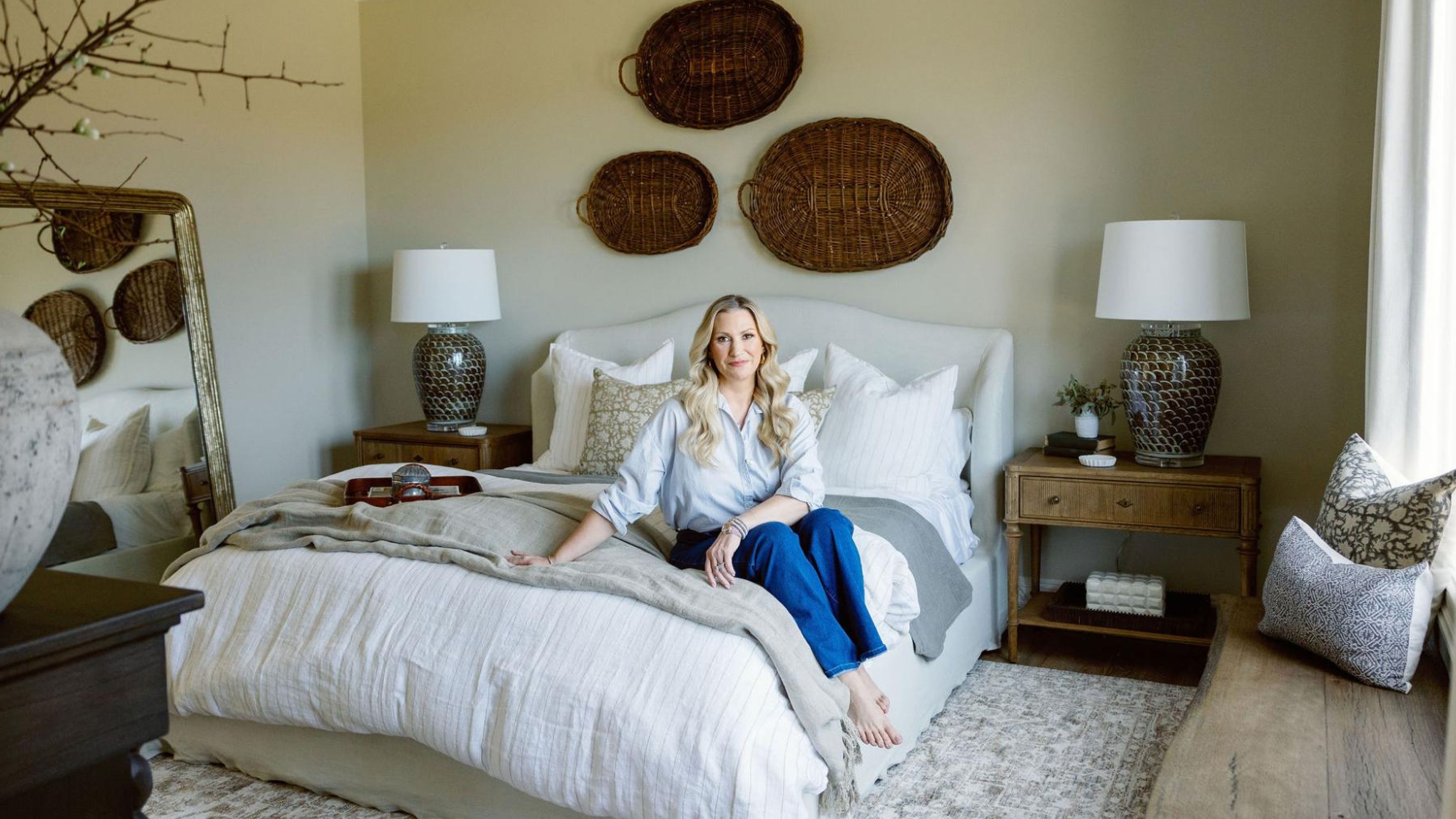
A bedroom can start with almost anything you love: the bed, the nightstands, or the dresser. Once that piece is established, everything else can mix in around it. It’s also one of the easiest rooms in the house to break apart if you already own a matching bedroom set. You don’t have to replace everything. Changing one piece can be enough to change how the entire room reads.
One note on the bedroom, because it is the room I get asked about most. I keep bedding solid or in a very subtle stripe and let the pattern live in the throw, the quilt and the accent pillows. That is a preference, not a rule. I want a bedroom to read as a retreat rather than have the bedding be the star of it. If you love a patterned duvet, buy the patterned duvet. It simply becomes the statement and everything else supports it, the same way a colorful room works best against white walls, because then the color is the thing you see.
Entry
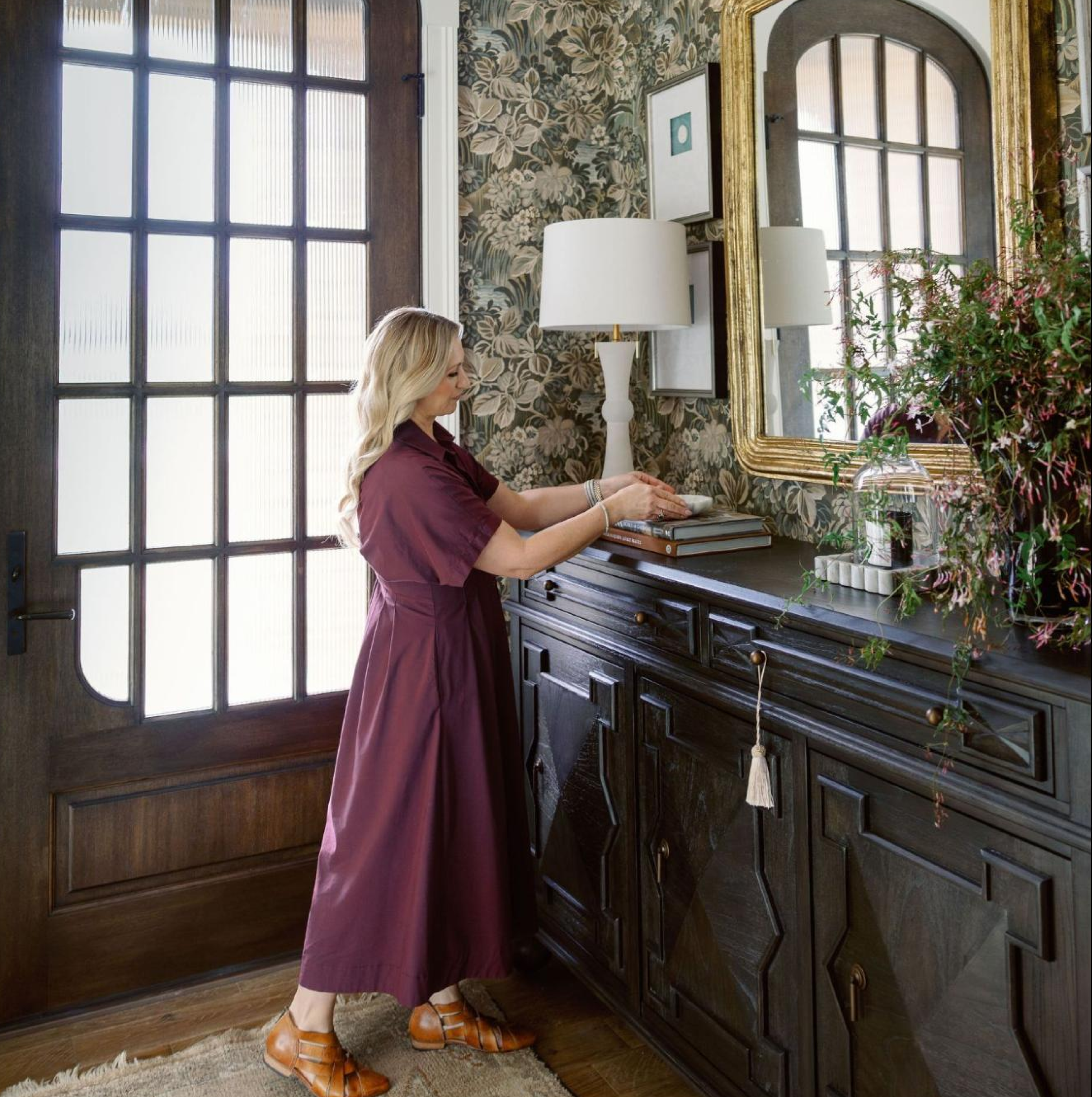
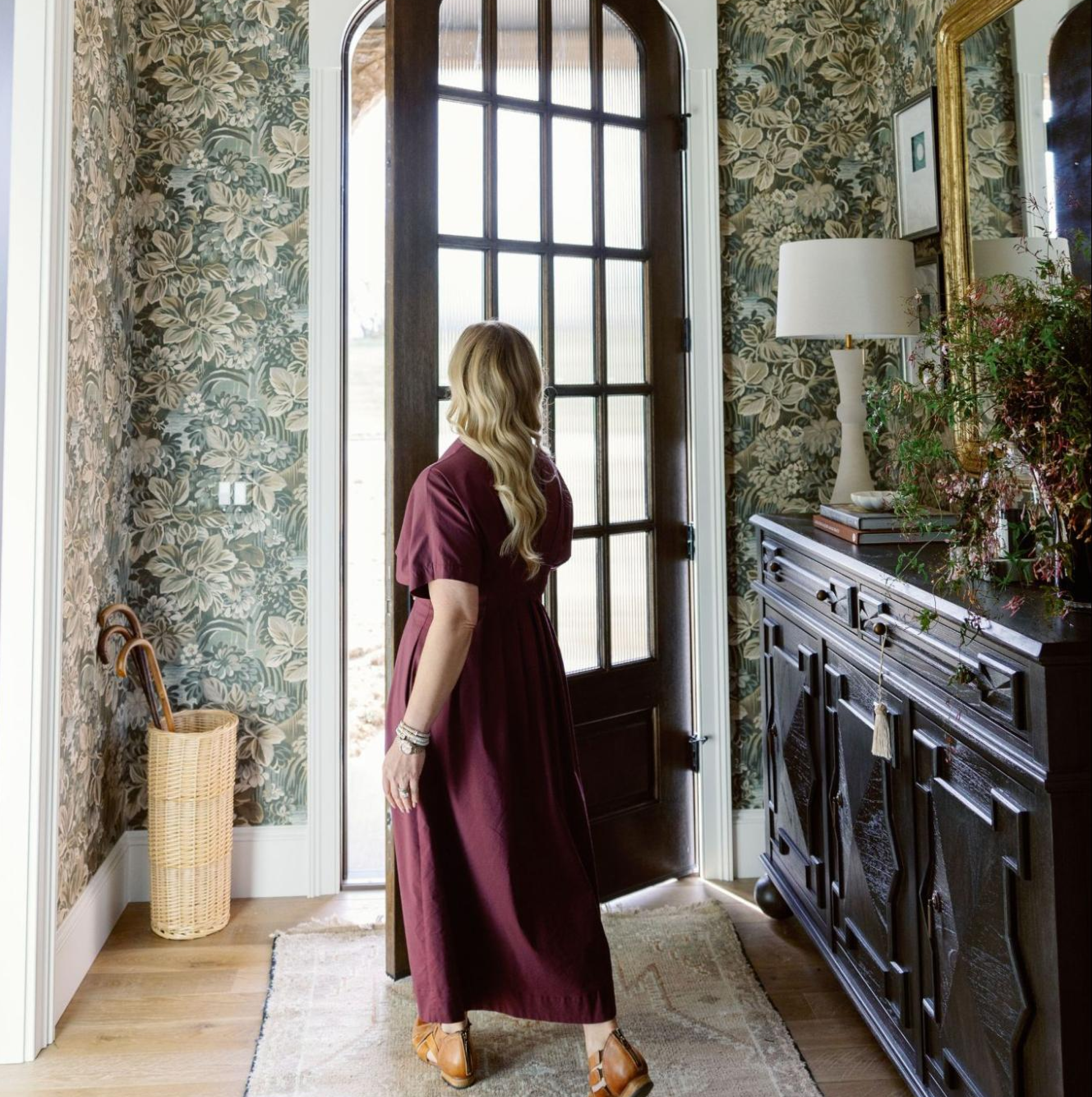
In an entry, I like to start with one substantial piece and create the mix between that piece and what goes around it. If the console is heavily traditional, I might use a cleaner, more modern lamp. If the console has simpler lines, I can go much more traditional with the lighting. Then I let the accessories follow the direction of that foundational piece. A substantial traditional console can carry a lot of visual weight, which gives you more freedom to have fun with modern details around it.
 |
How to know it worked, and the rules I break
When you think you are done, style it, take a picture, and look at the picture. I do this constantly. It is like trying on an outfit. You think it looks good, then you see the photo and you know. Pictures do not lie, and the camera catches what your eye has stopped seeing. Nine times out of ten the photo tells you to take something away rather than add something.
Now the rules I break. I do like to match nightstands. I love symmetry in a bedroom too much to give it up. So match the nightstands, then pick a different dresser and a different bed. Same with a sofa. Personally I like two matching end tables flanking one, and they can anchor a whole room, as long as the coffee table, the console and the drink tables all go their own way.
Go in loose. You are not going to mess this up. It is a visual thing, and the only way to learn what your eye likes is to put two pieces next to each other and see how you feel about them.
Frequently asked questions
Can you mix modern and traditional furniture?
Yes, and most of the designer rooms you have saved already are a mix. Let one piece start the room instead of splitting it evenly, repeat two or three materials so the eye reads a pattern, break up any matching set, and vary your lines and your heights on purpose. A room furnished out of a single era reads like a showroom.
What is the 80/20 rule in interior design?
It means weighting a room roughly 80 percent toward one style and 20 percent toward its counterpoint instead of splitting it down the middle. I do not think in ratios. I think about which one or two pieces are the visual statements in a room and let everything else support them.
How do you make old and new furniture go together?
Give them something to agree on. A shared color story, and one color or material that shows up in at least two places in the room. It does not have to repeat in the same material, so dark wood on one piece can be answered by an iron leg on another. Repetition turns a difference into a decision.
Is it OK to mix wood tones when you are mixing furniture styles?
Yes, and it is the part most people get wrong. Look inside the graining of the piece you already own, find the accent color running through it, and pull that color onto the next piece you buy. Two to three tones, each repeating, reads as collected. Black, white and upholstery go with everything.
Comments
Comment or question? Leave it below.
Six white dresser styles — from warm antique finishes to sculpted modern lacquers — and the rooms each one suits best. Shop designer dressers at Scout & Nimble.
keep reading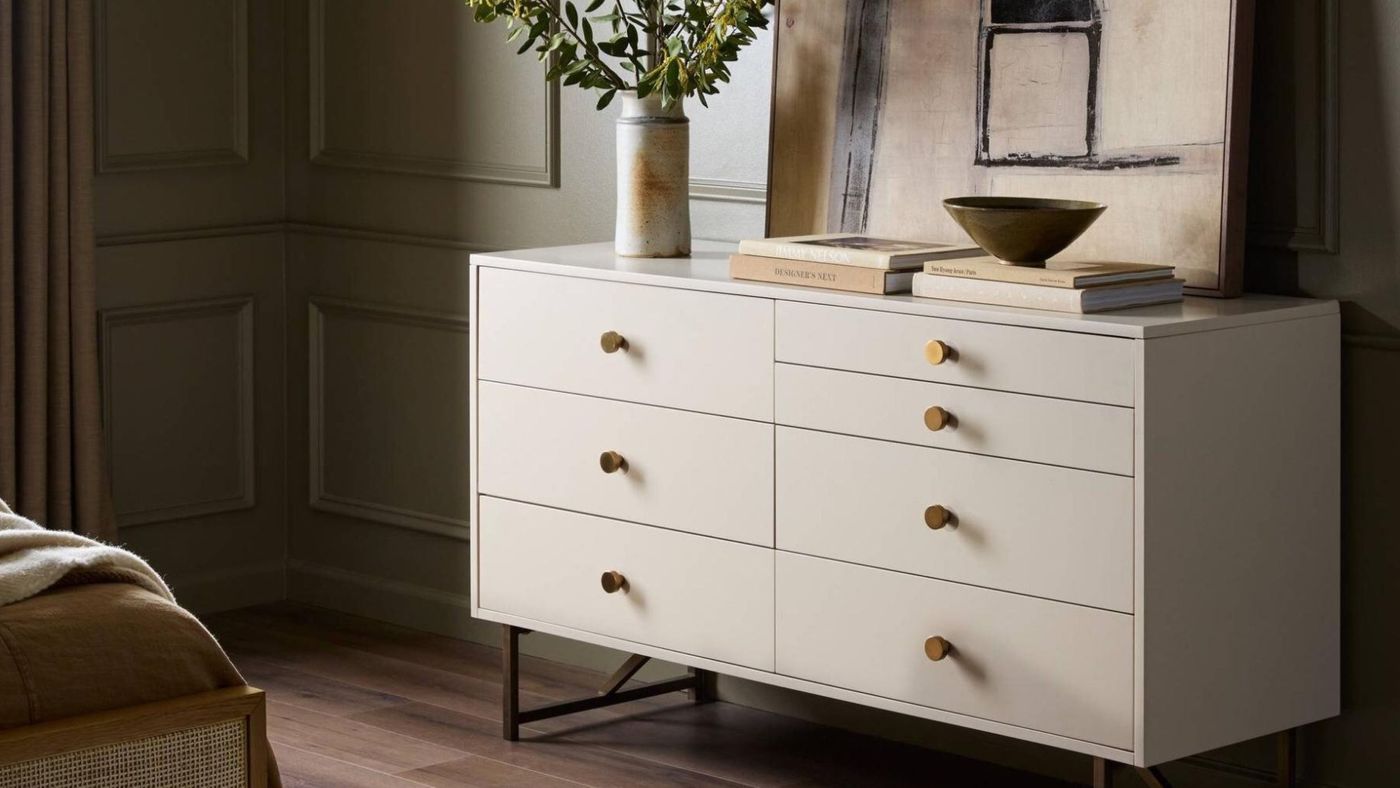
You can put a clean-lined sofa next to your grandmother's carved chest. Here is how I actually do it, including what to do about the matching set that is already sitting in your bedroom.
keep readingThe kitchen is divided into three working zones, with the dining table right in the middle and the scullery at the end intentionally left open. Nothing is closed off from the rest of the space. Here’s the thinking behind each of those decisions.
keep reading
Three completely different purchases go by the same name. Here's how I sort them, and what I'd buy for each.
keep reading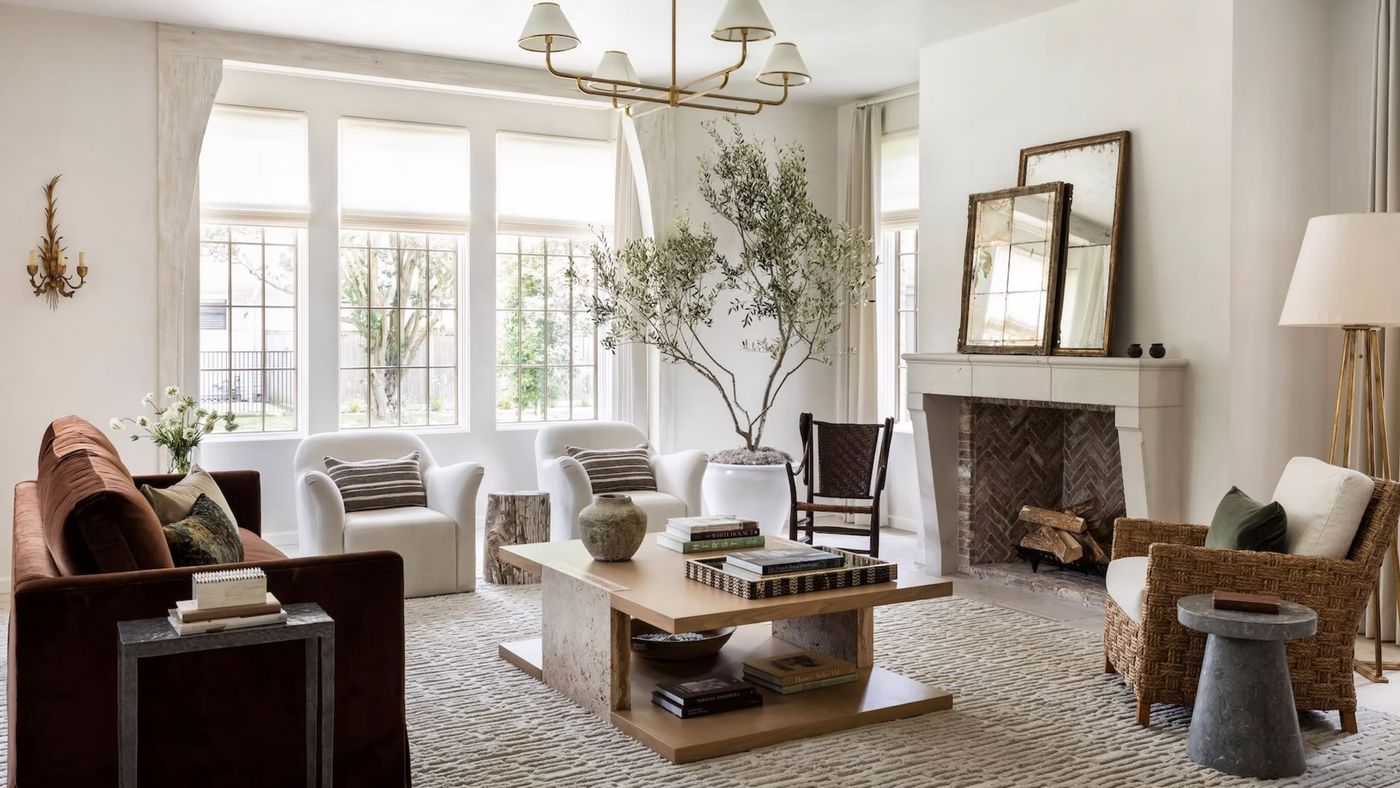
Diameter, clearance, and the base you choose decide how many people actually fit around a round table. Here are the numbers our designers use, and the tables we'd recommend to every client.
keep reading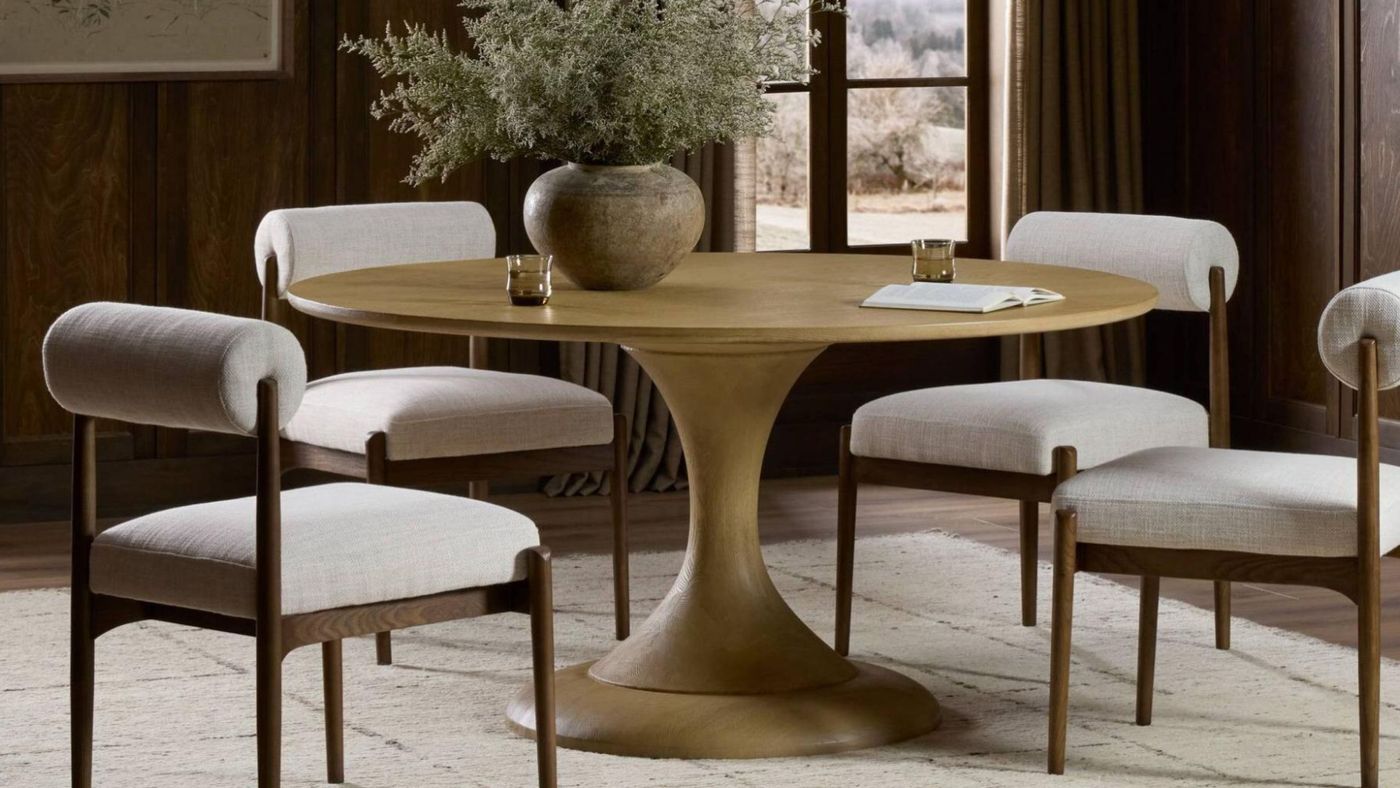
Six white dresser styles — from warm antique finishes to sculpted modern lacquers — and the rooms each one suits best. Shop designer dressers at Scout & Nimble.
keep readingYou can put a clean-lined sofa next to your grandmother's carved chest. Here is how I actually do it, including what to do about the matching set that is already sitting in your bedroom.
keep reading


