

Rustic cabin decor is built on character and patina. Jesse Bodine breaks down the rustic mountain look: materials, moody color, and what to buy.
Rustic Mountain Interior Design: How to Get the Look
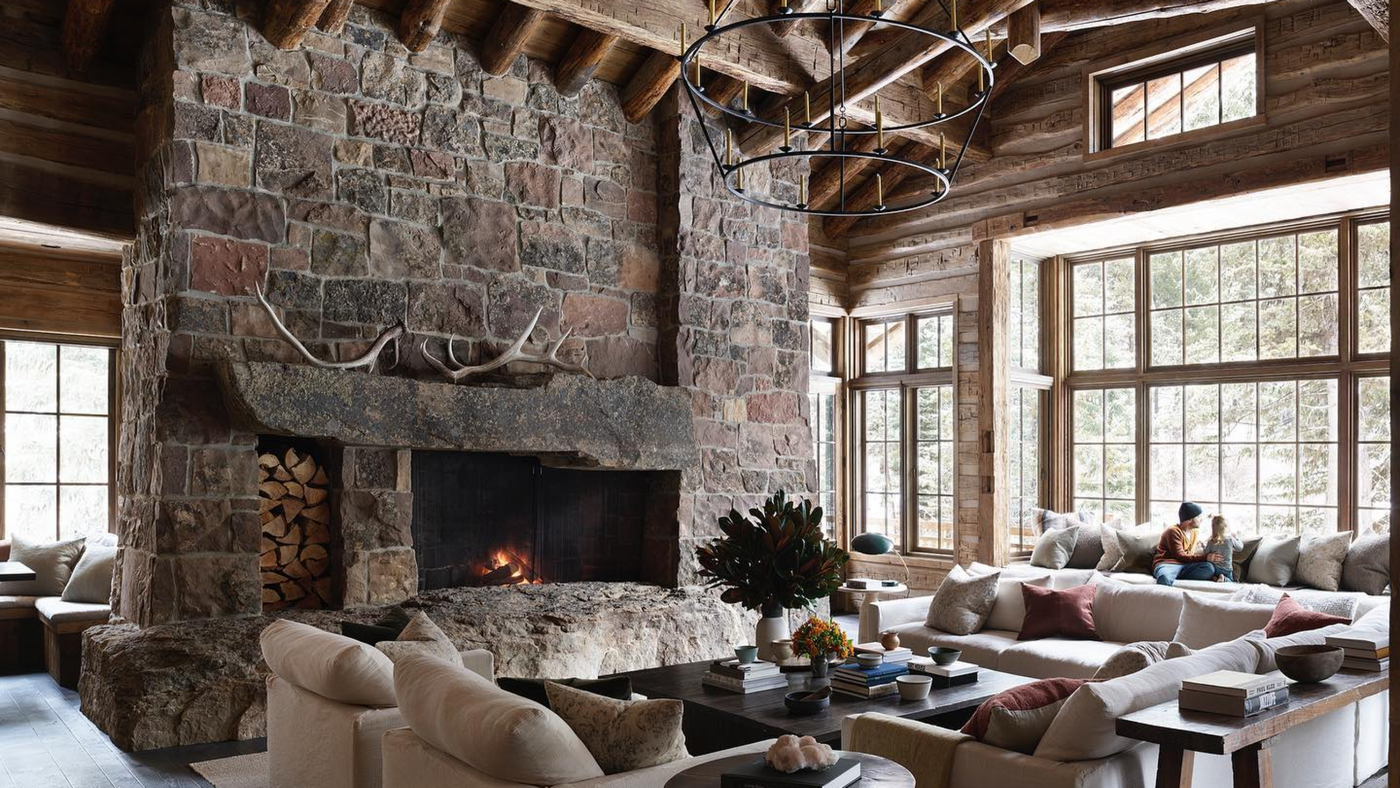
Rustic mountain style brings together natural materials, rich colors, and layers of texture to create the cozy, collected feeling of a mountain lodge. Here's what defines the look and how to bring it into your own home.
 |
Lately, we've been getting more and more requests for homes that feel like Jackson Hole, Blackberry Mountain, or Big Cedar Lodge. And while the references might be different, what people are looking for is very similar: a cozy, rustic retreat that feels like it has been there for generations.
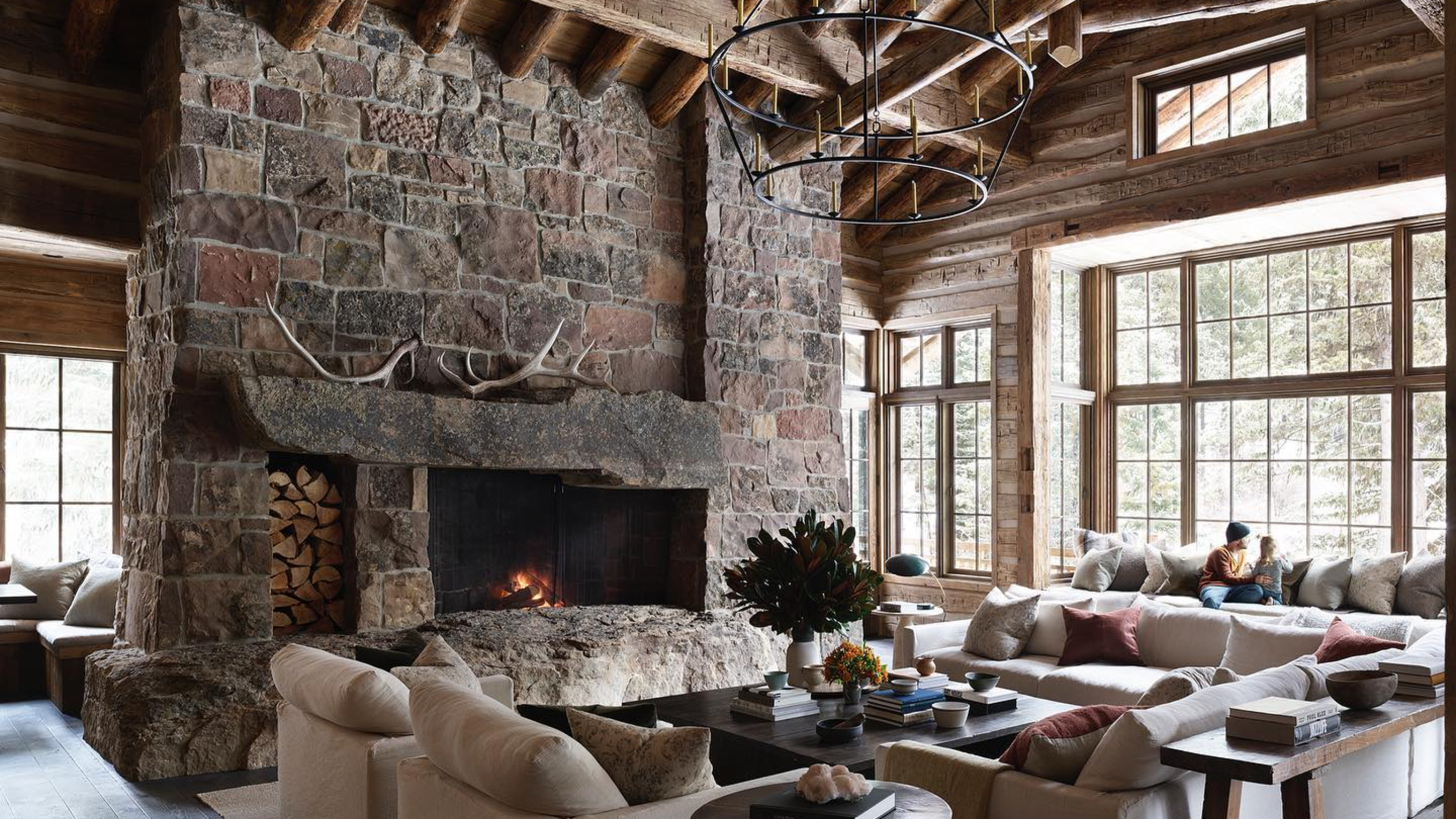
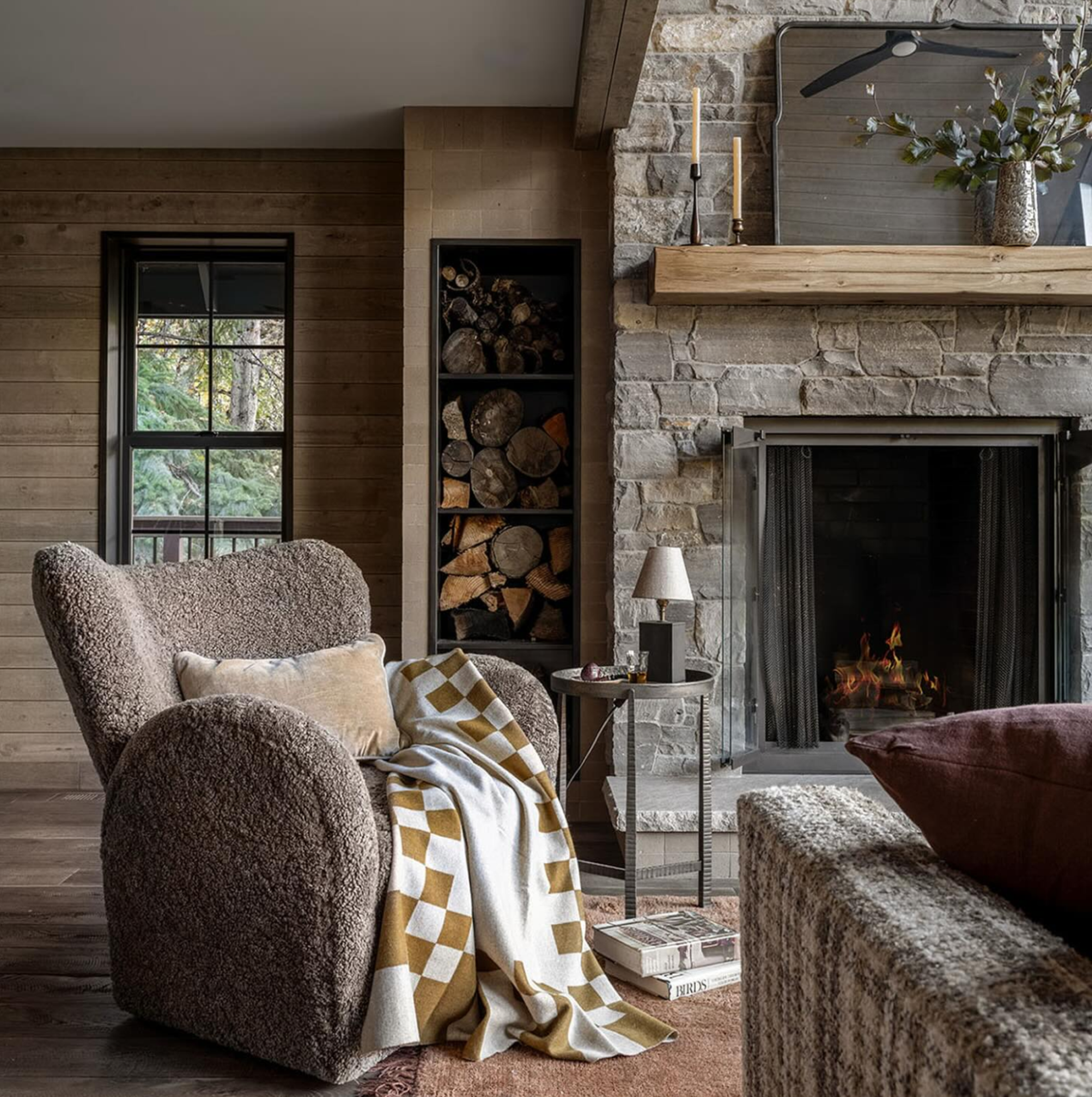
I call this look rustic mountain, and it's all about natural materials, rich colors, and pieces with character. Think beautiful stone fireplaces, aged wood, worn leather, plush furniture, and layers of texture that make you want to settle in and stay awhile.
There's something about these rooms that feels especially appealing right now, and I think it has a lot to do with our desire for homes that feel peaceful, comfortable, and connected to nature. Let's look at what makes this style work and how you can bring it into your own home.
What Defines Rustic Mountain Style?
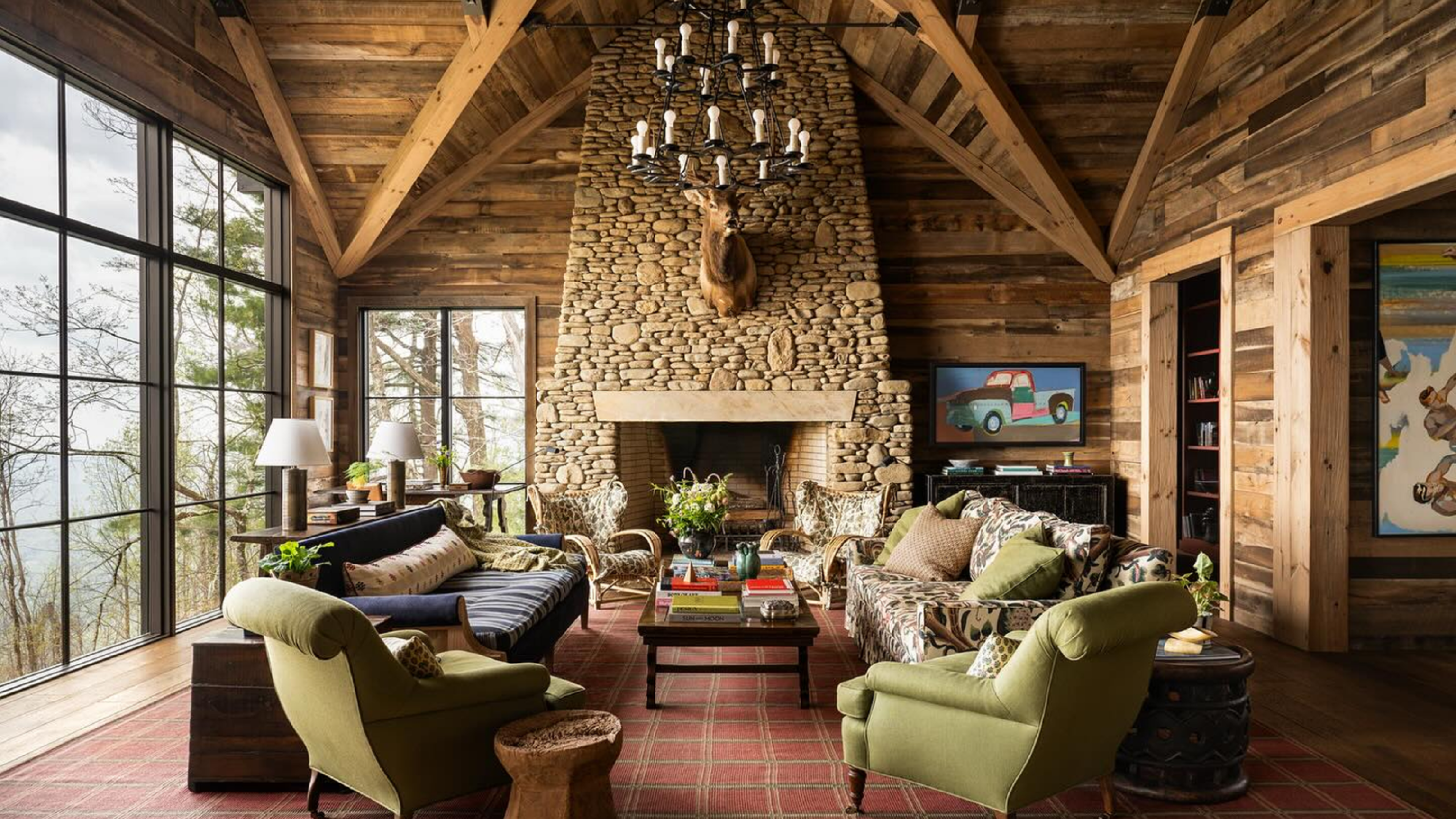
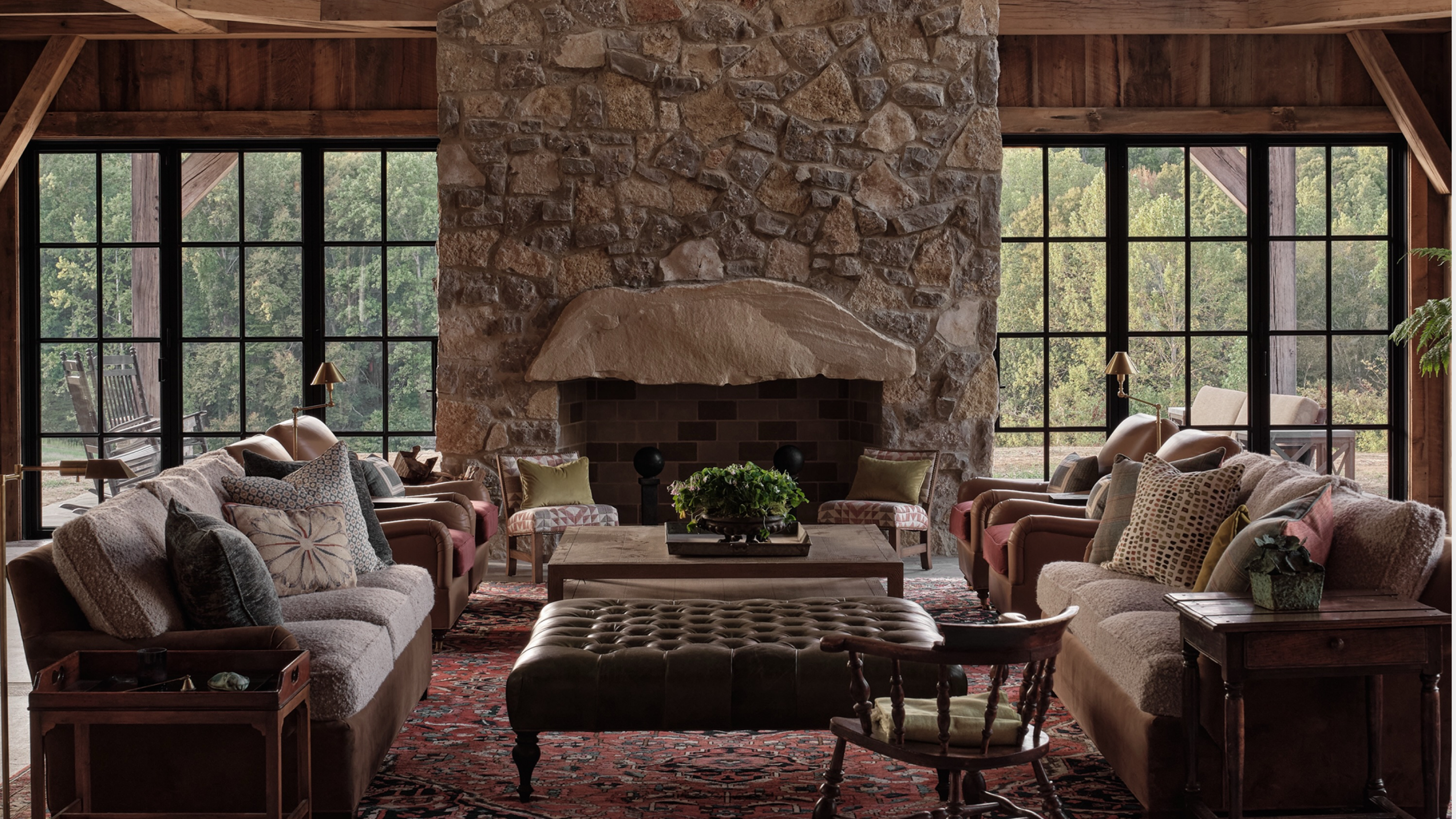
Rustic mountain interiors have an old, layered quality that makes a home feel like it has been there for generations. Think substantial stone fireplaces, timbered ceilings, aged wood, worn leather, and comfortable furniture surrounded by pieces that look like they've been collected over time.
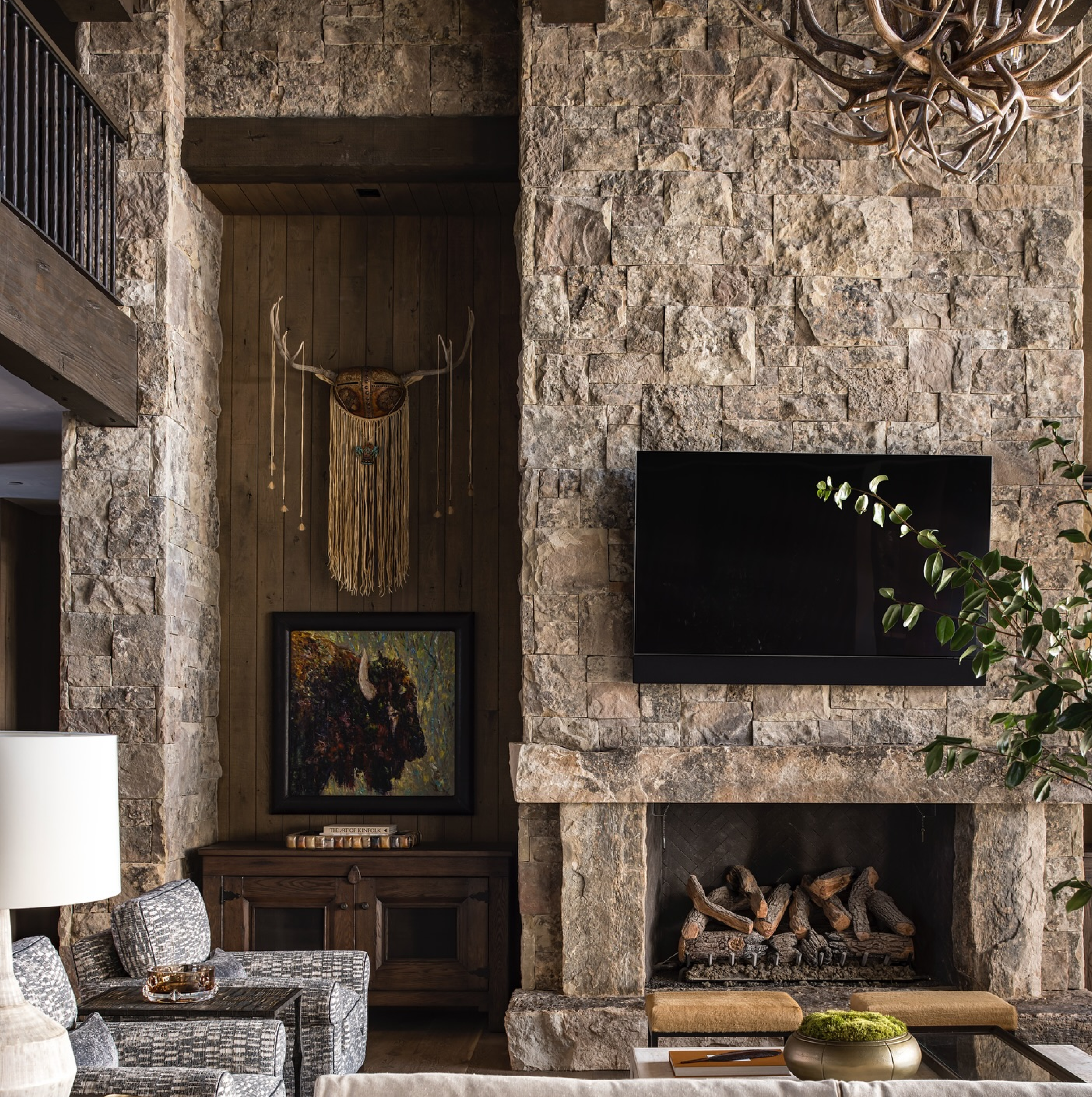 | 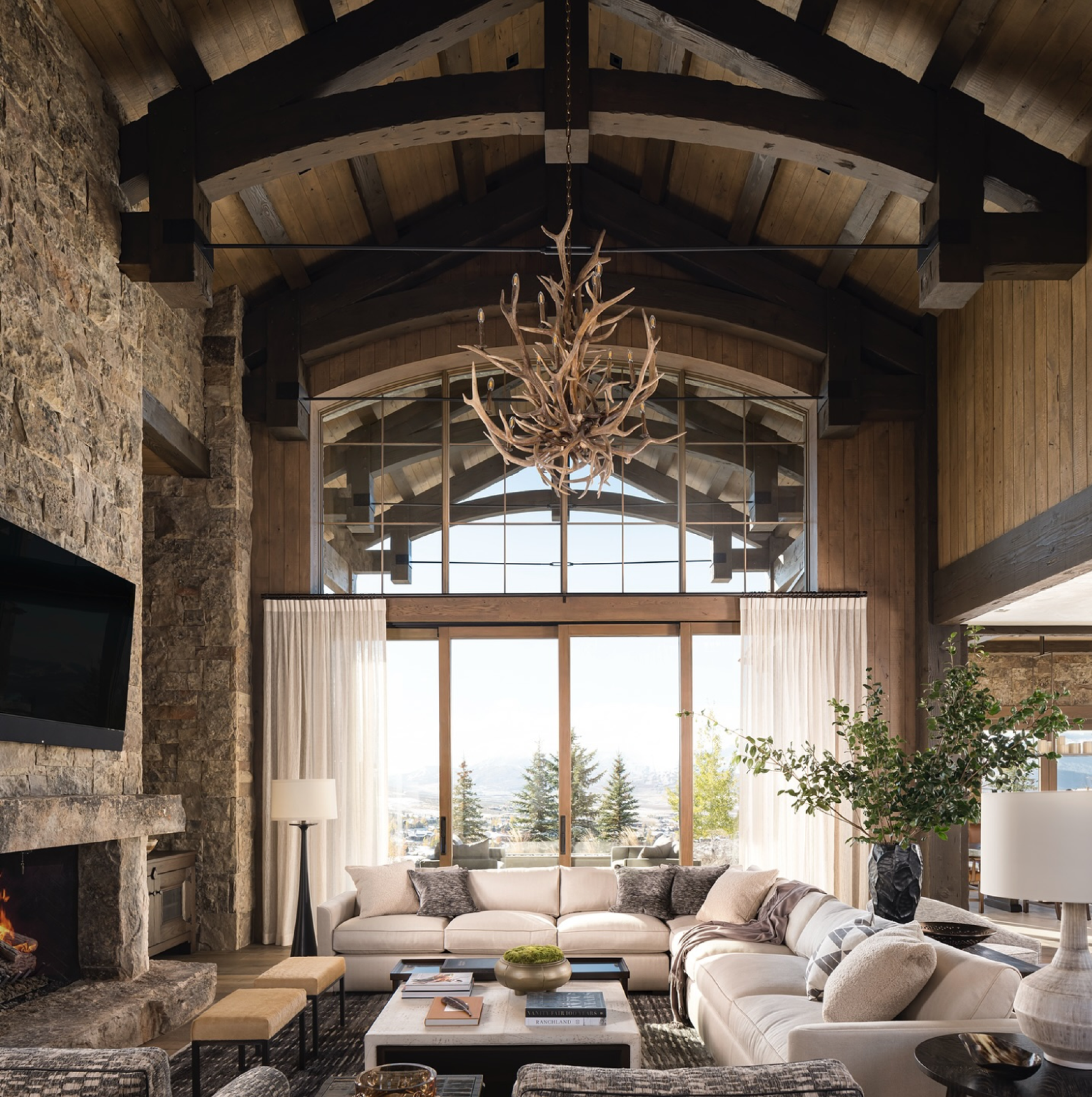 |
Nature plays a big role in this style, both in the materials and the details. Stone, wood, hides, and wildlife-inspired pieces bring the outdoors in, while rich, earthy colors and soft textiles make these rooms feel warm and inviting.
What I love most is the character. A piece of wood with an interesting grain, a stone fireplace with beautiful natural variation, or an old piece of furniture with a little patina can bring so much to a room. It's that combination of natural materials, history, and comfort that gives rustic mountain homes their appeal.
 |
Start With Natural Materials That Have Character
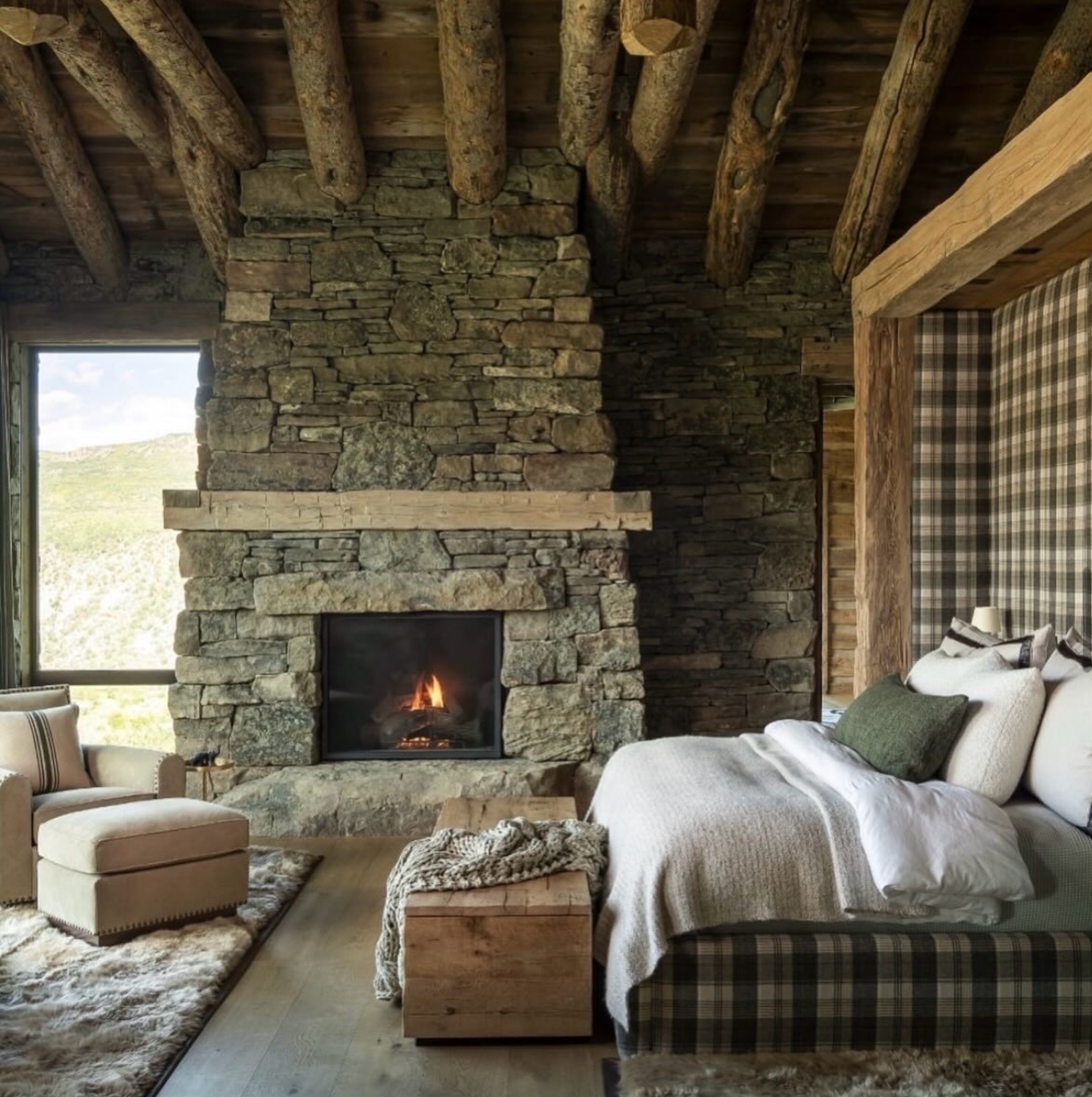
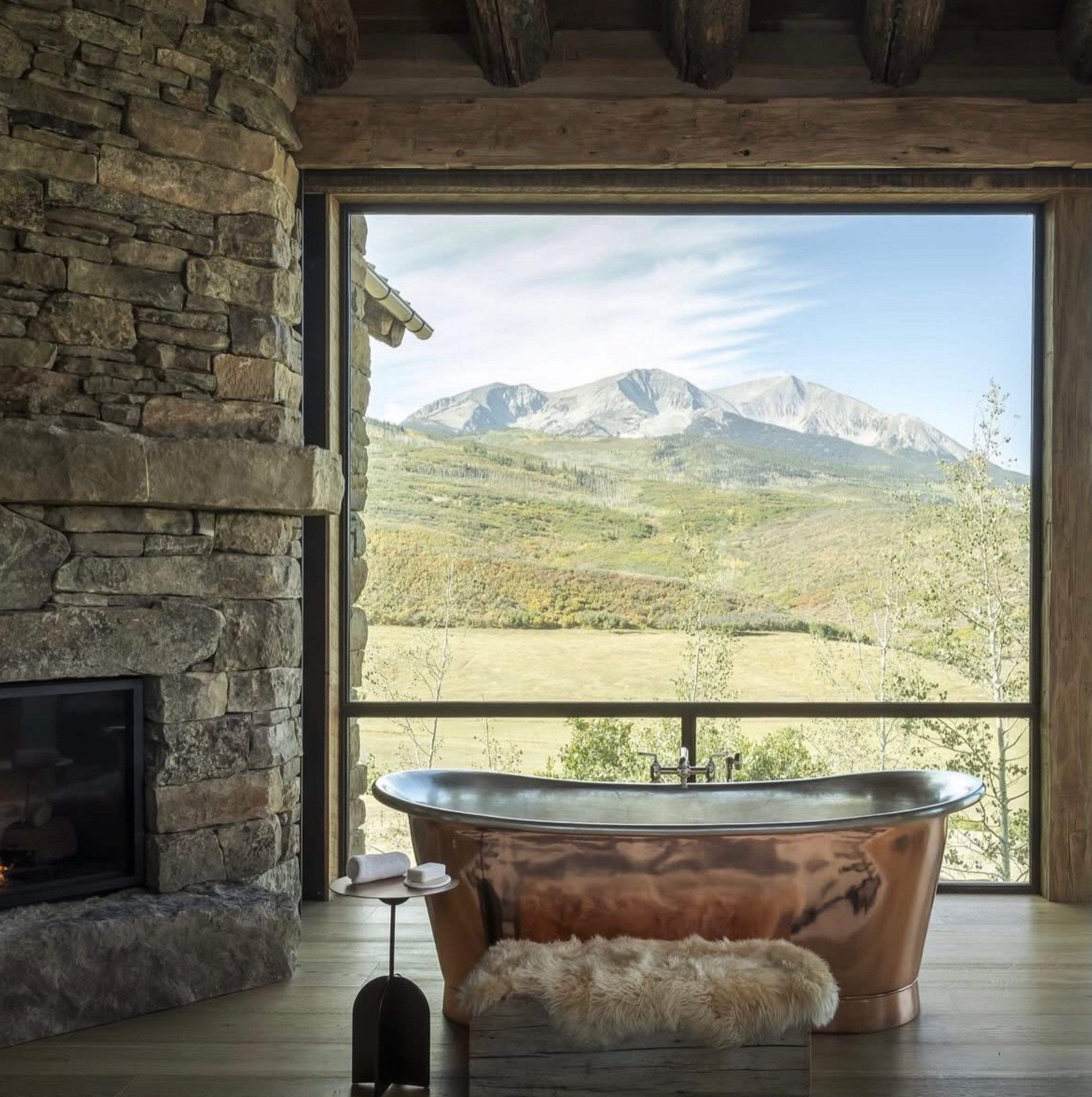
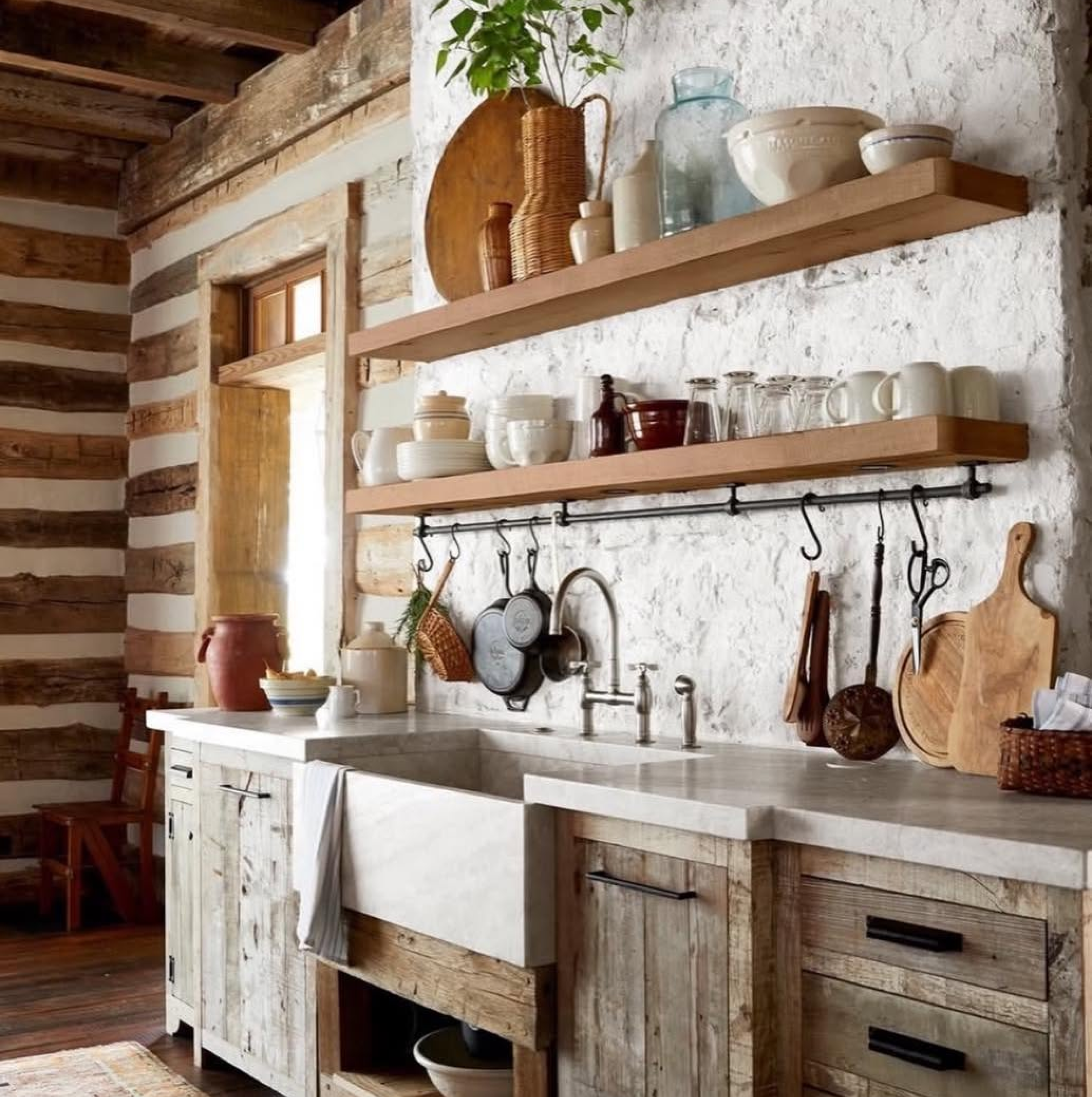
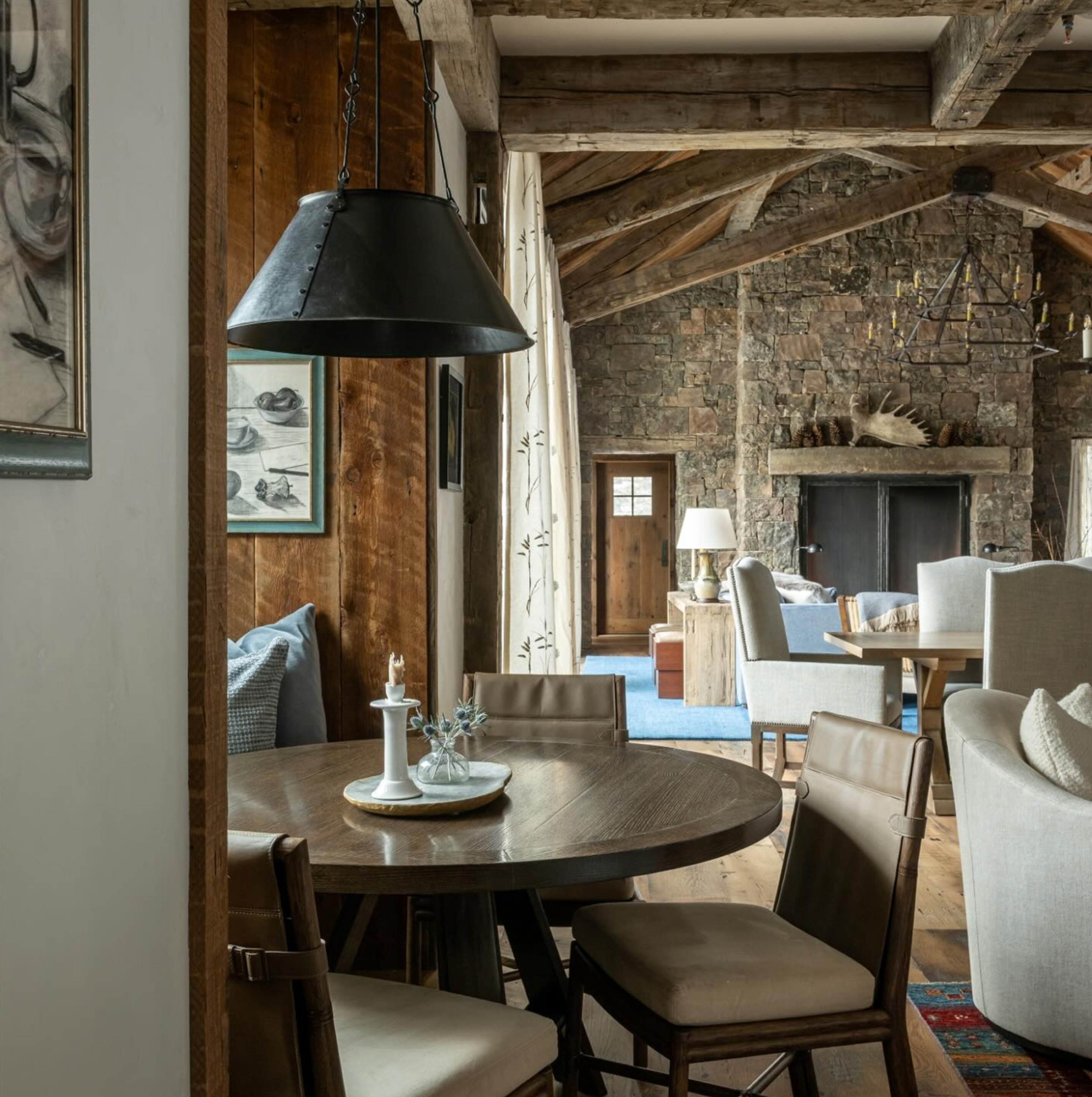
One of the things I love most about rustic mountain homes is how connected they feel to the outdoors. So much of that comes from the materials themselves. Stone fireplaces, timbered ceilings, wood-paneled walls, and floors with natural variation give these homes their warmth and character before you even begin furnishing them.
And the more character those materials have, the better. I love stone with interesting veining, wood with visible knots and grain, and furniture that has developed a beautiful patina over time. There's something about those imperfections that makes a room feel like it has a history, even if the home itself is relatively new.
I think about the old homesteads and log cabins that inspired this look. Those homes were filled with practical, hardworking pieces made from the materials available around them. Furniture wasn't necessarily purchased as a matching collection, and everything didn't arrive at once. Pieces were added over time, passed down, repaired, and used. That's a big part of the feeling I want to capture with rustic mountain style.
 |  |
But you don't need a mountain house with timbered ceilings and a massive stone fireplace to bring this look into your home. If you're working with an existing living room, start with the furniture and materials you can introduce. A substantial wood coffee table with a beautiful grain, a stone side table, or an antique cabinet can bring in that same sense of history.
I also love mixing materials that you might not immediately think to put together. A beautifully veined marble table next to a more rustic wood piece, for example, gives you two very different expressions of natural materials. It's similar to what I love about seeing marble and flagstone together. The contrast makes you appreciate the character of each.
When you're shopping, pay attention to the material itself, not just the shape of the furniture. Look for interesting grain, natural variation, and finishes that have some depth to them. Those are the details that help a room feel collected over time, rather than furnished all at once.
Rich, Earthy Colors That Feel Collected Over Time
Color is a big part of what makes rustic mountain interiors feel so warm and inviting. I think of deep greens, dusty blues, rich reds, warm browns, and touches of gold, balanced with softer creams and ivories. These are colors you might find in an old lodge, a well-loved antique rug, or a landscape just outside the window.
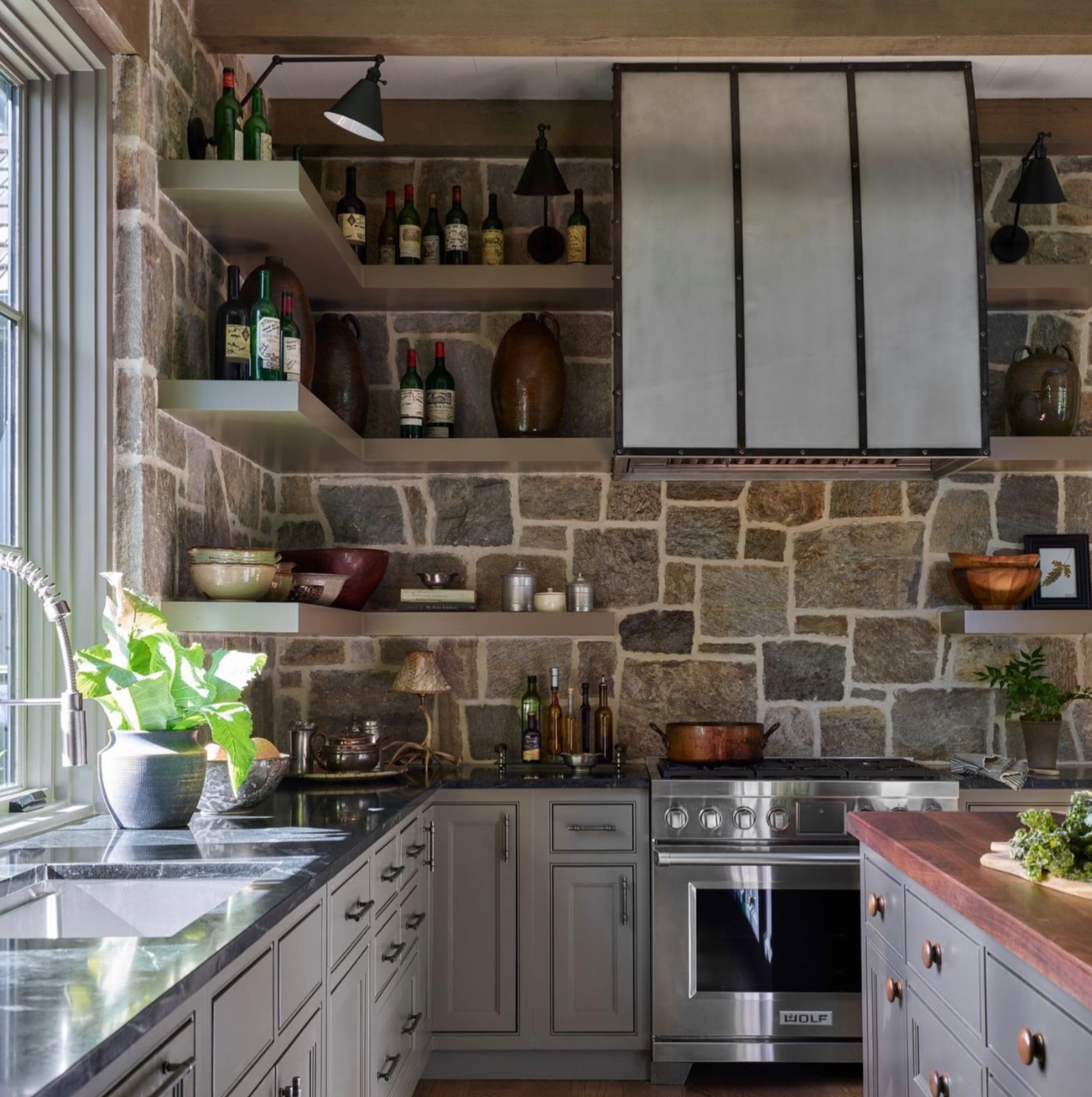 | 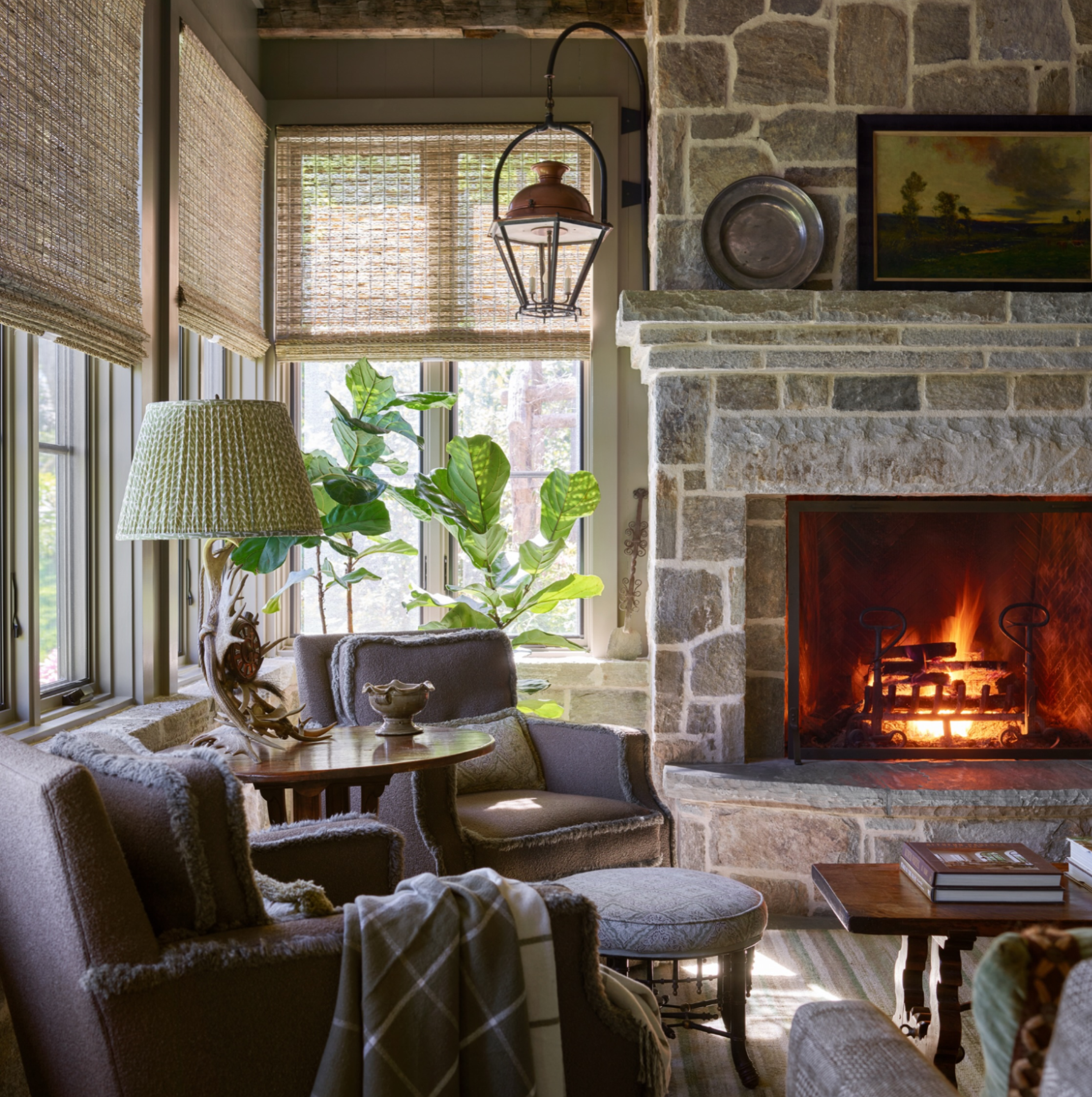 |
What I especially love about this palette is that even the stronger colors have a slightly muted, aged quality. Instead of a bright, crisp red, think of a faded burgundy. Rather than a fresh grassy green, picture a deep olive. The colors have depth to them, and that helps create the cozy, lived-in feeling we're after.
 | 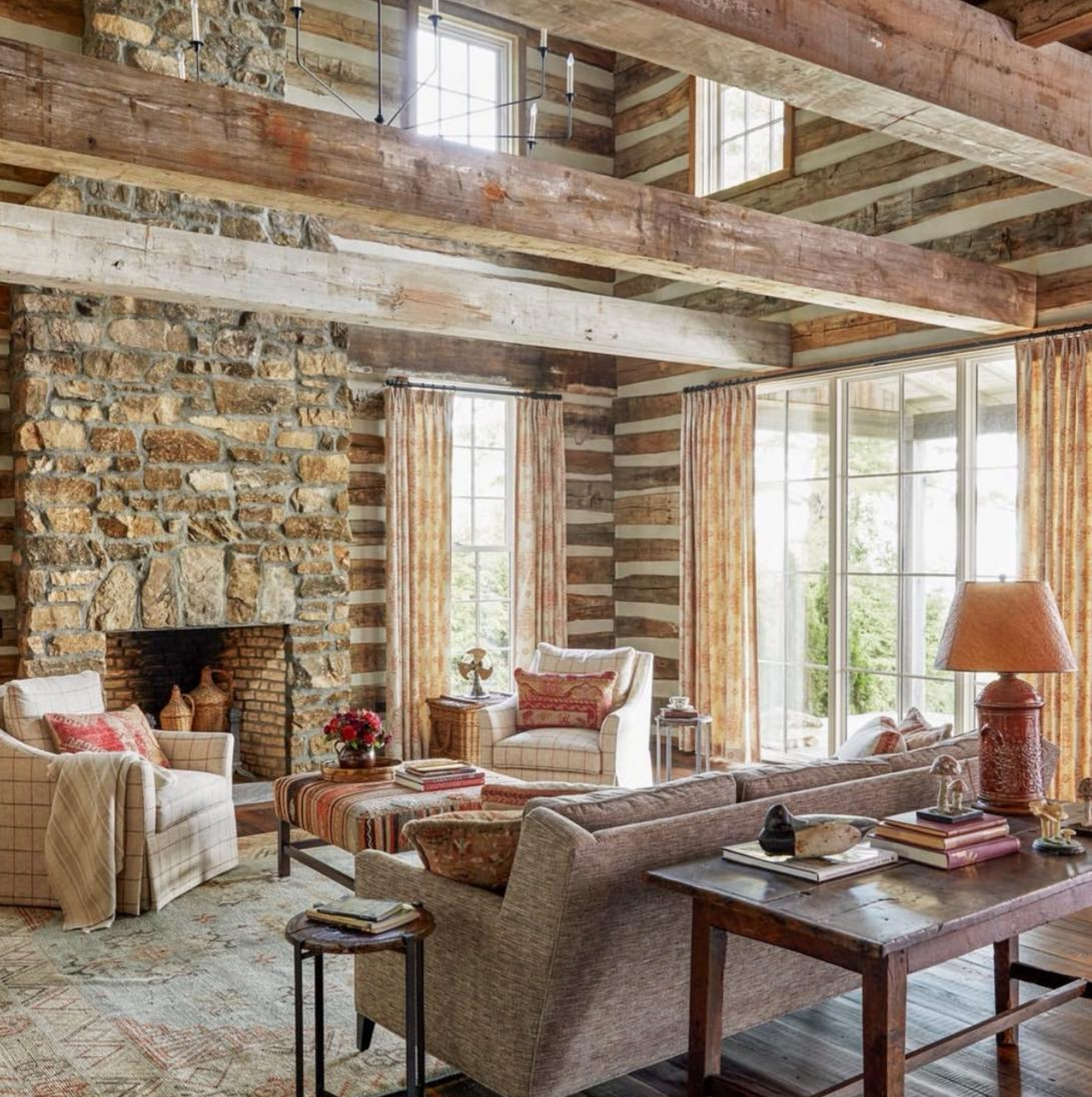 |
And don't feel like you have to choose between warm and cool colors. Some of my favorite combinations bring both into the same room. A warm brown leather sofa can look beautiful alongside a dusty blue chair, or a deep green wall can be softened with cream upholstery and warmer wood tones. It's the combination that makes the palette interesting.
If you're trying to bring this look into your own home, I'd start with a rug, a piece of art, or a fabric you love that already has several of these colors in it. Let that guide your choices for upholstery, pillows, and other textiles. You don't need every color in the palette, and you certainly don't need to introduce them all at once. A few colors repeated in different materials can make the room feel connected while still giving it that collected, layered quality.
 |
Layer in Leather, Cozy Textures, and Aged Metals
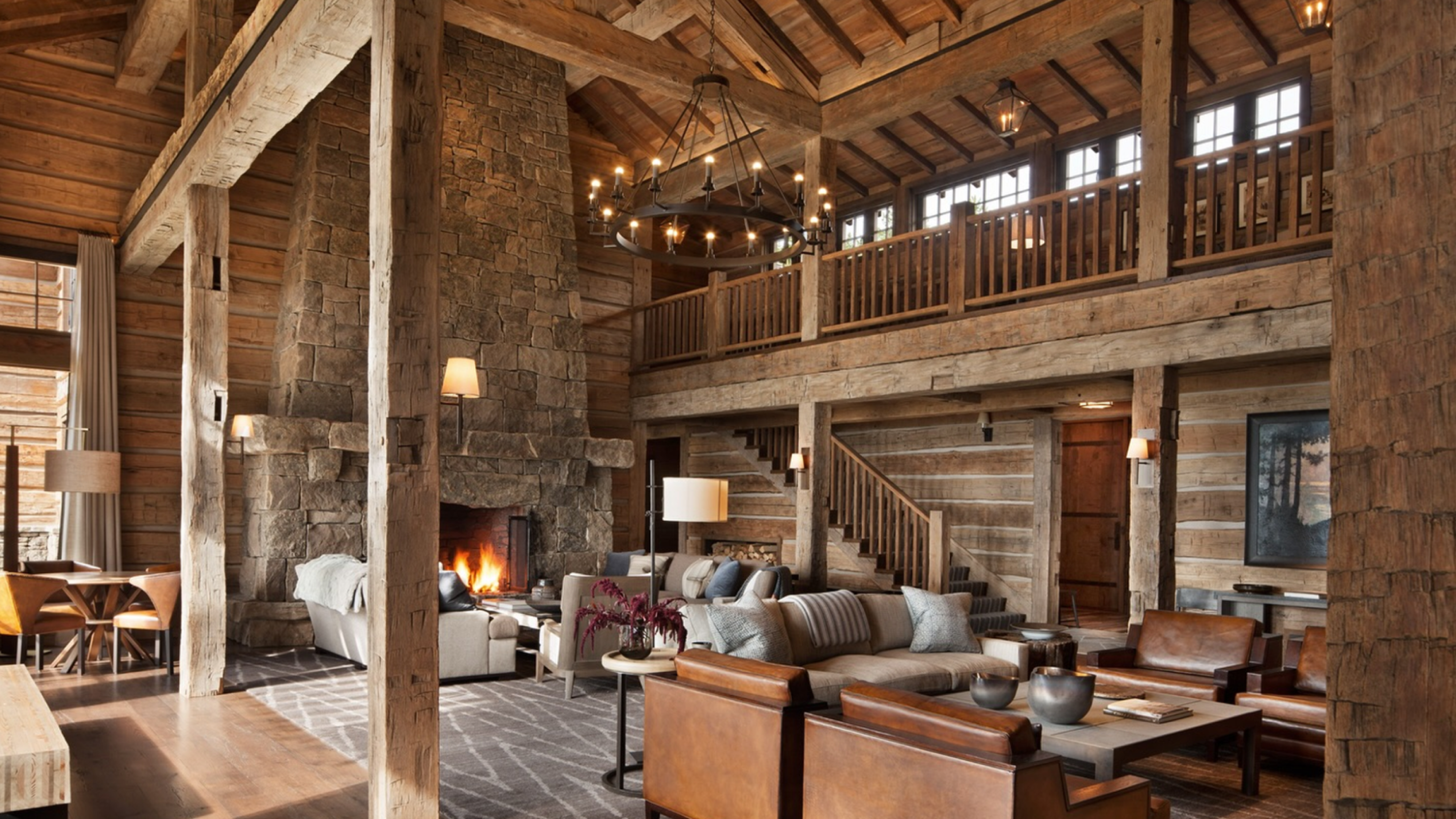
Once you have the natural materials and colors in place, it's time to think about the pieces that make a rustic mountain room feel comfortable enough to spend an entire afternoon in. This is where leather, plush upholstery, sheepskin, and softer textiles really come into play.
I love leather in these spaces, especially when it has some character to it. A leather sofa or accent chair brings warmth and richness to a room, and it's a material that can develop an even more beautiful patina with age. But I wouldn't fill the entire room with leather. Pairing it with a generously upholstered chair, a soft wool rug, or a sheepskin draped over a bench creates a much more inviting mix. You get that rustic quality without sacrificing comfort.
 | 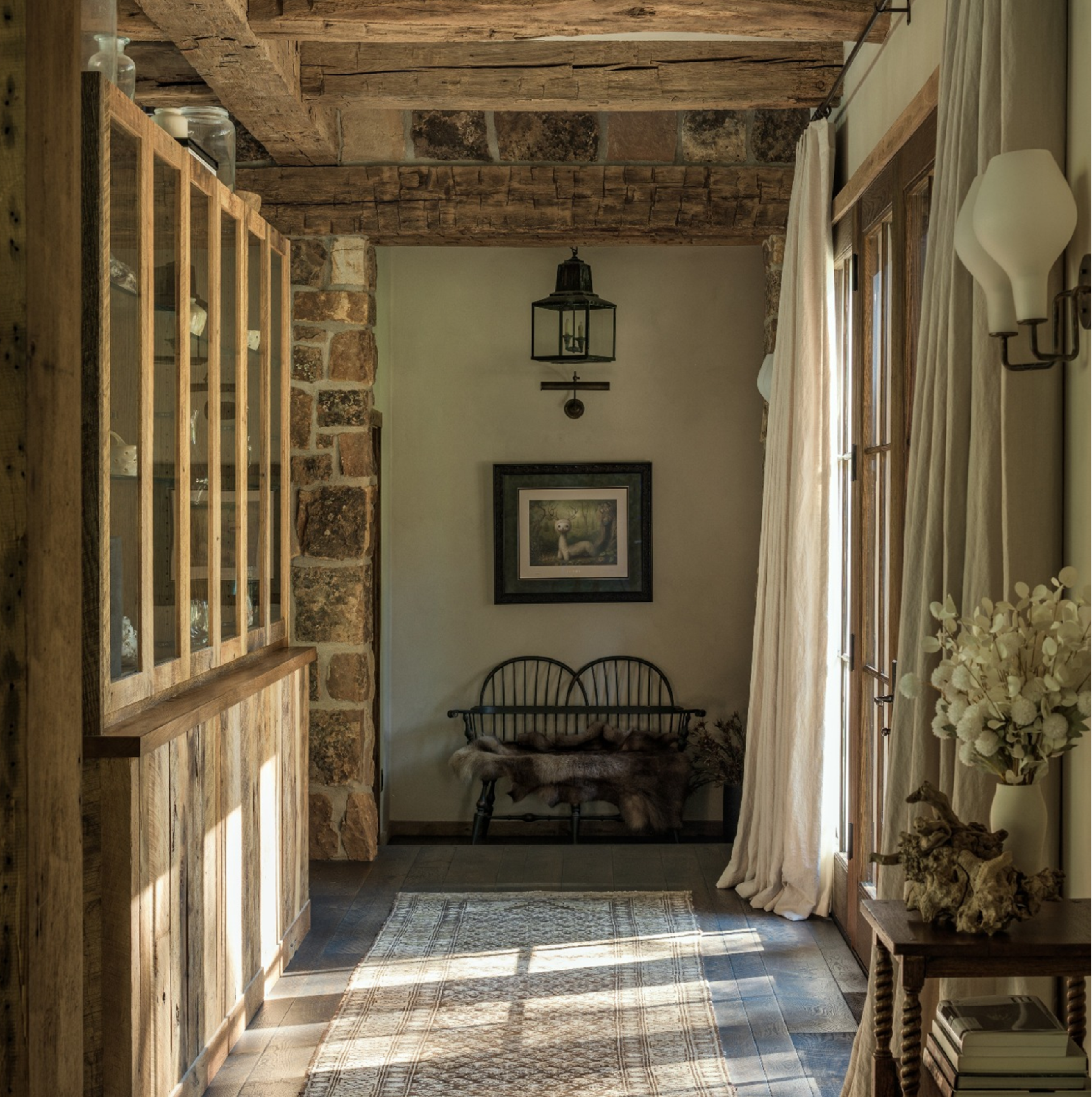 |
Hides and wildlife-inspired details are another part of the mountain lodge tradition. A hide layered over a larger rug, for example, brings in an organic shape and texture that works beautifully against the straighter lines of a sofa or coffee table. You can incorporate these references in smaller ways, too, without making the entire room feel themed.
And don't overlook the metals. Iron is one of my favorites for this look, whether it's a substantial chandelier, a floor lamp, or the base of a table. Oil-rubbed bronze, copper, and unlacquered brass also work beautifully because their finishes have warmth and depth. I especially like the contrast of an iron light fixture against softer upholstery or a copper accent alongside weathered wood.
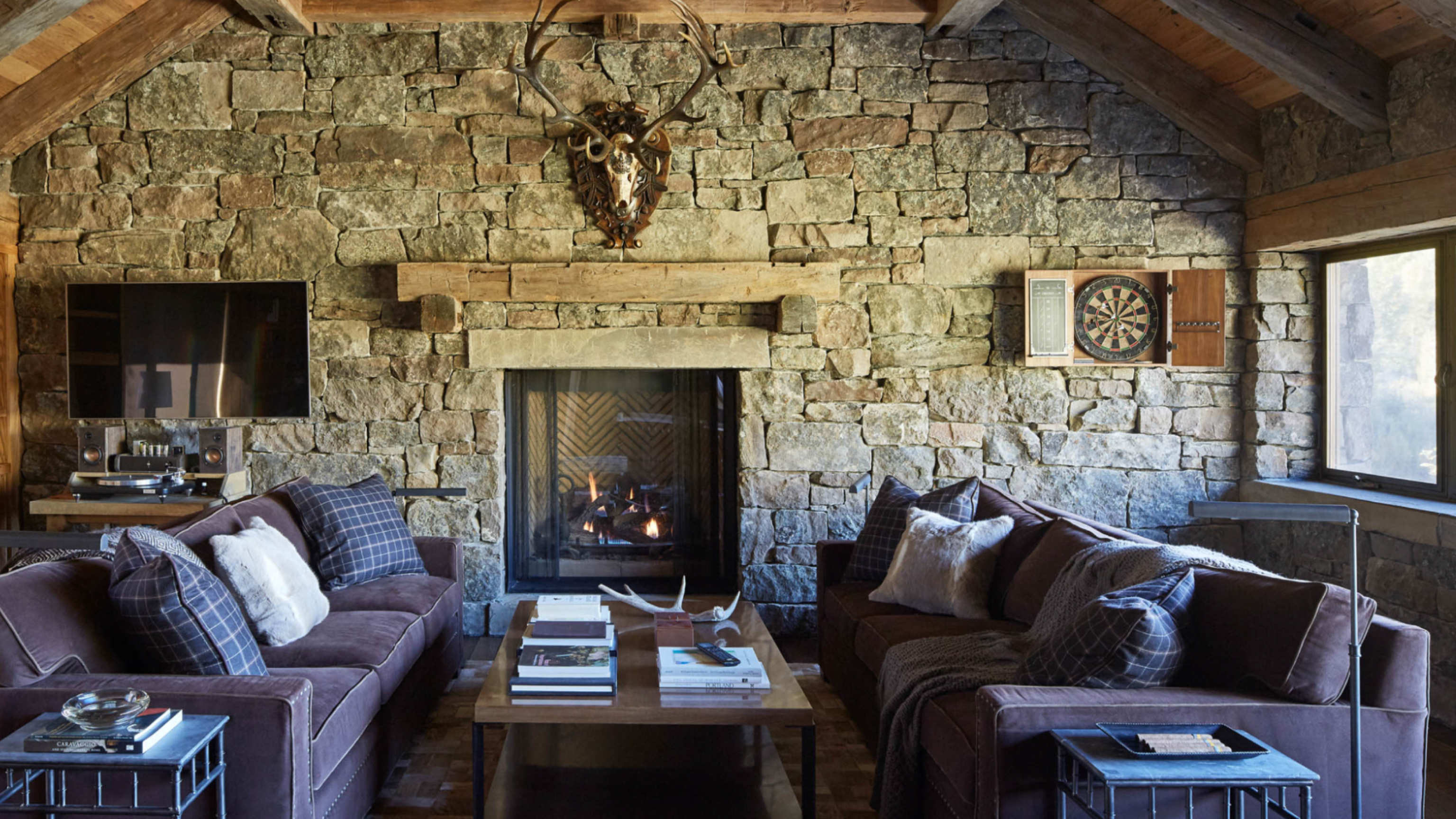 |
When I'm putting together a room like this, I want a mix of materials that each bring something different. If you already have a beautiful upholstered sofa, consider adding a leather chair or an accent chair with an exposed wood frame, like our Moraine chair. Then bring in something soft underfoot and a few metal details. It's that layering of different textures that gives the room its richness and makes all those substantial natural materials feel welcoming.
Why everyone is asking for it right now
People phrase it as Jackson Hole, Yellowstone or Blackberry Mountain, and the feeling they describe is a peaceful retreat.
It is interesting to watch this shift. When I first started in this business, the request was European French country and Old World. As traditional interiors came back, that style shifted to the Cotswolds and a more cottage look. This is a slightly different spin on that same longing for history, and all of a sudden we are getting a lot more interest in it. Maybe it is nostalgia. Ralph Lauren has had a huge resurgence, and his mountain variation is very much in line with this feel of rustic mountain living, out in the middle of nowhere.
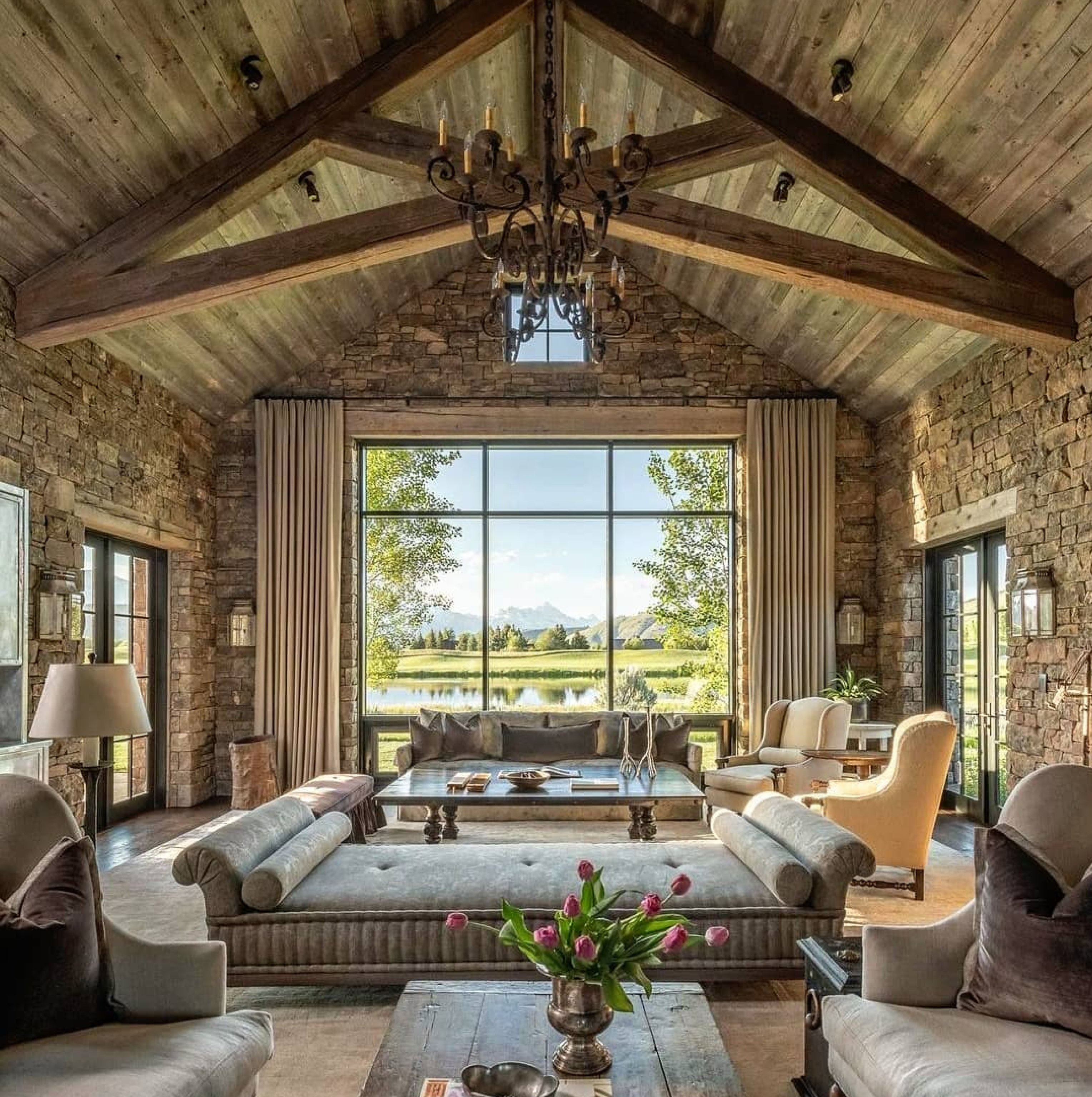
What these clients are after is a lodge. Cozy, cabin-like, a retreat from everything. And they want the stone moment.
 |  |
We've been getting more and more requests for this look at Bodine White, and I find it interesting how often clients describe it by naming a place rather than a design style. They'll mention Jackson Hole, Montana, Big Cedar Lodge, or Blackberry Mountain. What they're really describing is the feeling of being tucked away somewhere peaceful, surrounded by nature, in a home where you can completely relax.
I've watched people's tastes evolve quite a bit since I first started in this business. For a long time, everyone wanted that European French country or Old World look, with its rich materials, antiques, and sense of history. Then we saw traditional interiors come back in a big way, and suddenly everyone was drawn to the English countryside and the cozy, collected feeling of Cotswolds cottages.
I think rustic mountain is another expression of that same appreciation for homes with history and character, just with a different influence. Instead of the English countryside, we're looking to the American West, old mountain lodges, and cabins surrounded by woods. Ralph Lauren's resurgence makes sense to me in that context, too. His approach to mountain living has always embraced rich colors, worn leather, beautiful wood, and that comfortable, layered feeling.
 |
And maybe some of it is nostalgia. There's something appealing about a home that feels a little removed from everything, where you can curl up by the fireplace, spend time with family and friends, and enjoy being home. I think that's what people are responding to as much as the furniture or the architecture.
You don't have to live in Jackson Hole or own a cabin in the mountains to appreciate that feeling. The materials, colors, and pieces you choose can bring some of that same warmth and comfort into a home wherever you live.
What is rustic interior design?
Rustic interior design builds a room out of natural materials with visible age on them: stone, patinated wood, leather, hides and aged metal. The character and patina are the point rather than a flaw. The result reads old and layered, and it feels warmer and heavier than a contemporary room.
What makes a room feel like a mountain lodge?
Start with the hard materials: a stone fireplace, wood walls and timbered ceilings set the tone. Layer in plush, cozy furniture, hides and leather, aged metals like iron and unlacquered brass, and moody, muddied color. The result is dark, warm and candlelit.
What colors are used in rustic cabin decor?
Moodier, muddied color. Greens, blues and reds that look aged even when they are vibrant, alongside a traditional base of reds, golds, greens, browns, creams and ivories. These rooms mix warm and cool together rather than committing to one temperature, which is what keeps them from feeling flat.
What materials give a room that rustic, characterful quality?
Materials that come out of the ground and show their history. Stone, flagstone, travertine, marble and sculptural wood do the structural work. Hides, skins, leather and plush fabric add the depth. For metal, iron first, then oil-rubbed bronze, copper and unlacquered brass, all unsealed so they keep aging.
Comments
Comment or question? Leave it below.
Choosing a dining chair starts with the people sitting in it. Here’s how I think about fabric, comfort, and everyday life before deciding what belongs around the table.
keep reading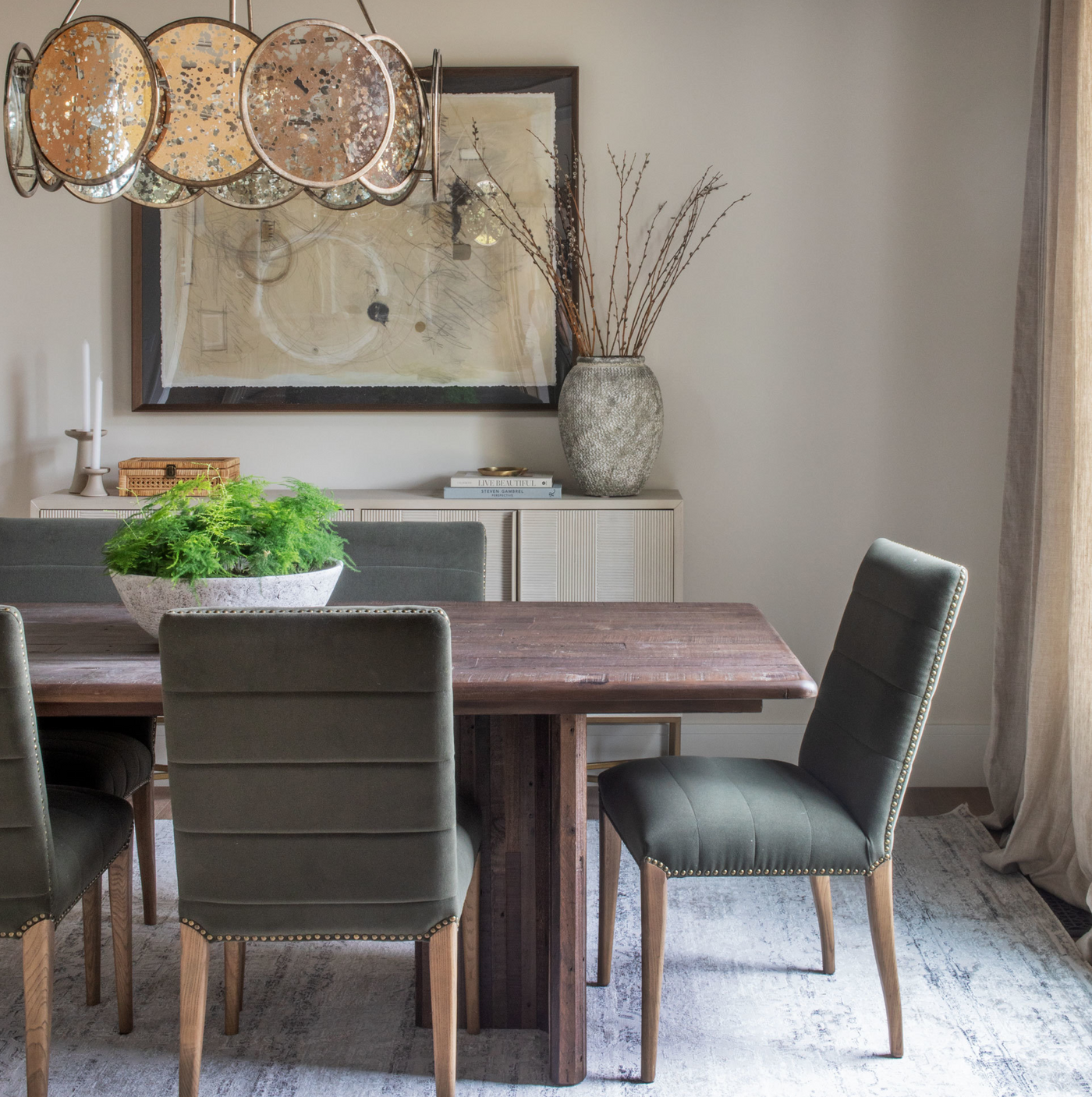
Rustic cabin decor is built on character and patina. Jesse Bodine breaks down the rustic mountain look: materials, moody color, and what to buy.
keep readingTo measure a room for furniture, sketch it, measure each wall, window, hearth and outlet, then draw it to scale on graph paper so every piece you buy fits.
keep reading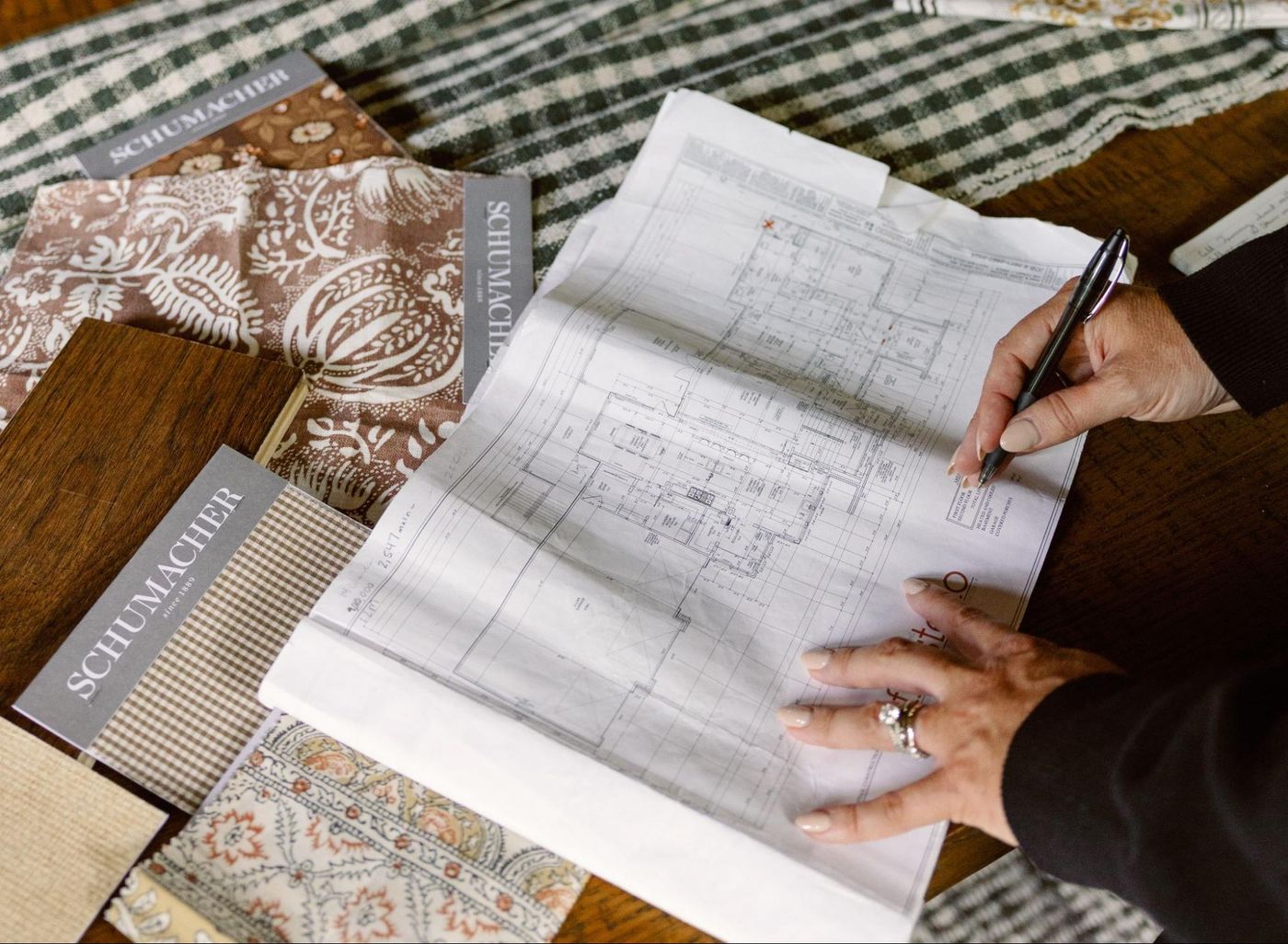
The 2027 interior design trends worth keeping, from burl and moiré to Western, and the one piece to start with to try each without redoing the room
keep reading
Two sofas, two chairs, a pair of ottomans, and six tables that do not match. A walk through the first two rooms of the Scout House, and the reason behind every piece in them.
keep reading
Choosing a dining chair starts with the people sitting in it. Here’s how I think about fabric, comfort, and everyday life before deciding what belongs around the table.
keep readingRustic cabin decor is built on character and patina. Jesse Bodine breaks down the rustic mountain look: materials, moody color, and what to buy.
keep reading


