

Traditional style isn't going anywhere, but it isn't staying the same either. Here's what actually defines it, its sub-styles, and how to make it feel warm and current at home.
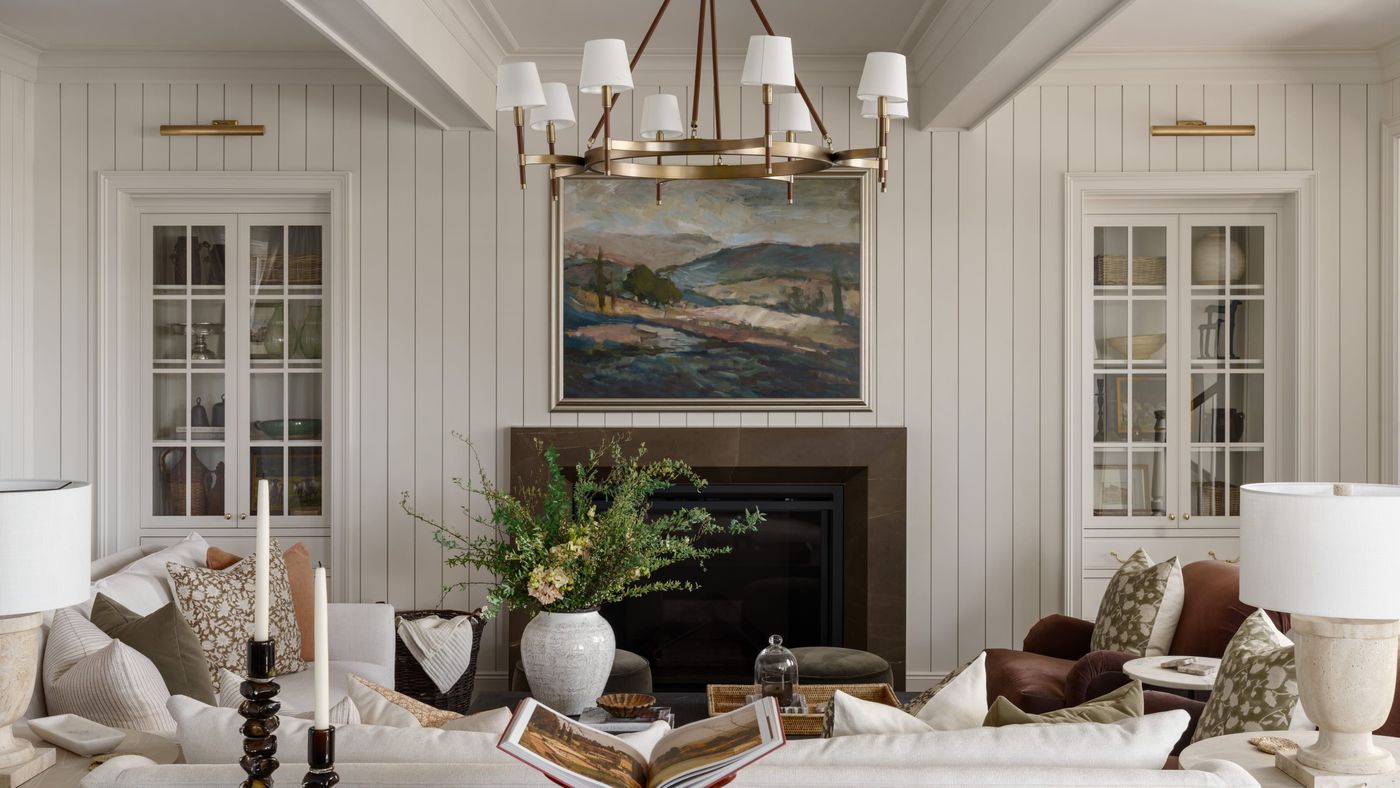
Quick answer: Traditional interior design is a timeless style rooted in 18th- and 19th-century European decor, defined by symmetry, rich wood tones, layered textiles, and classic furniture silhouettes. At its core, it prizes comfort, order, and a sense of history: rolled-arm sofas, antique-inspired case goods, warm color palettes, and accessories arranged in balanced pairs.
Traditional style isn't going anywhere, but it isn't staying the same either. What once felt like your grandmother's formal sitting room has evolved into something far more personal and wonderfully livable. It's become one of the most sought after looks again, as more people look for warmth, character, and homes that feel like they'll stand the test of time.
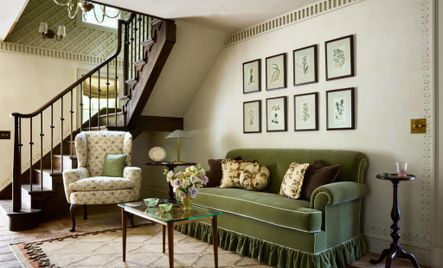
A textbook traditional room: rolled-arm velvet sofa, dark wood tones, and a deep earthy palette. The floral wingback in the corner adds a classic silhouette that helps anchor the whole space. Design: @moorehousedesign | Photo: @jaredkuziaphoto | Styling: @studio.jennlilly
What sets today's traditional homes apart is that they aren't filled overnight. They're intentionally collected. Every piece is chosen with purpose, whether it's a vintage find discovered at an antique market, something collected while traveling, a family heirloom, or a thoughtfully selected new investment. Those layers of old and new are what give a traditional home its richness and sense of history.
But traditional is a big, generous family of styles. So let's define it properly, explore its different substyles, and talk about how to bring it into your own home without making it feel like a museum.


Both rooms are built on the same earthy palette, in two different ways. Left: floral wallpaper carries up the ceiling, wrapping the room in warmth. Right: a blue-and-white plate wall and dark wood tones add quiet history. Design: @moorehousedesign | Photo: @jaredkuziaphoto | Styling: @studio.jennlilly
What defines traditional interior design?
While traditional interiors can take many forms, the best ones tend to share these defining characteristics:
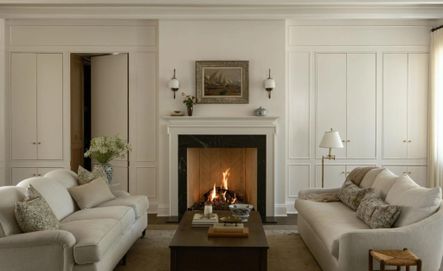
If traditional design had a textbook, this room would be in it. Notice the symmetry first: two rolled-arm sofas in conversation, matching sconces flanking centered art, everything balanced around the fireplace. Then the rest: classic silhouettes, warm wood and brass, layered pattern in the pillows, and blue-and-white porcelain on the mantel. Design: @wdesigncollective @maddiekienedesigns @mariannembrown | Styling: @anndesan @sararonna | Photo: @lauren.lee.photo | Build: @grovehomesutah | Architecture: @clayton_vance_architecture
Symmetry and order.
Matching lamps flanking a sofa, a pair of chairs in conversation, art centered just so. The eye reads the whole room as calm and balanced.
Classic furniture silhouettes.
Rolled arms, turned legs, tufted upholstery, wingbacks, cabriole curves; shapes borrowed from English and French furniture history.
Rich, warm materials.
Deep and mid-tone woods (mahogany, walnut, cherry, oak), brass and bronze, and natural stone.
Layered textiles.
Damask, floral, plaid, and stripe, layered across drapery, upholstery, and rugs, with plenty of velvet, linen, and wool for texture.
Curated accessories.
Antique-inspired lamps, framed art in thoughtful arrangements, porcelain, books, and the heirloom pieces that make a room feel like yours.
What ties it all together is a sense of comfort and longevity. Traditional interiors are designed to outlast trends, favoring quality, craftsmanship, and pieces that feel just as relevant years from now as they do today.
Where does traditional style originate?
Traditional interior design draws from European decor of the 1700s and 1800s, mostly English and French, along with the formal Colonial and Neoclassical interiors that followed in America. It borrows the proportions of classical architecture, the craftsmanship of period furniture makers, and the layered, collected feeling of grand historic homes. Knowing that origin makes the “rules” click into place: the symmetry comes from classical architecture, and rich woods and textiles come from an era when furniture was built to last generations.
What are the main sub-styles of traditional design?
Traditional isn't one look, it's a family of them. Most rooms people call "traditional" are really leaning on one of five sub-styles, each with its own furniture cues and palette. Knowing which one you're drawn to makes every other decision easier: you stop shopping "traditional" in general and start shopping the version that actually fits your home. Here are the five we work in most, and how to spot each one.
English Traditional
The most pattern-rich of the five. English Traditional is built on deep upholstery and layered pattern: a chesterfield or rolled-arm sofa, floral chintz, antiques collected over years, and color that reads rich rather than bright.
It's the library-and-drawing-room look: tufted leather, brass nailhead, a floral on the drapery talking to a stripe on the pillows. The palette runs deep and warm, so nothing feels stark. Done well, it looks like it's been added to for a generation, not bought in a season.
Palette: deep greens, burgundy, navy, cream.


These spaces are the epitome of English Traditional look up close: rich wood, layered pattern, and fringe-trimmed upholstery in a deep, warm palette that reads collected, not bought. Design: @simshilditch
French Country
The softest and most relaxed. French Country trades formality for warmth: carved wood, gentle curves, gently distressed finishes, and airy toile or gingham pattern.
Think a farmhouse outside Provence: a cabriole-leg chest, a little gold leaf worn at the edges, warm neutrals lifted with soft blue and ochre. It's traditional that feels lived-in rather than grand, the version that's easiest to settle into if formal isn't you.
Palette: warm neutrals, soft blue, ochre.


This is French Country at its coziest: warm neutrals, worn wood, and a breakfast nook you'd never want to leave. Design: @wdesigncollective | Photo: @jaredkuziaphoto | Build: @paynebouchierfinebuilders | Architecture: @anniemoumou | Styling: @anndesan @sararonna
Neoclassical / Formal
The most symmetrical and refined. Neoclassical leans on classical architecture — columns, moldings, and balanced silhouettes — in a restrained ivory, gold, and soft-grey palette.
This is the dressiest end of traditional: matched pairs, clean proportion borrowed from Greek and Roman forms, and finishes that read polished rather than cozy. A demilune console centered under a mirror is the whole idea in one vignette.
Palette: ivory, gold, soft grey.


Neoclassical is all about symmetry and polish. See it in the matched brass lamps flanking a gilt-framed landscape, the balanced millwork, the ivory-and-gold restraint. This is the dressiest end of traditional and feels both polished and balanced. Design: @wdesigncollective @maddiekienedesigns @mariannembrown | Styling: @anndesan @sararonna | Photo: @lauren.lee.photo | Build: @grovehomesutah | Architecture: @clayton_vance_architecture
Colonial
The most practical. Colonial is early-American traditional: honest wood furniture, spindle and Windsor chairs, and simple, unfussy silhouettes.
Less ornament, more craftsmanship. Warm wood tones, a muted blue or barn red as the accent, and shapes that have stayed in American homes for two-plus centuries because they work. It's traditional stripped to its useful bones.
Palette: warm wood tones, muted blues and reds.


Colonial lives in the wood and the spindles. Warm tones, a muted blue-and-red accent, and those classic spindle-back chairs and posted beds — shapes that stay because they work. Design: @jhinteriordesign | Photo: @aaronleitz
Modern Traditional (Transitional)
The most livable, and the one most people land on. Modern Traditional keeps traditional's classic shapes but pares them back — cleaner lines, less pattern, and a calmer palette with one or two accents.
Here's the difference in plain terms. Classic Traditional embraces the details and leans more formal: richer wood tones, layered patterns, antiques, decorative moldings, and rolled arms, tufting, and turned legs that give a room a sense of permanence. Modern Traditional starts from those same foundations and edits them down. Instead of a rolled arm, a sloped track arm. Instead of tufting, a clean tight back. Instead of turned legs, simple square legs. Patterns show up more sparingly, ornamentation is simplified, and a few contemporary pieces keep the room feeling fresh rather than formal.
In practice, that's a classic rolled-arm sofa paired with a sleek marble coffee table, or abstract art hung above an antique chest. It's the most-loved evolution of the style and the easiest to live with today, and if you're not sure which sub-style is you, it's the always-current place to start. We walk through the whole recipe on how to get the modern traditional look
Palette: soft neutrals with an accent or two.


Modern Traditional, doing what it does best: traditional silhouettes softened by clean lines, a quiet palette, and a single contemporary accent that keeps it feeling current, not formal. It's still beautifully curated and built for real life. Design: Jesse Bodine
How do I get the traditional look in my home?
You don't need a historic home or a full renovation to embrace traditional style. Start with these foundational elements, and the look comes together naturally.
Anchor with classic upholstery.
Start with one signature seat, a rolled-arm sofa, a wingback, a tufted chair, invest in quality upholstery. These silhouettes do the heaviest lifting.
Layer in warm wood tones.
Layer through a console, sideboard, or chest. These pieces help ground the space and add the warmth that makes a room feel collected.
Layer your textiles.
Bring in a patterned rug, then echo it gently in pillows and drapery. Mix one floral or damask with a stripe or plaid and a quiet solid texture.
Introduce symmetry.
Place lamps in pairs, center your art, flank a console or fireplace with matching accessories. It’s the fastest way to read “traditional.”
Curate your accessories.
Antique-inspired lamps, framed art, ceramics, books, grouped in odd numbers on surfaces, but balanced overall.
Choose colors with warmth and depth.
Lean into creams, warm greys, deep greens, navy, and burgundy over cool, stark whites.
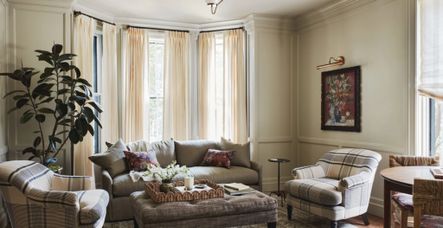
This is warmth and depth in practice: a soft green sofa layered with floral pillows, a textured ottoman, and a pair of plaid chairs that ground the whole room. Design: @wdesigncollective @georgiabarnesinteriors @mariannembrown | Photo: @jaredkuziaphoto | Build: @paynebouchierfinebuilders | Architecture: @anniemoumou | Styling: @anndesan @sararonna
The one thing we'd gently steer you away from? Matching every piece from a single collection. The most beautiful traditional rooms look gathered over time. Mix brands, eras, and finishes so the space feels collected, not bought in one afternoon.
How does blue fit into the look?
One of our favorite ways to do that is with blue and white accents. A chinoiserie vase, ginger jar, or a blue and white plate display have long been a hallmark of traditional interiors, bringing in color, pattern, and a sense of history without overwhelming the room.
While the foundation of traditional interiors is warm, blue has always been one of its signature accent colors. Rather than cool, icy blues or stark contrasts, traditional spaces lean toward softer navies, Wedgwood blues, and classic blue and white patterns that layer easily with warm wood furniture, antique brass, natural stone, and creamy neutrals. It's this interplay between warm foundations and timeless blue accents that gives traditional interiors their depth and balance.


Blue and white shows up in so many beautiful ways: from pillows to chinoiserie, wallpaper to a blue-and-white plate display. Every version layers effortlessly with warm woods and antique brass, which is exactly why it's endured in traditional homes for centuries. Design: @katiedavisdesign | Photo: @nathanschroderphoto | Styling: @jbheditorial
What colors are most commonly used in traditional interiors?
As we mentioned above, traditional palettes are built on a warm foundation with carefully chosen accents. The core neutrals are cream, ivory, taupe, and warm grey. From there, rich, saturated colors like hunter and sage green, navy, Wedgwood blue, burgundy, and gold bring depth and character. Blue and white accents have long played a starring role, adding pattern and contrast while still feeling perfectly at home alongside warm wood tones and antique finishes.
And don't forget that wood tones, from honeyed oak to deep mahogany, act as colors in their own right. Traditional interiors favor warmth and depth overall, so cool, blue based whites and stark black and white palettes can make a room feel more contemporary than traditional.
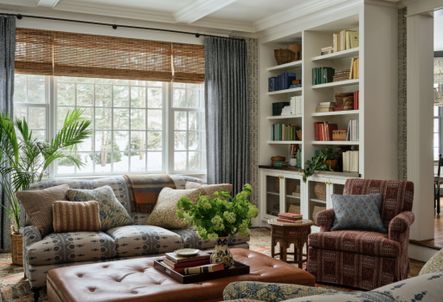
Here's that traditional palette at work: a warm neutral base lifted with navy, burgundy, and blue-and-white, grounded by a leather ottoman and warm wood. The real skill is the pattern mixing: stripe, floral, and geometric all sharing a room and somehow reading calm. Design: @katierosenfeld | Styling: @matthewgleasonstylist | Photo: @aaronleitz
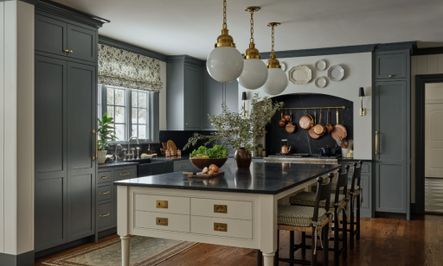
Design: @katierosenfeld | Styling: @matthewgleasonstylist | Photo: @aaronleitz | Build: @cradockbuilders
What about wallpaper?
Wallpaper has a long history in traditional interiors, and it's one of the easiest ways to bring pattern, character, and a sense of permanence into a room. Florals, botanicals, stripes, grasscloth, toile, and small-scale geometric patterns all feel at home here. If you're new to wallpaper, start small: a powder bath, dining room, study, or the back of a bookcase are all wonderful places to experiment. If a patterned wallpaper feels like too much, grasscloth is a beautiful alternative that brings warmth and texture without a bold motif. You can always introduce patterns in smaller, lower commitment ways through pillows, drapery, or other textiles.
In more traditional spaces, wallpaper isn't meant to steal the show. Instead, it adds another layer to the room, complementing the furnishings, textiles, and architecture already in place.
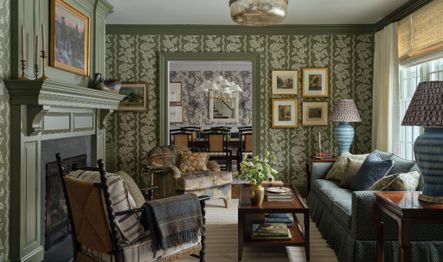
This is how you commit to pattern. Green wallpaper anchors the living room while a different print peeks through in the dining room beyond; proof that mixing patterns works when they share a warm, tonal palette. Nothing competes; everything layers. Design: @katierosenfeld | Styling: @matthewgleasonstylist | Photo: @aaronleitz
What furniture and brands suit a traditional home?
Traditional interiors reward well-made, classically proportioned pieces. At Scout & Nimble, the designer lines we carry, like Gabby, Theodore Alexander, and Furniture Classics, offer the rolled arms, carved wood, and refined silhouettes the style is built on. For a softer, French-leaning take, our Modern French Country collection brings in carved details and warm neutrals. Ground it all with a rug from Loloi, and you’ve got the bones of a traditional room.
What mistakes make traditional design feel dated?
Four small moves keep it fresh:
1. Be selective with pattern.
A floral, stripe, or plaid can bring a room to life, but not every surface needs one. Let a few patterns take the lead and give them room to breathe.
2. Overdoing dark wood.
Use dark wood thoughtfully. Traditional design loves rich wood tones, but too much can make a room feel heavy. Balance darker woods with lighter upholstery, natural light, and softer finishes to keep the space feeling fresh.
3. Introduce a modern counterpoint.
A contemporary light fixture, abstract artwork, or streamlined coffee table adds contrast and keeps the room from feeling like a period reproduction.
4. Matching every piece of furniture.
Avoid matching furniture sets. The most beautiful traditional rooms feel collected over time, not purchased all at once. Mix pieces from different eras, finishes, and sources to create depth and personality.
Traditional design feels fresh again because we're no longer recreating period rooms. We're borrowing the best parts, the warmth, character, and sense of permanence, and making them our own.


Design: @jenniferbeekhunter | Photo: @rikkisnyder | Styling: @francesfinds
How do I know if traditional style is right for me?
You might gravitate toward traditional design if:
- You'd rather invest in a great piece than replace furniture every few years.
- You love homes that feel warm, layered, and lived in.
- You find yourself saving rooms with antiques, wood furniture, or classic architecture.
- You want your home to feel timeless rather than trend driven.
- You want a home that feels lived in, personal, and reflective of your story rather than one that looks like it came straight from a magazine.
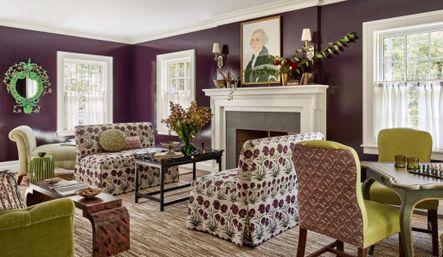
Design: @jenniferbeekhunter | Photo: @rikkisnyder | Styling: @francesfinds
Frequently asked questions
What is traditional interior design in simple terms?
It’s a timeless style based on 18th- and 19th-century European decor, defined by symmetry, classic furniture silhouettes, rich wood tones, layered textiles, and curated accessories. It prizes comfort, order, and a sense of history.
What are the key elements of traditional design?
Symmetry and balance, classic furniture shapes (rolled arms, turned legs, tufting), warm woods and metals, layered patterned textiles, and collected, antique-inspired accessories arranged in pairs.
What colors are used in traditional interior design?
Warm neutrals like cream, ivory, and taupe, with rich accents such as hunter green, navy, burgundy, and gold. Wood tones from honey oak to mahogany act as colors too. Cool, stark whites are generally avoided.
How do I make a traditional room feel modern?
Edit patterns down to one or two, lighten the palette with warm neutrals, and mix in a single modern element, a clean coffee table, contemporary lighting, or abstract art, to keep the room from feeling like a period reproduction.
Comments
Comment or question? Leave it below.
Six white dresser styles — from warm antique finishes to sculpted modern lacquers — and the rooms each one suits best. Shop designer dressers at Scout & Nimble.
keep reading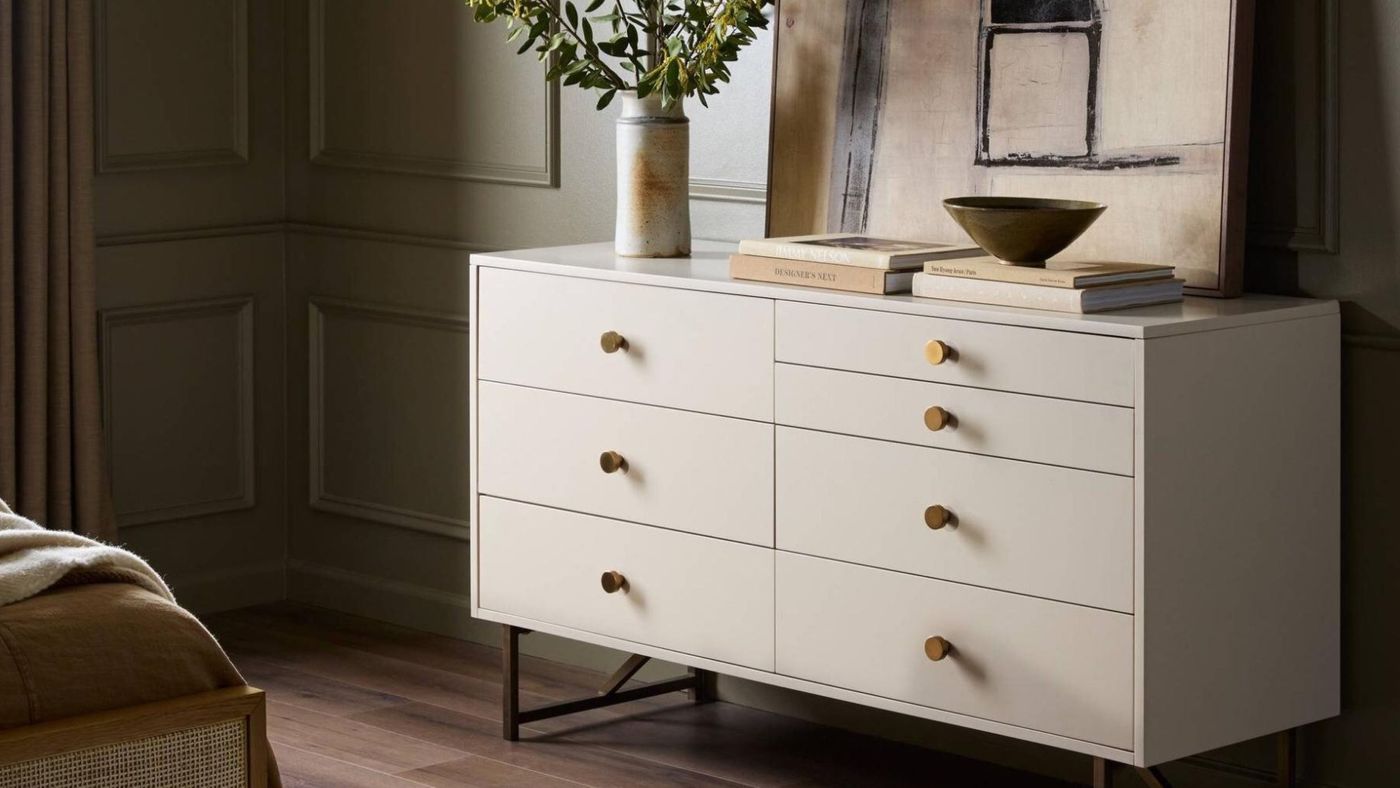
You can put a clean-lined sofa next to your grandmother's carved chest. Here is how I actually do it, including what to do about the matching set that is already sitting in your bedroom.
keep reading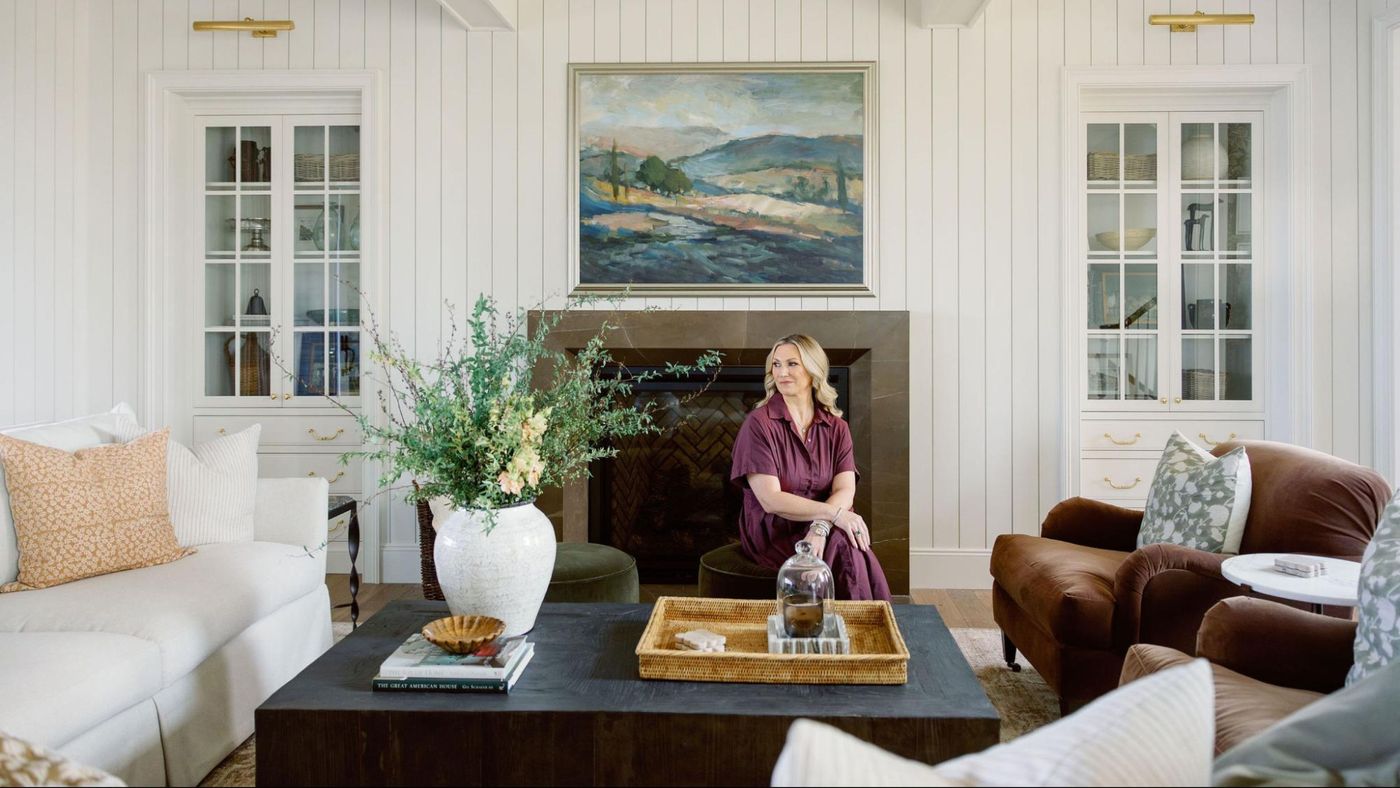
The kitchen is divided into three working zones, with the dining table right in the middle and the scullery at the end intentionally left open. Nothing is closed off from the rest of the space. Here’s the thinking behind each of those decisions.
keep reading
Three completely different purchases go by the same name. Here's how I sort them, and what I'd buy for each.
keep reading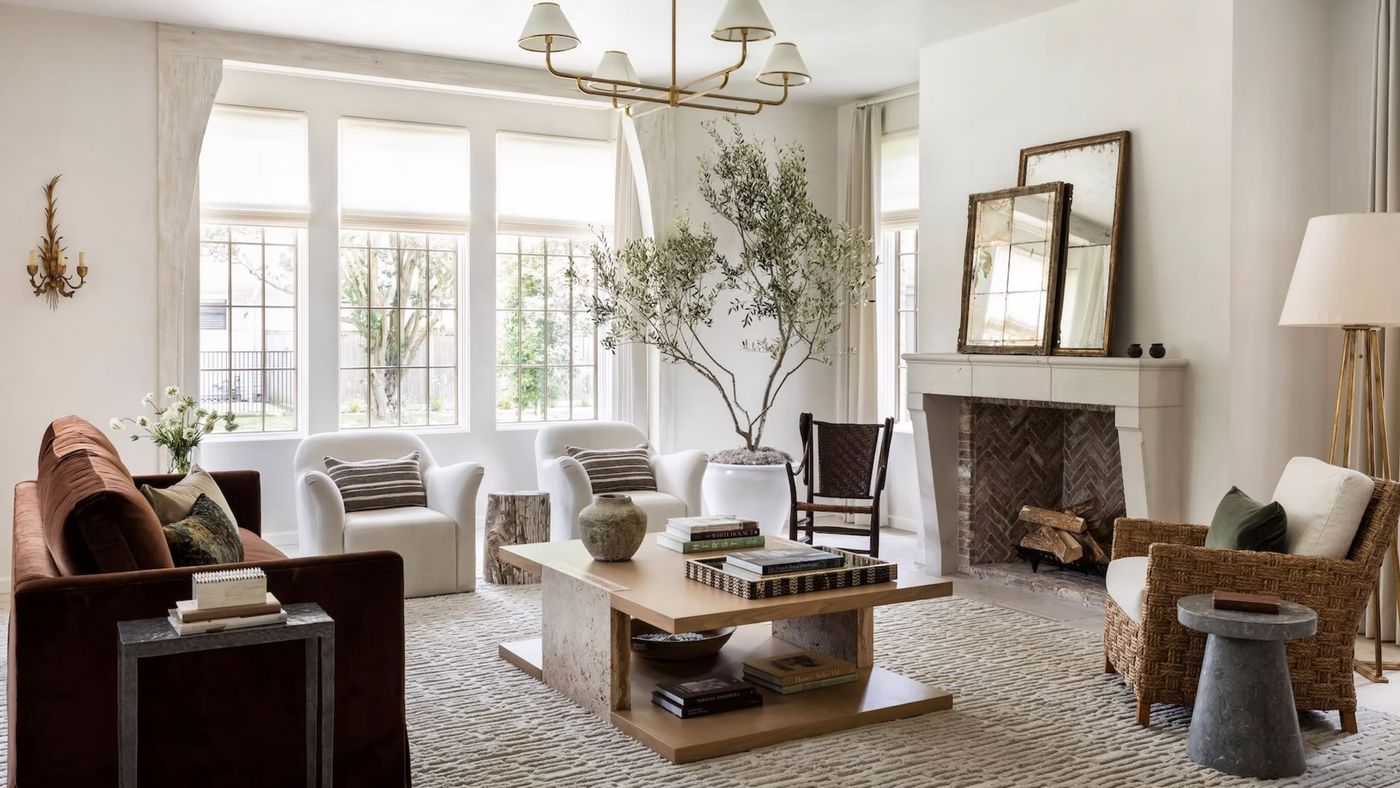
Diameter, clearance, and the base you choose decide how many people actually fit around a round table. Here are the numbers our designers use, and the tables we'd recommend to every client.
keep reading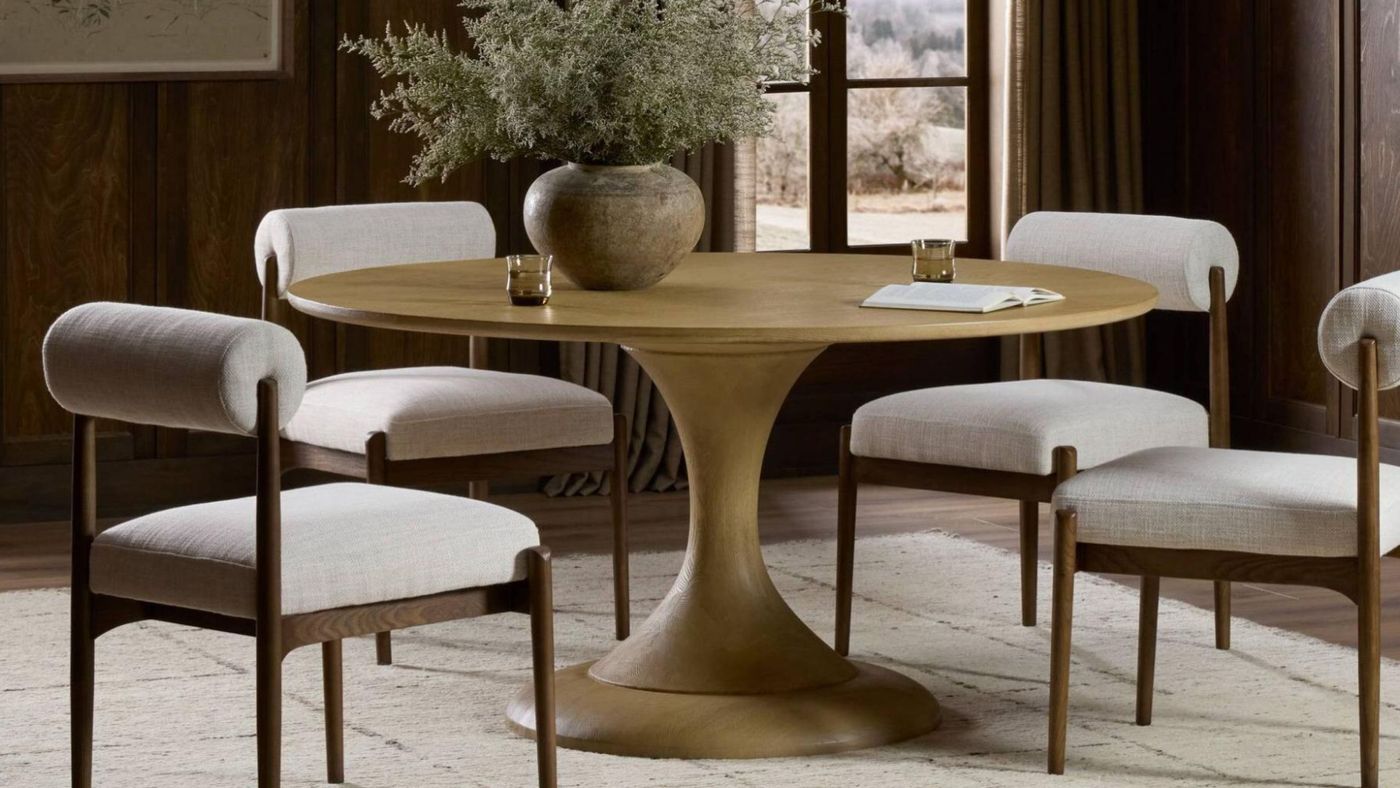
Six white dresser styles — from warm antique finishes to sculpted modern lacquers — and the rooms each one suits best. Shop designer dressers at Scout & Nimble.
keep readingYou can put a clean-lined sofa next to your grandmother's carved chest. Here is how I actually do it, including what to do about the matching set that is already sitting in your bedroom.
keep reading


