
Living Room Chairs (page 2)
A chair is where a living room actually gets used, for the book and the afternoon nap. These are built for those hours and chosen to sit well beside the sofa.
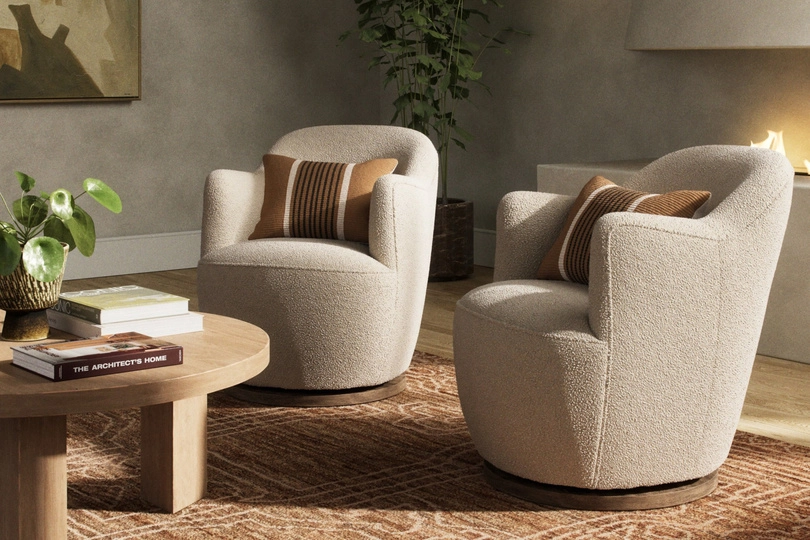
Most living rooms need two kinds of seating: the sofa for everyone, and a chair that belongs to one person. Living room accent chairs are how a room gets its conversation area. Place a pair across from the sofa with the coffee table between them, or angle two chairs toward each other at the end of the sofa to close the loop. Leave about 30 inches for walkways and keep chairs within 8 feet of the sofa so people can talk without raising their voices. A single chair in a corner with a floor lamp and a side table becomes a reading spot, and in a lot of houses that is the most used seat in the room.
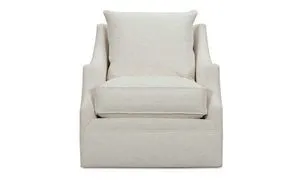
Swivel chairs suit an open floor plan, since one chair can face the TV and then turn toward the kitchen. A fixed base shows off the legs and sits a little lower to the eye. Leather chairs, from a club chair to a sling chair on a wood or metal frame, bring patina into a room of new upholstery and get better with use. Recliners and rockers are the comfort pick, and the good ones are tailored enough that the mechanism stays out of sight. Slipcovered chairs wash easily and relax over time. Cane and rattan lighten a room full of heavy upholstery, and a wing chair gives a traditional room its anchor.
Small living room chairs, under about 30 inches wide, fit beside a fireplace or in a bedroom corner, while a deep lounge chair with an ottoman needs a room with space to give. Keep the seat height within an inch or two of the sofa so conversation happens at one level. Let the chair differ from the sofa in material or color while sharing its undertone, a camel leather next to a warm oatmeal sofa or an indigo swivel next to a cream one. Two chairs that share a scale and a color family without being twins make a room look collected over time.